Twitter Automation Tools: Complete Guide for 2026
Introduction
Managing a successful Twitter presence in 2026 requires more than just occasional posting. With over 500 million tweets sent daily, standing out demands consistency, strategic timing, and continuous engagement—tasks that can quickly become overwhelming without the right tools.
Twitter automation tools have evolved from simple scheduling platforms into sophisticated systems that handle everything from content planning to audience analytics. Whether you're a solopreneur building your personal brand, a marketing team managing multiple accounts, or a business scaling your social presence, automation tools can save you 6-10 hours per week while improving your engagement rates by up to 40%.
This comprehensive guide explores the best twitter automation tools for 2026, covering scheduling platforms, engagement tools, analytics systems, and growth services. You'll learn how to automate twitter posts effectively, choose the right tools for your needs, and implement automation strategies that comply with X's policies while driving real results.
What is Twitter Automation?
Twitter automation refers to using software tools and platforms to streamline repetitive tasks on X (formerly Twitter). Instead of manually posting every tweet, responding to mentions, or tracking analytics, automation tools handle these processes based on predefined rules and schedules you set.
Modern twitter automation encompasses several key activities:
- Content scheduling: Planning and queuing tweets to publish at optimal times, even when you're offline
- Engagement automation: Automatically liking, retweeting, or responding to mentions based on specific triggers
- Analytics tracking: Monitoring performance metrics and generating reports without manual data compilation
- Audience growth: Identifying and connecting with relevant users through smart follow strategies
- Content curation: Automatically sharing relevant content from RSS feeds or specific sources
The goal isn't to replace authentic human interaction—it's to eliminate time-consuming repetitive tasks so you can focus on strategy, creativity, and genuine engagement that builds relationships.
Why Automate Your Twitter Presence?
The benefits of twitter automation extend far beyond simple time savings. Here's everything businesses and creators gain when they implement automation strategically:
Consistent Posting Schedule
Your audience expects regular content. Automation ensures you maintain a consistent presence even during weekends, holidays, or busy periods. Studies show that accounts posting 3-5 times daily see 2x higher engagement than those posting sporadically.
Optimal Timing Without Manual Effort
Your followers aren't online 24/7. Twitter scheduling tools analyze when your specific audience is most active and automatically publish your content during those peak windows—whether that's 6 AM or 11 PM.
Massive Time Savings
According to recent surveys, social media managers save an average of 6-8 hours weekly using automation tools. That's over 300 hours annually that can be redirected toward strategy, content creation, or other revenue-generating activities.
Improved Analytics and Decision Making
Automated tracking and reporting give you instant visibility into what's working. Instead of manually compiling spreadsheets, you get real-time dashboards showing engagement trends, follower growth, and content performance—enabling data-driven optimization.
Multi-Account Management
Managing multiple Twitter accounts manually is a nightmare. Automation platforms let you control 5, 10, or even 50+ accounts from a single dashboard with team collaboration features and approval workflows.
Better Engagement Through Strategic Automation
Paradoxically, automation can improve authentic engagement. By handling routine tasks automatically, you free up time for meaningful conversations, thoughtful replies, and community building that algorithms reward.
Types of Twitter Automation
Not all twitter automation tools serve the same purpose. Understanding the different categories helps you select the right combination for your specific needs.
1. Scheduling and Publishing Tools
These platforms let you create tweets in advance and schedule them for future publication. Advanced schedulers offer bulk uploading, thread scheduling, queue management, and optimal timing algorithms. This is the most common form of automation and the safest in terms of platform compliance.
2. Engagement Automation Tools
Engagement tools automatically interact with other users through likes, retweets, follows, or replies based on hashtags, keywords, or account targeting. While powerful for growth, these require careful implementation to avoid appearing spammy or violating Twitter's automation rules.
3. Analytics and Reporting Platforms
These systems continuously monitor your Twitter performance, tracking metrics like engagement rates, follower growth, best-performing content, and audience demographics. They generate automated reports and provide actionable insights without manual data analysis.
4. Content Curation and RSS Automation
Curation tools automatically share content from specified sources—like your blog's RSS feed, industry news sites, or curated content libraries. This keeps your feed active with relevant information even when you're not creating original content.
5. Direct Message (DM) Automation
DM automation sends welcome messages to new followers or automated responses to specific keywords in direct messages. Use this sparingly—automated DMs often feel impersonal and can harm your brand perception.
For cold outreach rather than scheduling, Xreacher covers the full DM workflow on X: a built-in scraper pulls leads from any account's followers, following, or tweet engagers with bio and follower-count filters, campaigns send personalized openers with automated follow-ups under per-account daily limits, and replies land in a unified inbox with reply-rate analytics by opener, account, and lead list. It also runs LinkedIn and Telegram outreach from the same workspace, and the company publishes reply-rate benchmarks drawn from 43.7 million cold DMs. Like any DM automation, it works best with tight targeting and conservative pacing rather than raw volume.
6. Growth and Audience Building Services
Services like Bulkoid.com offer targeted follower growth through organic engagement strategies. These platforms help you connect with relevant audiences based on interests, competitors, or hashtags, accelerating your account growth beyond what organic efforts alone achieve.
Top 15 Twitter Automation Tools for 2026
After testing dozens of platforms and analyzing current market leaders, here are the top twitter automation tools for 2026, organized by primary use case:
Best All-in-One Platforms
1. Sprout Social
Sprout Social delivers enterprise-grade twitter automation with its ViralPost technology that identifies optimal posting times for maximum reach. The platform combines scheduling, publishing, analytics, social listening, and team collaboration in one comprehensive system.
Key features include bulk scheduling, content calendar visualization, automated reporting, sentiment analysis, and unified inbox for managing all social interactions. Pricing starts at $199/month, making it ideal for agencies and larger teams who need robust features and multiple user seats.
2. Hootsuite
Hootsuite remains a market leader for good reason. It offers one of the most comprehensive feature sets available, including scheduling across 35+ social networks, bulk composer for uploading up to 350 posts at once, automated post-boosting, and best time scheduler.
The platform excels at team collaboration with approval workflows and role-based permissions. Plans start at $99/month for the Professional tier, scaling up to Enterprise for large organizations managing dozens of accounts.
3. SocialPilot
SocialPilot offers exceptional value, providing advanced automation features at a fraction of competitors' costs. You can bulk schedule up to 500 tweets via CSV upload, manage multiple accounts, utilize AI-powered content suggestions, and access detailed analytics.
The platform includes a social inbox for unified message management and white-label reporting for agencies. With plans starting at just $30/month, it's perfect for small businesses and solopreneurs who need professional features without enterprise pricing.
Best for Scheduling and Content Planning
4. Buffer
Buffer pioneered the simple queue-based scheduling approach that many tools now emulate. Its clean interface makes it incredibly easy to schedule tweets, build queues for automatic posting, and manage multiple accounts.
The platform recently added AI Assistant features for content generation and Pablo for creating quick social graphics. Buffer's free plan allows up to 10 scheduled posts per account, while paid plans start at $6/month per channel, making it accessible for creators and small businesses.
5. Typefully
Typefully specializes in thread creation and scheduling, making it the go-to choice for thought leaders and creators who primarily share long-form content on Twitter. The platform offers distraction-free writing, automatic thread numbering, smart scheduling queues, and analytics focused on thread performance.
Unique features include audience-building tools, cross-posting to LinkedIn, and vesper mode for automatic queue filling. Plans start at $12.50/month, positioning it perfectly for serious Twitter creators.
6. SocialBee
SocialBee excels at evergreen content automation. Its category-based scheduling system lets you create content categories (promotional, educational, curated, etc.) and automatically recycle them according to your posting schedule.
This automation is perfect for maintaining consistent activity with proven content without constantly creating new posts. The platform also includes Canva integration, hashtag groups, and audience analytics. Pricing starts at $24/month for the Bootstrap plan.
Best for Analytics and Data
7. Tweet Archivist
For businesses serious about Twitter analytics and historical data analysis, Tweet Archivist provides unmatched capabilities. The platform archives your complete Twitter history, enabling deep analysis of long-term trends, hashtag performance, and audience behavior over months or years.
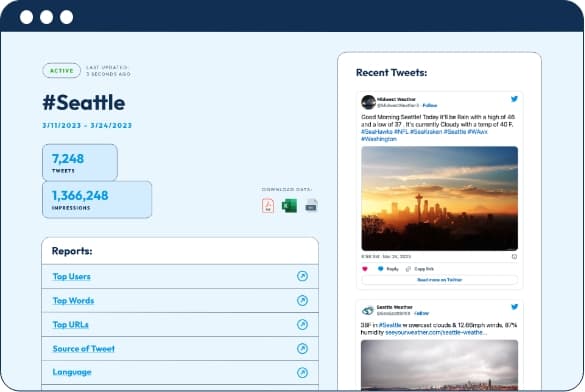
Unlike standard analytics tools that only track recent data, Tweet Archivist maintains permanent searchable archives of tweets, mentions, and hashtags. This historical perspective reveals seasonal patterns, successful content formulas, and engagement trends that inform better automation strategies. Explore Tweet Archivist's features to understand how comprehensive data analysis enhances your automation effectiveness.
8. Keyhole
Keyhole combines scheduling with advanced social listening and sentiment analysis. The platform monitors brand mentions, hashtag performance, influencer tracking, and competitive intelligence while providing recommendations based on your data.
Its real-time dashboards display trending topics, engagement metrics, and audience demographics. Keyhole is particularly valuable for brands managing reputation and tracking campaign performance. Custom pricing starts around $199/month.
Best for Team Collaboration
9. Agorapulse
Agorapulse shines for teams needing robust collaboration features. The platform includes approval workflows, team member assignments, social inbox with ticketing, content library for asset sharing, and comprehensive permission controls.
Its unique Writing Assistant provides AI-powered content suggestions, while Canva integration streamlines visual creation. The platform also tracks individual team member performance. Pricing starts at $69/month for the Standard plan supporting 10 social profiles.
10. Sendible
Sendible targets agencies managing multiple client accounts. It offers campaign grouping (organizing multiple clients' content in one view), white-label dashboards, automated client reporting, and content approval workflows.
The platform's Smart Compose Box adapts your content for different networks automatically and includes a content suggestions engine. Plans start at $29/month for freelancers, scaling up to agency tiers supporting 100+ clients.
Best for Workflow Automation
11. IFTTT (If This Then That)
IFTTT takes a different approach, creating automated workflows (called applets) between Twitter and thousands of other apps and services. You can automatically tweet new blog posts, share Instagram photos to Twitter, get notified of specific mentions, or trigger tweets based on virtually any online event.
The visual workflow builder makes complex automation accessible to non-technical users. IFTTT offers a free plan with limited applets, while IFTTT Pro starts at $2.50/month for unlimited applets.
12. Zapier
Similar to IFTTT but more powerful, Zapier connects Twitter with 5,000+ apps through multi-step workflows (called Zaps). You can create sophisticated automation like posting to Twitter when Airtable records are updated, saving mentions to Google Sheets, or triggering email notifications for specific hashtags.
Zapier's conditional logic and multi-step Zaps enable complex automation scenarios. The free plan includes basic Zaps, while paid plans start at $19.99/month for advanced features.
Best for Growth and Engagement
13. Bulkoid
For businesses focused on rapid audience growth, Bulkoid offers targeted follower acquisition through organic engagement strategies. The service identifies and engages with users likely to be interested in your content based on competitor analysis, hashtag targeting, and interest mapping.
Unlike generic growth services, Bulkoid focuses on quality over quantity, connecting you with genuinely relevant accounts. This targeted approach typically yields 2-5x higher engagement rates than broad follow-back strategies. Pricing varies based on growth goals and targeting complexity.
14. SocialChamp
SocialChamp combines scheduling with engagement features like post recycling, bulk uploading, and content curation from RSS feeds. Its standout feature is the unlimited post scheduling even on lower-tier plans.
The platform includes a social inbox for managing mentions and messages, making it a solid all-rounder for small businesses. Plans start at $29/month for the Champion plan supporting 12 social accounts.
15. CoSchedule
CoSchedule integrates content marketing with social automation, making it ideal for content-driven businesses. The Marketing Calendar provides a unified view of blog posts, social campaigns, and marketing projects alongside automated social posting.
Its ReQueue feature automatically fills gaps in your schedule with top-performing content, maintaining consistent posting without manual queue management. Pricing starts at $29/month for social scheduling, with Marketing Suite plans adding content planning features.
How to Choose the Right Automation Tool
With so many twitter scheduling tools and automation platforms available, selecting the right one requires evaluating your specific needs against each tool's strengths. Here's a framework for making the decision:
Define Your Primary Goal
Start by identifying your main objective. Are you primarily focused on maintaining consistent posting (choose scheduling-focused tools), growing your audience (prioritize growth services), managing multiple client accounts (select team collaboration platforms), or analyzing performance data (opt for analytics-heavy solutions)?
Consider Your Budget and Account Volume
Pricing varies dramatically from free plans to $500+/month enterprise solutions. Calculate the cost per account—some tools charge per profile, while others include 10+ accounts at one price. For agencies managing many clients, flat-rate pricing often delivers better value than per-account pricing.
Evaluate Feature Requirements
Make a must-have feature list. Do you need bulk uploading, thread scheduling, video support, team approval workflows, or white-label reporting? Avoid paying for advanced features you won't use, but ensure the platform supports your workflow requirements.
Test User Experience
Most platforms offer free trials. Test the interface yourself—even powerful tools become frustrating if the UI is clunky. Time yourself completing common tasks like scheduling 10 tweets or generating a performance report. The tool you'll actually use consistently is better than the most feature-rich option you'll avoid due to complexity.
Check Integration Capabilities
If you use content management systems, design tools, or other marketing platforms, verify integrations. Native connections to Canva, WordPress, Google Analytics, or your CRM can eliminate manual data transfers and streamline workflows significantly.
Assess Analytics Depth
Standard engagement metrics are universal, but advanced analytics vary widely. If data-driven decision making is important, prioritize platforms offering competitor benchmarking, sentiment analysis, audience demographics, and historical data tracking—or complement your scheduler with dedicated analytics like Tweet Archivist.
Review Compliance and Safety Features
Especially for engagement automation, verify the tool complies with Twitter's automation rules. Look for features like rate limiting, randomized timing, and human-like behavior patterns that reduce suspension risk.
Best Practices for Twitter Automation
Effective automation amplifies your strategy—it doesn't replace it. Follow these best practices to maximize results while maintaining authenticity:
Maintain the 80/20 Rule
Automate up to 80% of routine tasks (scheduling, analytics, content curation) but reserve 20% of your Twitter activity for real-time, human engagement. Respond personally to comments, join trending conversations, and participate in your community spontaneously. This balance keeps your account feeling authentic rather than robotic.
Schedule Around Audience Activity Patterns
Don't just post at random times—use analytics to identify when your specific followers are most active. Most automation tools offer optimal timing recommendations, but verify these against your own data. Posting when 60% of your audience is online versus 15% can triple your engagement.
Customize Content for Twitter
Avoid identical cross-posting from Instagram or Facebook. Twitter's audience expects specific formatting—concise copy, strategic hashtags (1-2, not 10+), thread-style storytelling, and conversational tone. Tailor your automated content for the platform.
Build Content Variety Into Your Schedule
Automate a diverse content mix: educational posts, promotional content, curated shares, questions that spark discussion, and behind-the-scenes updates. Tools like SocialBee's category system help ensure balanced variety rather than monotonous automation.
Monitor Performance and Iterate
Automation isn't set-and-forget. Review analytics weekly to identify top-performing content types, optimal posting times, and engagement trends. Double down on what works and eliminate or revise underperforming content patterns.
Combine Automation with Real-Time Engagement
Schedule your core content but stay available for spontaneous interactions. The most successful automated accounts still dedicate time daily to replying to mentions, joining relevant conversations, and engaging with their community authentically.
Use Evergreen Content Strategically
Identify your top-performing evergreen tweets—content that remains relevant over time—and automate their periodic resharing. This maintains activity and provides value to new followers without constant content creation, but avoid over-recycling (no more than once every 3-4 months).
Leverage Analytics for Content Strategy
Use automated reporting to guide your content strategy. If data shows video tweets generate 3x engagement versus text, adjust your content mix accordingly. Twitter stats tracking reveals patterns that should inform both your automated and manual posting.
Common Automation Mistakes to Avoid
Even experienced marketers fall into these automation traps. Avoid these common mistakes to protect your account and maintain effectiveness:
Over-Automation That Eliminates Authenticity
Automating every interaction makes your account feel like a bot. If users receive identical automated DMs, see only scheduled content with no spontaneous engagement, or get automated replies that don't address their actual questions, they'll disengage. Balance automation with genuine human presence.
Ignoring Context and Current Events
Scheduled content can create embarrassing situations when published during inappropriate moments. Always review your scheduled queue, especially during major news events. Build in approval steps or notification systems that alert you before scheduled posts publish during sensitive periods.
Aggressive Follow/Unfollow Tactics
Following hundreds of accounts daily then unfollowing those who don't follow back is an outdated growth tactic that violates Twitter's rules and damages your reputation. Modern algorithms penalize this behavior, and users recognize and resent the manipulation. Focus instead on organic growth through valuable content and strategic engagement.
Posting Identical Content Across Multiple Accounts
If you manage multiple accounts, avoid duplicating the same content across all profiles. Twitter's algorithms detect and suppress duplicate content, reducing reach. Customize messaging for each account's specific audience.
Neglecting to Test Links and Media
Bulk scheduled posts sometimes contain broken links, incorrect images, or formatting errors. Always preview scheduled content and test links before setting automation live. A single tweet with a broken link can waste hundreds of clicks and damage credibility.
Setting and Forgetting Automation
Your automated strategy needs regular optimization. Posting times that worked in January may underperform by June as audience behavior evolves. Evergreen content that resonated last year might feel stale now. Review and refresh your automation monthly.
Overlooking Rate Limits and Platform Rules
Twitter enforces strict limits on automated actions. Exceeding these—like following 1,000 accounts in an hour or posting identical content repeatedly—triggers account restrictions or permanent suspension. Quality automation tools include built-in rate limiting, but verify compliance before implementing aggressive automation.
Advanced Automation Strategies
Once you've mastered basic automation, these advanced strategies can multiply your effectiveness:
Content Recycling with Strategic Variation
Don't just repost identical evergreen content—create 3-5 variations of your best-performing tweets with different wording, visuals, or angles. Automate rotation through these variations so you're maximizing proven content without appearing repetitive. This strategy can extend the lifespan of top content by 12+ months.
Automated A/B Testing
Some advanced platforms let you schedule the same content with different headlines, images, or posting times to A/B test performance. Automate variants of new content to publish at different times, then analyze which version drives superior engagement. This data-driven approach continuously optimizes your content formula.
RSS-to-Twitter Automation for Content Distribution
If you publish blog content, podcast episodes, or video content regularly, automate promotion by connecting your RSS feed to Twitter through tools like IFTTT or Zapier. New content automatically generates tweets when published, ensuring immediate social distribution without manual effort.
Hashtag-Triggered Engagement
Set up automated monitoring for industry-specific hashtags or keywords, then receive notifications when relevant conversations occur. While you shouldn't automate responses, this automated listening helps you jump into valuable discussions immediately rather than discovering them hours later when the conversation has moved on.
Multi-Platform Content Syndication
Create content once and use automation to adapt and distribute it across platforms. Write a LinkedIn article, automatically create a Twitter thread highlighting key points, and schedule promotional tweets throughout the week—all from one initial content piece. This multiplies your content ROI through smart repurposing.
Automated Audience Segmentation
Advanced tools can automatically segment your audience based on engagement behavior, follower demographics, or interaction patterns. Use these segments to tailor automated content—posting technical deep-dives when your technical followers are most active, versus lighter content during broader audience activity periods.
Integration with Customer Relationship Management (CRM)
Connect your Twitter automation to your CRM system to automatically track social interactions with leads and customers. When someone engages with your tweets, that activity feeds into their customer profile, enabling more personalized follow-up and better understanding of customer journey touchpoints.
Twitter Automation Rules and Safety
Twitter (now X) enforces strict automation policies to prevent spam and preserve user experience. Violating these rules can result in account restrictions, temporary suspensions, or permanent bans. Understanding and following compliance guidelines is non-negotiable.
Twitter's Official Automation Rules
According to Twitter's Automation Rules, you may automate actions on Twitter as long as you comply with these core principles:
- You may not use automation to post identical or substantially similar content across multiple accounts
- You may not automate engagement (likes, retweets, follows) in a way that violates spam policies
- You must clearly identify automated accounts (though this primarily applies to bots, not scheduling)
- You may not use automation to inflate metrics artificially or engage in coordinated inauthentic behavior
Content scheduling through approved tools like those listed in this guide is explicitly permitted and encouraged by Twitter. The restrictions target spam-like behavior, not legitimate marketing automation.
Safe Automation Practices
To stay compliant while automating effectively, follow these safety guidelines:
Use reputable, established tools that comply with Twitter's API terms. All major platforms mentioned in this guide operate within Twitter's guidelines and include built-in protections against rule violations.
Limit automated engagement actions. While scheduling content is safe, automating mass follows, likes, or retweets carries higher risk. If you use engagement automation, keep volumes conservative and behavior patterns natural.
Avoid duplicate content across accounts. If managing multiple profiles, customize content for each. Never post identical tweets from different accounts simultaneously.
Maintain human oversight. Review scheduled content regularly, monitor automated campaigns, and stay available to pause automation if issues arise.
Respect rate limits. Don't exceed Twitter's action limits—following 1,000 accounts in a day or posting 100 identical tweets will trigger restrictions regardless of whether it's automated or manual.
What Happens If You Violate Rules
Twitter's enforcement actions escalate based on violation severity and frequency. First-time minor violations typically result in temporary restrictions (limiting follows, tweets, or API access for 24-48 hours). Repeated violations lead to longer suspensions, while severe spam or manipulation can cause permanent account suspension with no appeal option.
The key difference: Scheduling original content through approved tools carries virtually zero risk. Aggressive automated engagement (mass follows, automated DMs to strangers, spam-like behavior) carries significant suspension risk.
Staying Informed on Policy Changes
Twitter periodically updates automation policies. Subscribe to Twitter's Developer Blog and your automation tool's updates to stay informed about policy changes. Reputable tools quickly adjust to new rules, but being aware helps you adapt your strategy proactively.
Conclusion
Twitter automation tools have transformed from simple scheduling utilities into comprehensive marketing systems that can save you hours weekly while improving your results. Whether you're a creator building a personal brand, a business scaling your social presence, or an agency managing dozens of clients, the right automation strategy amplifies your effectiveness without sacrificing authenticity.
The key is choosing tools that match your specific goals—scheduling platforms like Buffer or Typefully for content consistency, comprehensive systems like Sprout Social or Hootsuite for team collaboration and analytics, or growth services like Bulkoid for targeted audience building. Most successful Twitter strategies combine multiple tools, using each for its specific strengths.
Remember that automation works best when it eliminates repetitive tasks while freeing you to focus on what humans do best: creative strategy, authentic engagement, and meaningful relationship building. Schedule your content, automate your analytics, and streamline your workflows—but always maintain that essential human element that turns followers into community members.
Start with one or two tools from this guide, implement the best practices outlined above, and continuously optimize based on your performance data. Tools like Tweet Archivist can help you analyze your Twitter history to identify patterns worth automating and measure the impact of your automation strategy over time.
The most effective Twitter presence in 2026 isn't fully manual or completely automated—it's strategically balanced, leveraging automation to maintain consistency and efficiency while preserving the authentic human connection that builds loyal audiences and drives real business results.