Best Twitter Automation Tools 2026: What's Safe vs What Gets You Banned
Twitter's Rules: What's Allowed vs What Gets You Banned
Twitter's automation policies draw clear lines between helpful tools that save time and manipulative automation that violates platform integrity. Understanding these boundaries is essential before implementing any automation, as violations can result in account restrictions or permanent suspension regardless of whether you intended harm.
The platform explicitly permits automation that helps you publish content, track performance, and manage your account more efficiently. Scheduling tweets for future publication, automatically posting content from RSS feeds or blogs, analyzing your performance metrics, and receiving notifications about mentions or keywords all fall within acceptable automation. These tools simply make using Twitter more efficient without creating artificial engagement or manipulating platform metrics.
Twitter strictly prohibits automation that creates artificial engagement, manipulates metrics, or spams other users. Automatically liking tweets, following/unfollowing accounts in bulk, sending automated direct messages to users who follow you, auto-retweeting based on keywords without human review, and any form of automated reply generation all violate platform rules. These behaviors create spam, manipulate engagement metrics, and degrade platform experience for other users.
The key distinction lies in whether automation serves you or manipulates others. Tools that help you create and publish content, understand your audience, and manage your workflow are legitimate efficiency aids. Tools that automatically engage with others' content, inflate your metrics artificially, or spam other users cross into manipulation that Twitter actively polices. If automation operates without your direct involvement in each action, it likely violates policies.
The Three Safe Automation Categories
Safe Twitter automation falls into three main categories that provide significant value while staying well within platform guidelines. Understanding these categories helps you build automation systems that save time without risking account health.
Content publishing automation lets you schedule tweets for optimal times, automatically share blog posts or content from other platforms, and maintain consistent posting even when you're busy or offline. This is the most universally useful automation category, transforming sporadic posting into consistent presence that the algorithm rewards. Every serious Twitter user benefits from scheduling capabilities regardless of account size or goals.
Analytics and reporting automation tracks your performance metrics, generates regular reports on key indicators, monitors competitor activity, and alerts you to important mentions or trends. This automation eliminates manual data collection and analysis, freeing time for strategy and content creation while ensuring you maintain awareness of your account's performance and relevant conversations in your niche.
Workflow automation streamlines repetitive tasks like saving tweets to organized collections, backing up your content, managing multiple accounts from unified dashboards, and coordinating team collaboration on shared accounts. These tools don't interact with Twitter publicly but make your private workflow more efficient, particularly valuable for businesses managing multiple accounts or teams coordinating social media efforts.
Best Scheduling Tools for Consistent Publishing
Scheduling tools represent the safest and most valuable automation category. These services let you prepare content in batches during dedicated creation time, then publish it automatically at optimal times throughout days or weeks. This transforms Twitter from constant daily obligation into systematic workflow manageable within bounded time blocks.
Twitter's native scheduling feature provides basic scheduling capability directly within the platform at no cost. Click the calendar icon when composing tweets to schedule publication times. This works well for occasional scheduling or users who don't need advanced features. The limitation is lack of bulk scheduling, limited analytics, and single-account restriction, making third-party tools more practical for serious users.
Buffer excels at simplicity and ease of use, making it ideal for individuals and small businesses. Create posting queues for different time slots, and Buffer automatically publishes content in rotation. The free plan allows scheduling ten posts, while paid plans starting at six dollars monthly provide unlimited scheduling, analytics, and team features. Buffer's strength is making scheduling accessible to non-technical users through extremely intuitive interface.
Hootsuite serves power users and teams managing multiple accounts or coordinating across several platforms. The platform provides comprehensive scheduling, social listening, team workflows, and approval processes. Pricing starts at ninety-nine dollars monthly, positioning Hootsuite for businesses rather than individuals. The investment makes sense for teams where multiple people coordinate social media or businesses managing numerous accounts.
Typefully specializes in Twitter-specific scheduling with thread formatting, writing assistance, and content recycling features. The service helps you create threads directly in the interface with proper formatting, schedule them optimally, and track performance. Pricing starts at twelve dollars monthly, targeting creators and thought leaders who primarily focus on Twitter rather than managing multiple platforms.
Analytics and Reporting Automation
Analytics automation eliminates manual data tracking while providing insights that inform content strategy and optimization decisions. Rather than manually checking metrics daily, automated analytics track performance continuously and surface important patterns requiring attention.
Twitter's native analytics now requires Premium subscription but provides comprehensive data on impressions, engagement rates, follower demographics, and top-performing content. The dashboard updates automatically as you accumulate data. For eight dollars monthly, you receive analytics alongside other Premium benefits, making it reasonable investment for anyone serious about Twitter growth.
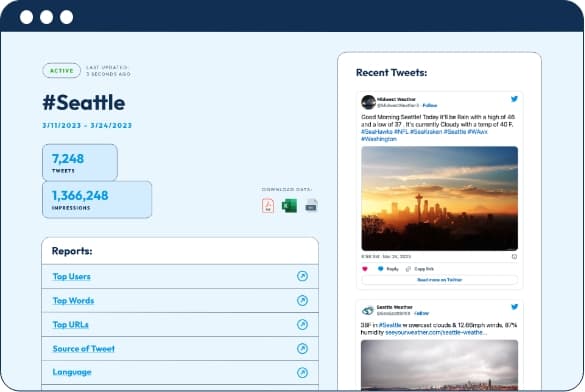
Tweet Archivist specializes in comprehensive historical data preservation and analysis that Twitter's native analytics don't provide. The service archives all your tweets permanently, tracks long-term performance trends, enables comparative analysis across time periods, and provides export capabilities for custom analysis. This becomes essential for serious users who need to understand performance evolution over months and years rather than just recent weeks.
Sprout Social delivers enterprise-grade analytics with competitive intelligence, sentiment analysis, and team performance tracking. The platform monitors how your Twitter metrics compare to competitors, analyzes sentiment in mentions and replies, and provides report automation for regular stakeholder updates. Pricing starts at two hundred forty-nine dollars monthly per user, targeting businesses with sophisticated analytics needs.
Social Blade offers free basic analytics tracking follower growth, engagement trends, and account rankings. The service provides historical charts showing follower count evolution and identifies growth patterns or anomalies. While limited compared to paid tools, Social Blade works well for users who want automated growth tracking without subscription costs.
Engagement Automation: The Danger Zone
Engagement automation creates the greatest temptation and highest risk. Tools that automatically engage with others' content promise to save enormous time but violate Twitter's policies and often backfire by making your account appear spammy or robotic.
Auto-liking tweets based on keywords or hashtags violates platform rules and creates obvious bot patterns. Users who receive likes from accounts that clearly auto-liked without reading the content feel spammed rather than appreciated. Twitter's systems detect these patterns and can shadow-ban or restrict accounts engaging in automated liking. The time saved doesn't justify the damage to your reputation and algorithmic standing.
Auto-follow and auto-unfollow tools that follow accounts based on criteria then unfollow them later represent classic spam tactics that Twitter aggressively polices. The platform limits how many accounts you can follow daily and monitors for suspicious following patterns. Mass following and unfollowing triggers restrictions quickly. Beyond platform penalties, this behavior is transparently manipulative and damages how people perceive your account.
Automated DM responses to new followers create terrible first impressions regardless of message quality. Everyone recognizes automated DMs and most find them annoying spam. If you can't personally thank new followers, don't thank them at all. Automated impersonal messages are worse than silence. This automation category consistently ranks among users' most-hated Twitter behaviors.
The only potentially acceptable engagement automation involves curating content for manual review before actually engaging. Tools that find relevant tweets based on your criteria and present them for you to decide whether to engage avoid the automation-of-engagement problem while providing the efficiency of not manually searching for content. You're automating discovery but maintaining human judgment on actual engagement decisions.
AI-Powered Content Creation Tools
AI content creation tools have proliferated rapidly, offering to generate tweets, threads, and responses automatically. These tools walk the line between helpful assistance and policy violations depending on implementation.
AI writing assistants that help you create content but require human editing and approval stay within acceptable use. Tools like ChatGPT, Claude, or purpose-built Twitter AI tools can generate draft tweets, suggest variations on your ideas, or help you refine messaging. The key is using AI as writing assistant while maintaining editorial control. You read AI output, edit it to match your voice, add your perspective, and approve each piece before publishing.
Completely automated AI posting without human review violates Twitter's policies on automated content and typically produces mediocre results that audiences recognize as artificial. AI writing lacks the personality, real experiences, and authentic voice that make Twitter content compelling. Fully automated AI accounts feel hollow and get exposed quickly when audiences notice the generic patterns and absence of genuine perspective.
The best practice involves using AI to accelerate your workflow rather than replace your judgment. Let AI generate first drafts, suggest angles on topics, or help you overcome writer's block. Then apply your expertise, voice, and editorial judgment to transform AI output into content that sounds authentically you. This approach captures AI's efficiency benefits while maintaining the authenticity that audiences value.
What Gets Accounts Banned or Restricted
Understanding which automation behaviors trigger enforcement helps you avoid costly mistakes that damage accounts you've spent time building. Twitter's enforcement targets specific patterns that indicate manipulation or spam.
Mass automated actions within short timeframes trigger the most obvious red flags. Following one hundred accounts within an hour, liking five hundred tweets in thirty minutes, or posting fifty tweets in a day all indicate bot behavior rather than human use. Twitter monitors action velocity and flags accounts exhibiting patterns impossible for humans without automation. Even if you're actually manually performing these actions, the pattern looks automated and triggers restrictions.
Repeated identical content posted across multiple accounts signals spam networks. If you manage multiple accounts, ensure each posts unique content rather than duplicating tweets across accounts. Twitter detects identical content patterns and interprets them as spam operations rather than legitimate multi-account management. Customize content for each account even when topics overlap.
Aggressive follow/unfollow cycling specifically designed to inflate follower counts while avoiding Twitter's following-to-follower ratio limits represents classic manipulation Twitter actively combats. Following accounts hoping they follow back, then unfollowing them days later to maintain ratios appears manipulative to both Twitter and users. This tactic damages reputation and typically results in account restrictions.
Coordinated inauthentic behavior where multiple accounts work together to artificially boost content or manipulate conversations violates platform integrity policies. This includes engagement pods that coordinate likes and retweets, multiple accounts promoting the same content identically, or fake accounts posing as different people while actually controlled by one entity. Twitter investigates suspicious coordination patterns and can suspend all involved accounts.
Using third-party tools that require your Twitter password rather than OAuth authentication creates security risks that Twitter explicitly warns against. Legitimate tools use official Twitter API with OAuth authorization that doesn't require sharing your password. Services demanding passwords may be planning account hijacking or using unauthorized automation that could get your account banned.
Automation Best Practices That Keep Accounts Safe
Implementing automation safely requires following practices that keep you clearly within platform guidelines while maximizing the efficiency benefits automation provides.
Maintain human involvement in all public-facing automation by reviewing scheduled content before it publishes, personally making engagement decisions even if discovery is automated, and monitoring automated systems regularly to ensure they're functioning as intended. Automation should make you more efficient, not make you absent from your account. Stay involved in what your automation publishes on your behalf.
Start conservatively with new automation tools by beginning with minimal settings, monitoring results carefully for any negative impacts, and gradually increasing automation scope only after confirming it works as expected without problems. Don't immediately max out settings on powerful automation tools. Ease into automation to catch potential issues before they cause serious damage.
Use only tools with established reputations and clear compliance with Twitter's policies. Research tools before connecting them to your account by checking how long they've operated, reading independent reviews, verifying they use official Twitter API rather than gray-market methods, and confirming they don't request more permissions than necessary. Avoid new tools with no track record or those making too-good-to-be-true promises.
Monitor your account health metrics regularly including follower growth patterns for sudden changes, engagement rates staying consistent or improving, and follower quality remaining high with real engaged accounts. Automation should improve these metrics or at minimum maintain them, never cause degradation. If metrics worsen after implementing automation, that's a red flag that something violates policies or damages your account.
Keep automation usage proportional to your account size and activity level. Scheduling five tweets daily makes sense for active accounts. Scheduling fifty tweets daily looks automated regardless of whether it technically complies with rules. Match automation levels to what human behavior looks like for your account size and niche. Extreme automation even when technically allowed often backfires by making you appear inauthentic.
Recommended Safe Automation Tool Stack
Building an automation stack that combines complementary tools maximizes efficiency while maintaining safety and compliance. This combination handles the major automation use cases without crossing into dangerous territory.
For content scheduling, use Buffer for its simplicity and reliability. The ten-dollar monthly pro plan provides unlimited scheduling, basic analytics, and clean interface that makes batching content straightforward. Buffer has operated for over a decade without policy violations, establishing trust that newer tools haven't earned. For pure scheduling needs, Buffer represents the sweet spot of capability, cost, and safety.
For analytics, invest in Twitter Premium at eight dollars monthly for official analytics access, supplemented by Tweet Archivist for long-term historical analysis and data export capabilities. This combination provides both real-time metrics from Twitter and comprehensive historical tracking from Tweet Archivist. The dual approach costs roughly thirty to forty dollars monthly but delivers analytical capabilities that inform meaningful optimization.
For content discovery, use Twitter Lists organized by topic to manually curate feeds of accounts worth engaging with regularly. This avoids automation entirely while making discovery efficient. Create lists for industry leaders, potential collaborators, target accounts, and content sources, then review these lists during dedicated engagement time. Lists provide similar efficiency to automated discovery without any automation risks.
For team coordination, Hootsuite or similar team-focused platforms become necessary when multiple people need to coordinate on shared accounts. The investment makes sense for businesses but individual creators rarely need team features. Evaluate team tools only when you actually have team coordination needs rather than adopting them preemptively.
This stack costs roughly twenty to fifty dollars monthly depending on which analytics tier you choose and whether you need team features. The investment delivers substantial time savings through efficient scheduling while maintaining complete safety from policy violations. You can automate the tedious aspects of Twitter presence while keeping the strategic and creative work under your direct control.
Frequently Asked Questions
Is Twitter automation allowed?
Yes, certain automation is explicitly allowed including scheduling tweets, analyzing your metrics, and managing your content workflow. Twitter prohibits automation that automatically engages with others' content, sends spam, or manipulates metrics. Focus automation on your own publishing and analysis rather than automatically interacting with others.
Will scheduling tweets hurt my engagement?
No, scheduled tweets perform identically to manually posted tweets. Twitter doesn't penalize scheduled content and most users can't tell whether tweets were scheduled or posted manually. The key is scheduling content for optimal times when your audience is active, which often improves engagement compared to posting whenever you happen to be available.
What's the best free Twitter automation tool?
Twitter's native scheduling feature provides basic scheduling at no cost. For analytics, Social Blade offers free growth tracking. Buffer's free plan allows scheduling ten posts. These free tools suffice for casual users or those testing automation before investing in paid tools. Serious users benefit from upgrading to paid tools for better features and reliability.
Can I automate Twitter likes and follows?
No, automating likes and follows explicitly violates Twitter's policies and risks account suspension. These actions constitute engagement automation that manipulates metrics. Even if tools offer this functionality, using it jeopardizes your account. Engage manually or don't engage at all—automated engagement isn't worth the risks.
How many tweets can I schedule without looking automated?
Most accounts safely schedule three to five tweets daily. Posting ten or more daily starts appearing automated even if technically compliant. Match your scheduled volume to what human posting patterns look like for your niche and account size. Extreme volume triggers suspicion regardless of whether you're technically following rules.
Do automation tools still work after Elon Musk's changes?
Yes, legitimate tools using official Twitter API continue working. Musk's changes primarily affected API pricing which some free tools couldn't sustain, causing them to shut down. Established paid tools adapted to new API pricing and function normally. Focus on established tools with track records of adapting to platform changes rather than free or new tools with uncertain viability.
Should I use AI to write my tweets?
AI works well as writing assistant but shouldn't fully replace you. Use AI to generate drafts, overcome writer's block, or suggest variations, but always review and edit output to match your voice and add your perspective. Fully automated AI posting without human review produces mediocre content audiences recognize as artificial and may violate Twitter policies on automated content.
What happens if I violate automation rules?
Violations can result in temporary account restrictions, permanent suspension of API access to automation tools, required phone verification to regain access, or permanent account suspension for serious or repeated violations. Penalties depend on severity and whether violations appear intentional. If restricted, stop problematic automation immediately and focus on manual activity while restrictions clear.
Safe Twitter automation focuses on scheduling, analytics, and workflow efficiency rather than automating engagement with others. Build your automation stack around tools like Buffer for scheduling and Tweet Archivist for analytics. Track your performance with proper analytics tools to measure whether automation improves your results while keeping you safely within platform guidelines.