Best Twitter Analytics Tools for 2026 (Free & Paid)
Introduction
Finding the best Twitter analytics tools in 2026 has become more challenging than ever. Since Twitter's transformation into X and the subsequent API restrictions, many beloved free analytics platforms have shut down, forcing marketers and businesses to rethink their social media measurement strategies.
Whether you're a solo creator tracking your first thousand followers, a growing brand managing multiple campaigns, or an enterprise team monitoring global conversations, the right twitter analytics software can transform raw data into actionable insights that drive real business results. This comprehensive guide reviews the top twitter analytics platforms for 2026, comparing features, pricing, and capabilities to help you make an informed decision.
Why Twitter Analytics Matter in 2026
Twitter remains one of the most influential social platforms for real-time conversations, brand building, and audience engagement. Despite the platform's evolution into X, the need for robust analytics has only intensified. Modern businesses face increasingly complex challenges: algorithm changes, shifting user behaviors, and the constant pressure to prove social media ROI.
The best twitter analytics tools help you answer critical questions that directly impact your bottom line. Which tweets drive the most website traffic? When is your audience most active and engaged? How do your metrics compare to competitors in your industry? What content formats generate the highest conversion rates? These insights separate successful Twitter strategies from random posting schedules.
According to recent research, brands that actively track and optimize based on Twitter analytics see engagement rates up to 3x higher than those using intuition alone. More importantly, data-driven Twitter strategies directly correlate with measurable business outcomes, from lead generation to customer retention. When combined with strategic growth services like those offered by Bulkoid.com, comprehensive analytics create a powerful framework for sustainable social media success.
What Changed for Twitter Analytics in 2026
The Twitter analytics landscape underwent seismic shifts in 2024 and early 2026. Understanding these changes is crucial for selecting tools that will remain viable long-term.
First and foremost, X (formerly Twitter) eliminated free access to native analytics for standard accounts. The analytics dashboard that once provided impression counts, engagement metrics, and audience demographics now requires an X Premium subscription ranging from $10 to $25 monthly. This change pushed many users and businesses toward third-party analytics solutions.
Simultaneously, X implemented strict API restrictions and pricing changes that forced numerous free Twitter analytics tools to shut down permanently. Popular platforms like Tweepi, ManageFlitter, MentionMapp, Social Bearing, and TweetReach closed their doors, unable to absorb the dramatically increased API costs. This consolidation left the market dominated by well-funded SaaS companies and specialized analytics platforms willing to invest in X's enterprise API access.
For marketers, these changes mean two things: budget allocation for analytics has become non-negotiable, and choosing a financially stable, well-established platform is more important than ever. The silver lining? Surviving tools have improved significantly, offering more sophisticated features, better data accuracy, and enhanced competitive intelligence capabilities.
Essential Features to Look For
Before diving into specific tool recommendations, let's establish the baseline features that separate exceptional twitter analytics software from basic stat trackers.
Core Metrics and Performance Tracking
Any legitimate analytics platform must provide comprehensive engagement metrics including likes, retweets, replies, quote tweets, link clicks, and video views. Beyond surface-level numbers, look for tools that calculate engagement rates, track follower growth velocity, and measure reach versus impressions to understand true content performance.
Historical Data Access
The ability to analyze historical trends separates powerful analytics from limited dashboards. The best tools offer unlimited historical data access, allowing you to identify seasonal patterns, track long-term growth trajectories, and understand how algorithm changes impact your performance over months or years.
Competitor Benchmarking
Understanding your performance in isolation provides limited value. Tools with robust competitor analysis features let you benchmark your metrics against industry standards, identify content gaps, and discover opportunities your competitors haven't exploited.
Hashtag and Keyword Tracking
For campaign tracking and brand monitoring, hashtag analytics are non-negotiable. Look for tools that provide real-time hashtag performance data, sentiment analysis, influencer identification within hashtag conversations, and the ability to track multiple campaigns simultaneously.
Audience Intelligence
Demographics, interests, behaviors, geographic distribution, and follower authenticity metrics help you understand who you're actually reaching. Advanced tools provide psychographic data, purchase intent signals, and audience overlap analysis with competitor accounts.
Custom Reporting and Exports
Whether you're reporting to clients, executives, or team members, flexible reporting capabilities save countless hours. White-label reports, scheduled automated delivery, customizable metrics dashboards, and clean data exports are essential for professional workflows.
Best Enterprise Twitter Analytics Tools
For large organizations with substantial social media budgets, these enterprise-grade platforms offer unmatched depth, sophistication, and cross-channel integration.
Sprout Social: The Comprehensive Powerhouse
Sprout Social consistently ranks as one of the best twitter analytics tools for enterprise teams managing complex, multi-channel social strategies. Its Twitter analytics module provides deep insights into account performance, audience engagement patterns, and content effectiveness across multiple X profiles simultaneously.
The platform's standout features include AI-powered content recommendations, sentiment analysis that goes beyond positive/negative classifications, competitive benchmarking with customizable peer groups, and integration with CRM systems for closed-loop ROI tracking. The Smart Inbox consolidates all Twitter interactions, making it invaluable for customer service teams monitoring brand mentions and support requests.
Pricing: Plans start at $249 per user per month for the Standard plan, with Professional ($399/user/month) and Advanced tiers available. Premium Analytics, which unlocks granular data filtering and custom metrics, costs an additional $1,200-$2,400 annually.
Best for: Marketing agencies, enterprise brands with dedicated social teams, organizations requiring robust reporting for stakeholders, and companies prioritizing social customer care integration.
Brandwatch: Built for Social Intelligence
Formerly one of the first tools to accurately track Twitter analytics at scale, Brandwatch has evolved into a comprehensive social intelligence platform. It excels at monitoring brand conversations, identifying emerging trends before they go viral, and providing competitive intelligence that informs broader marketing strategies.
Brandwatch's Twitter analytics capabilities include visual listening with image recognition technology, AI-driven insights that surface actionable recommendations automatically, crisis detection with real-time alerts, and influencer identification within niche communities. The platform monitors conversations across languages and geographic markets, making it ideal for global brands.
Best for: Mid-size to enterprise teams focused on brand reputation management, crisis prevention, and competitive intelligence gathering across global markets.
Talkwalker: AI-Driven Predictive Analytics
Talkwalker differentiates itself with Blue Silk™ AI technology that doesn't just report what happened but predicts emerging trends and recommends proactive strategies. The platform monitors 150+ million sources beyond just Twitter, providing context about how social conversations connect to broader cultural movements.
Key features include multilingual sentiment analysis across 187 languages, visual listening that identifies your brand in images and videos even without tags, customizable dashboards for different stakeholder needs, and automated alerts for unusual activity spikes or sentiment shifts.
Best for: Global enterprises, brands in crisis-prone industries (travel, hospitality, consumer goods), and organizations investing in predictive social strategies rather than reactive management.
Mid-Tier Solutions for Growing Businesses
These platforms strike the perfect balance between sophisticated features and reasonable pricing, making them ideal for growing businesses and serious marketers who need more than basic analytics but aren't ready for enterprise-level investment.
Hootsuite: The Industry Standard
Hootsuite pioneered social media management platforms and remains the industry benchmark two decades later. While known primarily for scheduling, its analytics capabilities have matured significantly, offering unified reporting across multiple Twitter accounts and other social channels.
Hootsuite's Twitter analytics include OwlyWriter AI assistant for content optimization, integrated social listening to track brand mentions and industry conversations, extensive third-party app integrations through their marketplace, and team collaboration features with approval workflows for regulated industries.
Pricing: Plans start at $99 per month, making it accessible for small to medium businesses. Enterprise plans with advanced analytics and API access require custom quotes.
Best for: Teams managing multiple social platforms simultaneously, agencies juggling numerous client accounts, and businesses prioritizing workflow efficiency alongside analytics.
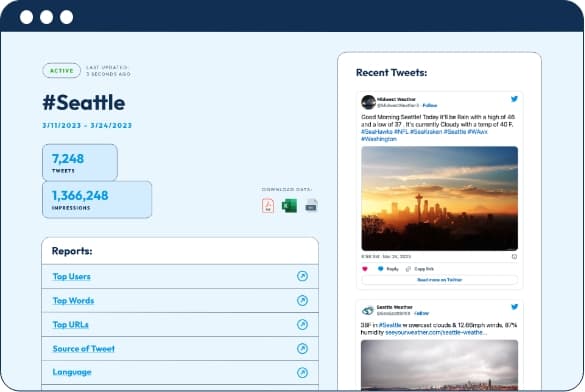
Tweet Archivist: Specialized Historical Analysis
For marketers who need deep historical data analysis and comprehensive Twitter search capabilities, Tweet Archivist offers unmatched specialization. Unlike general social media management tools, Tweet Archivist focuses exclusively on capturing, archiving, and analyzing Twitter data with powerful search and filtering capabilities.
The platform excels at historical campaign analysis, allowing you to track hashtag performance over extended periods, analyze conversation evolution, and preserve Twitter data for compliance and research purposes. Its advanced search operators let you slice data by date ranges, user types, engagement thresholds, and content types with precision that general analytics tools can't match.
Tweet Archivist's real-time tracking capabilities make it invaluable during live events, product launches, or crisis situations when you need to monitor and archive rapidly evolving conversations. The platform exports clean, analysis-ready data sets that integrate seamlessly with business intelligence tools for deeper cross-channel analysis.
Best for: Researchers, brand managers tracking long-term campaigns, compliance officers requiring Twitter data preservation, market researchers analyzing industry conversations, and agencies providing comprehensive reporting to clients. Explore pricing options to find the plan that matches your archiving and analysis needs.
SocialPilot: Budget-Friendly Comprehensive Solution
SocialPilot has emerged as the value leader among mid-tier twitter analytics platforms, offering impressive feature depth at prices that undercut competitors by 50-70%. Despite the affordable pricing, the platform delivers automated reporting, hashtag tracking, influencer identification, and content calendar integration.
The analytics module includes customizable report templates, scheduled report delivery to stakeholders, "Top Mentions Posts" tracking to identify influential amplifiers, and filters for deep diving into specific content types or time periods.
Pricing: Plans start at just $30 per month, making it one of the most affordable options for small businesses and growing brands.
Best for: Small businesses and startups with limited budgets, solo marketers managing multiple clients, and teams prioritizing value without sacrificing essential features.
Free and Budget-Friendly Options
While the free twitter analytics landscape has contracted significantly, several viable options remain for creators, small businesses, and anyone testing the waters before committing to paid platforms.
X Premium Analytics: Native Platform Insights
Since Twitter eliminated free analytics access, X Premium ($10-25/monthly) has become the baseline for anyone serious about tracking their account. The native analytics dashboard provides daily post performance tracking, audience demographic breakdowns, impression and engagement metrics, and identifies top-performing tweets by various metrics.
While not as sophisticated as third-party tools, X Premium analytics offer the advantage of complete data accuracy (since they come directly from the platform) and integration with Grok AI for conversational data queries.
Best for: Individual creators, small businesses just starting with Twitter analytics, and anyone wanting official platform data without third-party interpretation.
Buffer: Clean Interface, Free Tier Available
Buffer maintains a genuinely useful free plan that includes core analytics for up to three social channels. The free tier tracks post-level performance, provides basic audience insights, and offers strategic recommendations for improving engagement.
The clean, intuitive interface makes Buffer ideal for beginners who find comprehensive analytics platforms overwhelming. Paid tiers unlock demographic data, competitor benchmarking, and team collaboration features.
Pricing: Free plan available; paid plans start at reasonable monthly rates with significant feature upgrades.
Best for: Individual creators, small businesses testing social media management tools, and anyone prioritizing simplicity over comprehensive features.
Followerwonk: Deep Follower Analysis
Followerwonk has survived the Twitter analytics consolidation by focusing on a specific niche: follower analysis and audience intelligence. The free version lets you search Twitter bios, compare follower lists between accounts, and analyze follower characteristics including location, activity patterns, and social authority scores.
This specialization makes Followerwonk particularly valuable for influencer outreach, competitor follower analysis, and understanding audience overlap between related accounts.
Best for: Influencer marketers, content creators researching their audience composition, and brands identifying partnership opportunities based on follower overlap.
Twitonomy: Sophisticated Free Analytics
Twitonomy offers surprisingly sophisticated Twitter analytics in its free tier, including detailed engagement metrics, hashtag performance tracking, mention monitoring, and competitor tracking capabilities. The platform lets you analyze which tweets get retweeted most, track replies and mentions systematically, and access data on hashtag popularity within your content.
The premium plan ($19/month) unlocks unlimited historical data and advanced features, but the free version provides substantial value for budget-conscious users.
Best for: Small businesses and creators needing more depth than native analytics provide, users tracking specific hashtag campaigns, and anyone wanting competitor insights on a budget.
Specialized Analytics Tools
Beyond comprehensive platforms, several specialized tools excel at specific analytics use cases worth considering as supplements to your primary analytics solution.
Brand24: Real-Time Brand Monitoring
Brand24 specializes in brand mention monitoring with GPT-powered recommendations that translate raw mentions into strategic advice. The platform excels at sentiment analysis, influencer identification within brand conversations, and crisis detection through unusual activity alerts.
Its real-time tracking makes Brand24 invaluable during product launches, crisis situations, or any scenario where immediate awareness of brand mentions is critical.
Best for: Brand managers focused on reputation monitoring, PR teams tracking media coverage and influencer mentions, and businesses in industries where brand perception directly impacts sales.
Keyhole: Hashtag Campaign Specialists
Keyhole has built its reputation on superior hashtag and keyword tracking capabilities. The platform provides real-time campaign performance monitoring, multi-platform tracking (Twitter, Instagram, TikTok), sentiment analysis at the hashtag level, and influencer identification within campaign conversations.
For event marketers, product launch teams, and anyone running hashtag-centric campaigns, Keyhole's dedicated focus delivers insights general analytics tools miss.
Best for: Event marketers tracking conference hashtags, campaign managers measuring hashtag performance, and brands running influencer campaigns with specific tracking tags.
Tweet Binder: Historical Campaign Reports
Tweet Binder specializes in creating comprehensive reports for completed Twitter campaigns, events, and hashtag activities. The platform generates detailed historical analysis with visual social media walls, engagement metrics breakdowns, and influencer identification within past conversations.
This retrospective focus makes Tweet Binder perfect for post-campaign analysis, event ROI measurement, and creating client reports that showcase Twitter campaign success.
Best for:Event organizers measuring conference impact, agencies reporting on completed campaigns, and researchers analyzing historical Twitter conversations.
How to Choose the Right Tool
With dozens of twitter analytics platforms available, selecting the right one requires matching tool capabilities with your specific needs, budget, and organizational maturity.
Assess Your Primary Use Case
Start by identifying your main analytics objective. Are you primarily tracking content performance to optimize posting strategies? Then prioritize tools with robust engagement analytics and content intelligence. Focused on brand monitoring and crisis prevention? Social listening capabilities become paramount. Need comprehensive reporting for stakeholders? Look for customizable dashboards and white-label reports.
Consider Your Budget and ROI Expectations
Analytics tools range from free to thousands of dollars monthly. Rather than simply choosing the cheapest option, calculate the potential ROI of better insights. If improved Twitter strategy could generate even a handful of additional customers monthly, a $100-300/month analytics investment becomes trivially cheap. Conversely, if you're just starting to build your Twitter presence, free tools provide adequate feedback while you establish baseline metrics.
Evaluate Integration Requirements
The best twitter analytics tools integrate seamlessly with your existing marketing stack. If you use HubSpot for marketing automation, Salesforce for CRM, or Google Analytics for website tracking, prioritize analytics platforms with native integrations that enable closed-loop attribution and holistic customer journey analysis.
Test Before Committing
Most reputable platforms offer free trials ranging from 7 to 30 days. Take advantage of these trials to test real workflows with your actual accounts. Evaluate interface usability, report clarity, data accuracy against native Twitter analytics, and customer support responsiveness before making long-term commitments.
Plan for Scale
Choose tools that can grow with your needs. If you're managing one Twitter account today but expect to handle five accounts within a year, verify that your selected platform accommodates that growth without forcing a complete tool migration. Similarly, if you might expand into other social platforms, multi-channel analytics tools prevent future disruption.
Maximizing Your Analytics Investment
Purchasing twitter analytics software represents just the first step. Extracting maximum value requires strategic implementation, consistent monitoring, and translating insights into actionable optimizations.
Establish Baseline Metrics and Goals
Before diving into optimization, document your current performance across key metrics: engagement rate, follower growth rate, click-through rate on links, and conversions from Twitter traffic. Establish realistic improvement goals based on industry benchmarks and your historical performance.
Create a Consistent Review Cadence
Analytics only drive improvement when reviewed consistently and acted upon. Establish weekly reviews for tactical optimizations (best posting times, high-performing content formats), monthly reviews for strategic adjustments (content themes, campaign effectiveness), and quarterly reviews for big-picture strategy evaluation.
Combine Analytics with Growth Strategies
Analytics illuminate what's working, but sustainable Twitter growth requires combining insights with proactive audience building. Services like Bulkoid.com complement analytics by accelerating follower growth, engagement, and reach while your analytics tools track performance and identify optimization opportunities. This combination of strategic growth and data-driven optimization creates compound effects that organic-only strategies can't match.
Focus on Actionable Insights
The best twitter analytics tools generate mountains of data, but not all metrics deserve equal attention. Focus on metrics that directly connect to business outcomes: website traffic from Twitter, lead generation, customer acquisition cost, and customer lifetime value from social-acquired customers. Vanity metrics like follower count matter less than engagement quality and conversion rates.
Document What You Learn
Create a simple system for documenting insights and their resulting actions. When you discover that video content generates 3x more engagement than text posts, document that finding and implement a content strategy shift. Track whether the hypothesis proves true over subsequent weeks. This scientific approach transforms random optimizations into systematic improvement.
Conclusion
The best twitter analytics tools for 2026 represent a more consolidated but ultimately more sophisticated market than existed just two years ago. While the elimination of many free options created initial frustration, surviving platforms have invested heavily in features, accuracy, and user experience.
For enterprise teams requiring comprehensive cross-channel analytics, deep competitive intelligence, and AI-powered insights, platforms like Sprout Social, Brandwatch, and Talkwalker justify their premium pricing through sophisticated capabilities and dedicated support. Mid-tier solutions like Hootsuite, Tweet Archivist, and SocialPilot deliver exceptional value for growing businesses that need powerful analytics without enterprise budgets.
Budget-conscious creators and small businesses can still access meaningful analytics through free tiers from Buffer and Twitonomy, supplemented by X Premium's native dashboard. Specialized tools like Brand24, Keyhole, and Tweet Binder fill specific niches that general platforms don't address comprehensively.
Regardless of which twitter analytics platform you choose, remember that tools only create value when insights drive action. Establish consistent review rhythms, focus on metrics that matter to your business outcomes, and combine analytics with proactive growth strategies to build a Twitter presence that delivers measurable ROI. The right analytics foundation transforms Twitter from a time-consuming obligation into a strategic channel that generates leads, builds brand authority, and drives revenue growth.
Start by exploring Tweet Archivist's specialized analytics capabilities for historical data analysis, then complement your chosen platform with the insights, strategies, and tools that align with your specific goals and budget. The analytics revolution on Twitter is here—make sure you're equipped to take full advantage.