Twitter Account Analysis: Complete Guide to Analyze Any Account (2026)
Introduction to Twitter Account Analysis
Twitter account analysis has become an essential skill for businesses, marketers, and researchers in 2026. Whether you're vetting potential influencer partners, monitoring competitor strategies, or optimizing your own Twitter presence, comprehensive account analysis provides the actionable insights you need to make data-driven decisions.
A twitter account analysis involves systematically examining key performance metrics, audience characteristics, content patterns, and engagement behaviors to understand how an account performs and who interacts with it. Unlike basic follower counts, proper twitter profile analysis digs deep into engagement quality, follower authenticity, posting strategies, and competitive positioning.
The landscape of Twitter analytics has shifted dramatically. Since X's API changes, native analytics now requires a premium subscription starting at $10-25 monthly, making third-party twitter analyzer tools more valuable than ever for comprehensive analysis.
Why Businesses Need Twitter Account Analysis
Strategic account analysis serves multiple critical business functions:
- Competitor Intelligence: Understanding competitor content strategies, posting patterns, and audience engagement helps identify market opportunities and benchmark your performance
- Influencer Vetting: Before committing budget to influencer partnerships, analyze twitter accounts to verify authentic engagement, audience demographics, and content alignment with your brand
- Brand Monitoring: Track mentions, sentiment, and conversation patterns around your brand to manage reputation and identify customer service opportunities
- Content Optimization: Analyze which content types, topics, and posting times drive maximum engagement for your target audience
- Campaign Measurement: Assess the impact of marketing campaigns on follower growth, engagement rates, and brand awareness
Key Metrics for Twitter Account Analysis
Effective twitter account analysis requires tracking the right metrics. While vanity metrics like raw follower counts grab attention, deeper performance indicators reveal true account health and engagement quality.
Engagement Rate and How to Calculate It
Your twitter engagement rate measures how actively your audience interacts with content relative to your reach. This metric is crucial because it reveals content resonance better than any other single indicator.
The standard formula for engagement rate is: (Likes + Retweets + Replies + Quote Tweets) ÷ Impressions × 100
When analyzing accounts you don't own (lacking impression data), use this public formula: (Likes + Retweets + Replies) ÷ Followers × 100
According to 2026 benchmarks, the median twitter engagement rate across all industries is 0.029%. Top-performing brands achieve 0.08% or higher, while anything below 0.029% suggests room for improvement.
Understanding these benchmarks helps contextualize performance. A sports team averaging 0.072% engagement performs exceptionally well, while a media company at 0.009% faces engagement challenges despite potentially large follower counts.
For more detailed guidance on calculating and improving engagement, see our comprehensive twitter engagement rate guide.
Follower Growth Patterns and Trends
When you analyze twitter account follower growth, you're not just counting new followers—you're identifying patterns that reveal content effectiveness, campaign impact, and audience development strategies.
Key follower growth metrics include:
- Net Growth Rate: New followers minus unfollows over a specific period
- Growth Velocity: Rate of change in follower acquisition (accelerating, steady, or declining)
- Growth Correlation: How follower spikes align with specific content, campaigns, or external events
- Follower-to-Following Ratio: Established brands typically follow far fewer accounts than follow them, while fake accounts show suspicious 1:1 ratios
Sudden follower spikes warrant investigation. They may indicate successful viral content, paid promotion campaigns, or potentially problematic bought followers. Natural growth typically shows steady, gradual increases with occasional peaks around major announcements or viral moments.
Learn advanced techniques for monitoring and accelerating growth in our guide on how to track twitter follower growth.
Content Performance Metrics
Analyzing individual tweet performance reveals what resonates with audiences and informs content strategy optimization.
Essential content metrics include:
- Impressions: Total views of your tweets, indicating reach and visibility
- Link Click-Through Rate: Percentage of viewers who click links in tweets, measuring call-to-action effectiveness
- Video View Rate: Completion rates for video content, showing content quality and relevance
- Reply Quality: Not just reply volume, but sentiment and conversation depth
- Retweet-to-Like Ratio: Higher retweet ratios indicate shareable, valuable content worth amplifying
Top-performing content typically earns engagement within the first 2-3 hours after posting. Content that gains traction later often benefits from algorithmic amplification or shares from influential accounts.
Posting Frequency and Timing
Strategic posting schedules directly impact visibility and engagement. Twitter account analysis should examine both how often accounts post and when they publish content.
Current benchmarks show top brands post an average of 4.2 times weekly, while the median is 3.31 posts per week. However, optimal frequency varies dramatically by audience, industry, and content quality. Analysis should focus on finding each account's sweet spot where engagement remains strong without audience fatigue.
Timing analysis reveals when target audiences are most active and receptive. Rather than following generic "best times to post" advice, analyze specific account patterns to identify when their unique audience engages most.
Audience Demographics and Behavior
Understanding who follows and engages with an account provides strategic context for all other metrics.
Key audience characteristics to analyze:
- Geographic Distribution: Where followers are located affects optimal posting times and cultural content relevance
- Language Preferences: Primary languages spoken by audience members
- Interest Categories: What topics, brands, and accounts your audience also follows
- Professional Demographics: Industries, job titles, and professional contexts (particularly valuable for B2B)
- Engagement Patterns: Whether audiences primarily lurk, like, retweet, or actively reply
How to Analyze Twitter Engagement Rate
Twitter engagement rate analysis goes beyond simple calculations—it requires context, comparison, and pattern identification to generate actionable insights.
Start by establishing your baseline engagement rate using the formulas provided earlier. Then segment analysis by:
Content Type: Calculate separate engagement rates for text tweets, images, videos, polls, and threads. Most brands discover certain formats consistently outperform others for their specific audience.
Topic Categories: Group tweets by theme or topic to identify which subjects resonate most. A technology brand might find product announcements underperform while educational content thrives.
Time Periods: Compare engagement rates across different times of day, days of week, and seasonal periods. Pattern identification reveals optimal publishing windows.
Campaign Attribution: Isolate engagement rates for specific marketing campaigns versus organic content to measure campaign effectiveness accurately.
Industry-Specific Engagement Standards
Generic benchmarks provide starting points, but industry-specific standards offer more relevant comparison frameworks:
- Sports Teams: 0.072% median engagement rate (exceptionally high due to passionate fanbases)
- Higher Education: 0.05% median rate
- Nonprofits: 0.04% median rate (strong emotional connections drive engagement)
- Alcohol Brands: 0.04% median rate
- Media Companies: 0.009% median rate (large followings with passive consumption patterns)
When you analyze twitter account engagement against these benchmarks, focus on trends over time rather than single data points. A consistent upward trajectory matters more than hitting arbitrary targets immediately.
Improving Engagement Through Analysis
The ultimate goal of engagement rate analysis is improvement. After identifying patterns, implement these evidence-based strategies:
- Double down on high-performing content formats and topics
- Optimize posting schedule based on audience activity patterns
- Increase two-way conversation through questions and replies
- Test different content mixes to discover new engagement opportunities
- Monitor competitors' engagement tactics for inspiration (without copying)
For comprehensive strategies on boosting twitter performance, explore our twitter analytics best practices guide.
Analyzing Follower Quality and Detecting Fake Accounts
Follower count means nothing if those followers are fake, inactive, or bot accounts. Sophisticated twitter account analysis must assess follower quality to determine true influence and reach.
Research consistently shows that 5-30% of Twitter followers are fake accounts, spam profiles, or inactive users. This widespread issue affects influencer credibility, campaign ROI, and competitive analysis accuracy.
Signs of Fake Followers and Bot Accounts
When you analyze twitter account follower quality, watch for these red flags:
Profile Characteristics:
- Generic profile images (stock photos, default eggs, or AI-generated faces)
- Usernames with random number strings (e.g., @user847362937)
- Empty or nonsensical bios
- Accounts created recently with high follower counts
- Location fields listing unusual or inconsistent places
Activity Patterns:
- No tweets or years since last tweet
- Extremely high following-to-follower ratios (following 5,000+ accounts with 50 followers)
- Zero engagement history (no likes, retweets, or replies visible)
- Repetitive or spam content when they do tweet
- Following and unfollowing patterns indicating follow-back farming
Engagement Anomalies:
- Sudden follower spikes without corresponding viral content or media coverage
- High follower counts but minimal engagement on posts
- Follower demographics that don't match content language or target market
Tools for Fake Follower Audits
Manual review becomes impractical beyond small samples. Professional twitter analyzer tools automate fake follower detection:
FollowerAudit uses AI-driven algorithms to identify fake followers, spam accounts, and inactive profiles by analyzing following ratios, suspicious activities, and engagement patterns.
SparkToro's Fake Followers Audit samples 2,000 random followers and runs diagnostic checks that correlate with fake follower indicators, providing percentage estimates of account quality.
Tweet Archivist offers comprehensive account analysis including follower quality assessment, engagement authenticity scoring, and audience demographic verification for thorough influencer vetting.
These tools generate quality scores ranging from "excellent" (>90% authentic followers) to "poor" (<70% authentic followers), helping businesses make informed partnership decisions.
Impact of Fake Followers on Credibility
Beyond vanity metrics, fake followers create real business problems:
- Wasted Marketing Budget: Influencer campaigns targeting fake followers generate zero ROI
- Skewed Analytics: Fake followers distort engagement rates and make performance tracking unreliable
- Reputation Damage: Brands caught with purchased followers suffer credibility losses
- Algorithm Penalties: Social platforms increasingly deprioritize accounts with suspicious follower patterns
Twitter Competitor Analysis Step-by-Step
Competitive intelligence through twitter account analysis reveals market positioning opportunities, content gaps, and audience insights that inform strategic decisions.
A methodical approach to competitor analysis delivers actionable intelligence rather than surface-level observations.
Step 1: Identifying the Right Competitors to Track
Effective competitor analysis requires selecting the right comparison accounts across three categories:
Direct Competitors: Brands offering identical or nearly identical products/services to the same target audience. These accounts provide the most relevant benchmarks for your performance.
Indirect Competitors: Companies solving similar customer problems through different approaches. They compete for audience attention and budget even without direct product overlap.
Aspirational Competitors: Larger or more established accounts in your industry whose performance represents long-term goals. Their strategies offer valuable lessons even when direct comparison seems unfair.
Most businesses should track 3-5 competitors across these categories to gain well-rounded market perspective without analysis paralysis.
Step 2: Key Metrics for Competitive Benchmarking
Once competitors are identified, systematically track these comparative metrics:
Follower Growth Velocity: How quickly are competitors gaining followers compared to your account? Accelerating growth often signals successful campaigns or content strategies worth investigating.
Engagement Rate Comparison: Calculate engagement rates for all tracked competitors using consistent formulas. This reveals who builds the most loyal, active communities regardless of follower count differences.
Content Performance Patterns: Analyze competitors' top-performing tweets by engagement. What formats, topics, and approaches consistently resonate? Which content flops despite high production value?
Posting Frequency and Timing: Document how often competitors post and when they publish. High-performing accounts often discover optimal schedules through testing—learn from their experiments.
Content Mix Distribution: Categorize competitors' content into promotional, educational, entertaining, and conversational buckets. The balance reveals strategic priorities and audience preferences.
Hashtag Strategies: Examine which hashtags competitors use, how many per tweet, and whether they create branded hashtags that gain traction.
Reply and Engagement Behavior: How actively do competitors respond to mentions and comments? Community management approach significantly impacts brand perception and loyalty.
Step 3: Creating Actionable Competitive Insights
Raw competitive data only becomes valuable when translated into strategic actions.
Conduct quarterly SWOT analysis based on competitive intelligence:
Strengths: Where does your account outperform competitors? Double down on these differentiators.
Weaknesses: Where do competitors consistently beat you? Prioritize closing critical gaps.
Opportunities: What audiences, content types, or conversations are competitors missing? These represent white space for differentiation.
Threats: What emerging competitor strategies could erode your position if left unaddressed?
Translate SWOT findings into three-horizon action plans:
- Quick Wins (1 month): Easy optimizations that close obvious gaps (e.g., increasing posting frequency to match competitors)
- Medium-Term Improvements (1-3 months): Content strategy adjustments, new formats, or community management enhancements
- Long-Term Strategic Shifts (3-6 months): Major positioning changes, audience expansions, or campaign launches inspired by competitive intelligence
Best Twitter Account Analysis Tools
Choosing the right twitter analyzer dramatically impacts analysis depth, efficiency, and actionability. The 2026 tool landscape offers options ranging from free basic analyzers to comprehensive enterprise platforms.
Tweet Archivist for Comprehensive Analysis
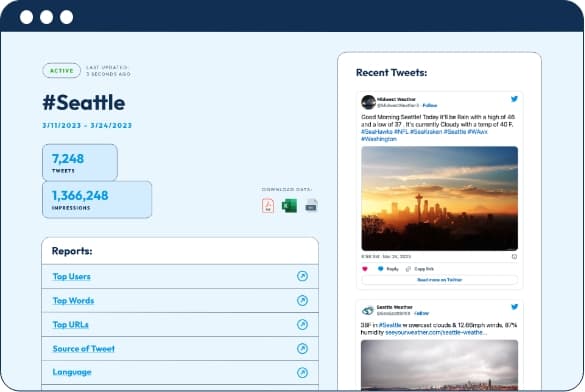
Tweet Archivist provides professional-grade twitter account analysis designed for businesses, researchers, and marketers who need reliable, comprehensive insights.
Key capabilities include:
Historical Data Access: Unlike native Twitter analytics with limited history, Tweet Archivist archives complete account histories enabling long-term trend analysis and pattern identification spanning months or years.
Competitor Tracking: Analyze any public Twitter account, not just your own. Track competitor performance, influencer authenticity, and industry benchmarks with comprehensive metrics.
Advanced Sentiment Analysis: Understand the emotional tone of conversations around your brand, products, or industry topics with AI-powered sentiment scoring.
Hashtag Analytics: Track hashtag performance, reach, and engagement to optimize campaign hashtags and identify trending topics relevant to your audience.
Audience Intelligence: Deep demographic analysis reveals who engages with tracked accounts, including geographic distribution, language preferences, and professional characteristics.
Fake Follower Detection: Built-in quality scoring identifies suspicious follower patterns, helping vet influencers and assess account authenticity.
Custom Reports and Exports: Generate presentation-ready reports and export raw data for deeper analysis in spreadsheets or business intelligence tools.
Tweet Archivist bridges the gap between limited free tools and enterprise platforms with overwhelming complexity, offering the depth marketers need at accessible pricing.
Free vs Paid Twitter Analyzers
Understanding the tradeoffs between free and paid tools helps allocate analytics budget effectively.
Free Twitter Analysis Tools:
Free options have become increasingly limited following X's API restrictions. Most now offer:
- Basic profile statistics (follower count, tweet count, account age)
- Limited historical data (last 30-90 days typically)
- Rate limits that restrict analysis frequency
- No competitor tracking for accounts you don't own
- Generic benchmarks without industry context
Popular free options include Twitter's native analytics (requiring premium subscription), Foller.me for basic profile analysis, and TweetDeck for account monitoring. While useful for casual users, these tools lack depth for serious business analysis.
For an overview of available free options, see our comparison of free twitter analytics tools.
Paid Twitter Analysis Platforms:
Professional tools justify costs through:
- Unlimited historical data access
- Comprehensive competitor analysis for any public account
- Advanced features like sentiment analysis, influencer scoring, and audience overlap
- Higher data accuracy and reliability
- Customer support and training resources
- API access for custom integrations
- Multi-user access for teams
Leading paid platforms include Sprout Social (comprehensive social media management), Brandwatch (enterprise social listening), Hootsuite (multi-platform management), and Tweet Archivist (Twitter-specialized analytics).
Choosing the Right Tool for Your Needs
Select twitter analyzer tools based on specific use cases and requirements:
For Small Businesses and Solo Marketers: Start with Twitter's native analytics supplemented by Tweet Archivist for competitor intelligence and historical trend analysis. This combination provides essential insights without enterprise complexity.
For Marketing Agencies: Choose platforms offering multi-account management, white-label reporting, and client-specific dashboards. Sprout Social and Hootsuite excel here.
For Enterprise Brands: Invest in comprehensive platforms with advanced features like crisis detection, global listening, and integration with marketing automation tools. Brandwatch and Talkwalker serve enterprise needs.
For Researchers and Analysts: Prioritize tools with robust data export, API access, and historical archives. Tweet Archivist's research-grade archives and export capabilities serve academic and market research needs.
For Influencer Marketing Teams: Focus on tools with strong authenticity verification, audience demographic analysis, and influencer discovery features. Platforms like Upfluence and AspireIQ supplement Twitter-specific tools.
Advanced Analysis Techniques
Beyond basic metrics, sophisticated twitter account analysis employs advanced techniques that reveal deeper strategic insights.
Sentiment Analysis for Brand Monitoring
Sentiment analysis uses natural language processing to determine whether mentions and conversations about your brand, products, or industry are positive, negative, or neutral.
Advanced sentiment analysis goes beyond simple positive/negative classification to identify:
- Emotional Intensity: How strongly people feel (mildly positive vs. enthusiastically positive)
- Emotional Categories: Specific emotions like joy, anger, frustration, trust, or disappointment
- Trending Sentiment Shifts: When and why sentiment changes, correlating with specific events, announcements, or campaigns
- Sentiment by Audience Segment: How different customer groups feel differently about your brand
Sentiment insights inform crisis management, product development, campaign messaging, and customer service priorities. Tracking sentiment trends over time reveals whether brand perception improves or deteriorates.
Hashtag Performance Tracking
Strategic hashtag analysis identifies which tags drive discovery, engagement, and conversation participation.
Key hashtag metrics include:
- Reach and Impressions: How many users see tweets with specific hashtags
- Engagement Rate: Whether hashtagged tweets perform better or worse than untagged content
- Hashtag Conversation Size: Total tweets using the tag and growth velocity
- Influencer Adoption: Whether influential accounts use and amplify your hashtags
- Sentiment Distribution: Whether hashtag conversations are predominantly positive or negative
Branded hashtag campaigns require particularly careful tracking. Success means the hashtag gains organic traction beyond owned media, with customers and fans adopting it naturally.
Audience Overlap Analysis
Understanding which audiences overlap between your account and competitors or complementary brands reveals partnership opportunities and targeting insights.
Audience overlap analysis answers:
- What percentage of competitor followers also follow you?
- Which complementary brands share significant audience overlap, suggesting partnership potential?
- What accounts do your followers engage with most, revealing their interests and behaviors?
- Which competitor audiences have minimal overlap with yours, representing growth opportunities?
High overlap with direct competitors confirms you're reaching the right audience. Overlap with complementary but non-competing brands suggests co-marketing opportunities or cross-promotion potential.
Content Gap Identification
Content gap analysis reveals topics, formats, or conversation areas where competitors engage audiences but you're absent.
Systematic gap analysis involves:
- Cataloging all content themes competitors address
- Mapping which themes you cover and which you ignore
- Identifying high-performing competitor content in your gap areas
- Assessing whether gaps represent strategic opportunities or intentional choices
- Prioritizing which gaps to fill based on audience interest and strategic fit
Not every gap demands filling—some represent intentional positioning differences. However, significant gaps in high-engagement topics often reveal missed opportunities.
How to Analyze Influencer Twitter Accounts
Influencer marketing ROI depends entirely on partnering with authentic, aligned creators who actually reach and influence your target audience. Rigorous twitter account analysis separates genuine influencers from those with purchased followers and minimal actual influence.
Vetting Influencers for Partnerships
Before committing marketing budget, analyze potential influencer partners across multiple dimensions:
Audience Authenticity and Quality: Run fake follower audits to verify the influencer's audience is real. Aim for accounts with 85%+ authentic followers. Also examine follower demographics—do they match your target customer profile?
Engagement Rate and Quality: Calculate the influencer's engagement rate using the public formula. Compare against industry benchmarks, considering that accounts with larger followings typically have lower rates. Also review engagement quality—are replies substantive conversations or just emoji spam?
Content Alignment: Analyze the influencer's typical content themes, tone, and values. Strong alignment with your brand ensures authentic promotion that resonates with both your and their audience.
Posting Consistency: Examine posting frequency and consistency over time. Sporadic posters with long gaps deliver less value than consistently active influencers who maintain audience engagement.
Previous Brand Partnerships: Review past sponsored content to assess promotion style, disclosure practices, and results (when visible). Too many sponsorships can dilute effectiveness and alienate audiences.
Authenticity Signals to Look For
Genuine influencers display distinctive characteristics that separate them from fake accounts or those with purchased influence:
- Organic Follower Growth: Steady, gradual growth patterns with occasional spikes tied to specific viral content or media features
- Two-Way Conversations: Influencers actively reply to followers, engage in discussions, and build community rather than broadcasting one-way
- Audience Loyalty: Followers defend the influencer during controversies, create fan content, and participate in community rituals
- Topic Authority: The influencer demonstrates deep knowledge, shares original insights, and earns media citations or speaking opportunities
- Engagement Consistency: Similar engagement rates across posts rather than wild swings suggesting purchased engagement
ROI Indicators for Influencer Campaigns
Beyond reach and impressions, analyze these indicators that predict actual influencer marketing ROI:
Link Click-Through Rates: When influencers share links, what percentage of viewers click? High CTR indicates persuasive influence over audience behavior.
Conversion-Tracking URLs: Use UTM parameters or affiliate links to track which influencers drive actual website visits, signups, or purchases—the ultimate ROI proof.
Share of Voice Growth: Does partnering with the influencer increase mentions of your brand in relevant conversations?
Follower Acquisition: Do you gain followers when the influencer mentions your account? Quality influencer partnerships drive audience growth.
Content Longevity: Does the influencer's sponsored content continue generating engagement days or weeks after posting, or does it immediately die? Longevity indicates genuine audience interest.
Analyzing Your Own Twitter Account
While competitive and influencer analysis provide external insights, regularly analyzing your own twitter account performance drives continuous improvement and strategic optimization.
Setting Up Regular Account Audits
Establish a consistent schedule for comprehensive account analysis:
Weekly Quick Checks: Review basic metrics (follower growth, top tweets, engagement rate) to catch immediate issues or opportunities. Takes 15-20 minutes.
Monthly Deep Dives: Analyze content performance patterns, audience growth trends, and competitive positioning. Identify tactical adjustments for the coming month. Allocate 1-2 hours.
Quarterly Strategic Reviews: Comprehensive analysis including sentiment trends, content strategy effectiveness, competitive benchmark updates, and goal progress. Inform quarterly planning. Requires 3-4 hours.
Annual Strategic Planning: Full-year retrospective analyzing growth trajectory, major campaign results, strategic positioning changes, and industry evolution. Sets annual goals and strategy. Full-day exercise.
For detailed guidance on leveraging native analytics, see our tutorial on how to check twitter analytics.
Identifying Improvement Opportunities
Account audits should surface specific, actionable improvement opportunities across multiple dimensions:
Content Strategy Optimization: Which content types, topics, and formats consistently outperform others? Where should you double down, and what should you eliminate or reduce?
Posting Schedule Refinement: Are you posting when your specific audience is most active and receptive? Small timing adjustments often deliver significant engagement improvements.
Engagement Practice Enhancement: How quickly and thoroughly do you respond to mentions and replies? Building genuine community requires consistent two-way conversation.
Profile Optimization: Does your bio clearly communicate value to potential followers? Is your profile image professional and on-brand? Are pinned tweets strategically selected?
Link and CTA Effectiveness: Are your calls-to-action clear and compelling? Do tweets with links perform well, or do they underperform?
Tracking Progress Over Time
Improvement requires measurement. Establish clear baselines and track progress against goals:
Define SMART Goals: Set Specific, Measurable, Achievable, Relevant, Time-bound objectives like "increase engagement rate from 0.025% to 0.035% within 6 months" rather than vague aspirations like "be better at Twitter."
Create Tracking Dashboards: Use Tweet Archivist or other analytics tools to build dashboards that visualize key metrics over time, making trends immediately apparent.
Celebrate Milestones: When you hit follower milestones, engagement rate improvements, or other goals, acknowledge and analyze what drove success.
Course-Correct Quickly: If metrics trend wrong direction for 2-3 weeks, don't wait for quarterly review—investigate immediately and adjust tactics.
Consistent tracking transforms analytics from interesting data into strategic decision-making fuel that drives continuous improvement.
Common Mistakes in Twitter Account Analysis
Even experienced marketers fall into analysis traps that waste time and lead to poor decisions. Avoid these common pitfalls:
Focusing on Vanity Metrics
Raw follower counts, impression numbers, and reach statistics feel impressive but rarely correlate with business outcomes.
An account with 100,000 followers and 0.01% engagement rate (10,000 impressions per tweet, 10 engagements) delivers less value than an account with 10,000 followers and 0.1% engagement rate (5,000 impressions per tweet, 50 engagements). The smaller account has more genuine influence and community.
Focus analysis on metrics tied to business goals: engagement quality, conversion rates, customer acquisition, and brand sentiment—not vanity numbers that look good in presentations but don't drive results.
Ignoring Context and Benchmarks
Metrics without context are meaningless. A 0.04% engagement rate could represent either excellent or poor performance depending on industry, account size, and content type.
Always contextualize performance against:
- Industry-specific benchmarks for relevant comparison
- Your own historical performance to identify trends
- Competitor performance for competitive positioning
- Goal targets that define success for your business
An engagement rate that declined from 0.06% to 0.05% warrants concern even though 0.05% exceeds industry averages. The downward trend matters more than single-point comparisons.
Analysis Without Action Plans
The gravest mistake is conducting thorough analysis but never translating insights into strategic actions.
Every analysis session should conclude with clear action items:
- What specifically will we do differently based on these insights?
- Who owns each action item and by when will they complete it?
- How will we measure whether these changes improve performance?
- When will we review results and iterate?
Analysis for analysis's sake wastes time. The goal isn't understanding data—it's using data to make better decisions that improve business outcomes.
Conclusion and Next Steps
Mastering twitter account analysis transforms social media from a guessing game into a strategic, data-driven channel that delivers measurable business results. Whether you're optimizing your own account, vetting influencer partners, or tracking competitors, comprehensive analysis provides the insights needed to make confident decisions.
The essential elements of effective analysis include:
- Tracking the right metrics—engagement rate, follower quality, content performance, and audience characteristics—rather than vanity numbers
- Using professional twitter analyzer tools that provide depth and historical context beyond free basic tools
- Conducting regular audits on consistent schedules to catch trends early and optimize continuously
- Translating data insights into specific, actionable strategy improvements
- Benchmarking against industry standards and competitors for relevant context
The Twitter analytics landscape in 2026 requires more sophisticated approaches than ever before. Native analytics limitations, API restrictions, and increasing bot accounts make third-party professional tools essential for reliable insights.
Start Your Twitter Analysis Today
Ready to unlock the strategic insights hidden in your Twitter data? Tweet Archivist provides comprehensive twitter account analysis tools designed for businesses, marketers, and researchers who demand reliable, actionable analytics.
Our platform offers:
- Complete historical data archives for long-term trend analysis
- Comprehensive competitor and influencer account tracking
- Advanced sentiment analysis and audience intelligence
- Fake follower detection and authenticity scoring
- Custom reports and data exports for deeper analysis
- Professional-grade accuracy without enterprise complexity
Transform your Twitter presence with data-driven decisions. Explore Tweet Archivist's twitter analytics capabilities and start your free trial today to experience the difference comprehensive account analysis makes for your social media strategy.
Social media success doesn't happen by accident—it's built through consistent analysis, strategic optimization, and data-driven decision-making. Start analyzing smarter today.