How to Buy Twitter Likes and Retweets Safely in 2026 (Without Getting Banned)
Why Buy Twitter Engagement?
Twitter's algorithm prioritizes content that generates immediate engagement. When your tweet receives likes and retweets quickly after posting, the platform interprets this as a signal that your content is valuable and shows it to more users. This creates a snowball effect where initial engagement leads to organic reach, which generates additional engagement from real users who discover your content through their feeds.
The challenge is breaking through the noise when you're starting out or trying to establish credibility in a competitive niche. Tweets that receive zero engagement in the first few minutes often die in obscurity, never reaching beyond your existing followers. Meanwhile, tweets that gain rapid early engagement can reach thousands or even millions of users through Twitter's recommendation algorithm. This reality has created a legitimate market for engagement boosting services that help content gain initial traction.
Businesses use purchased engagement strategically for product launches, important announcements, and campaigns where visibility matters. Influencers and creators leverage it to establish social proof that attracts organic followers and brand partnerships. Even established accounts occasionally boost critical content to ensure it receives the visibility it deserves. When done correctly with real engagement from legitimate services, this approach amplifies your message without violating platform policies or damaging your reputation.
Risks You Should Know About
The Twitter engagement industry includes both legitimate marketing services and scam operations that can seriously damage your account. Understanding these risks before purchasing any engagement is essential for protecting your account and reputation while still benefiting from growth services.
Bot engagement represents the biggest risk factor. Services that deploy automated bot accounts to like and retweet your content create obvious patterns that Twitter's spam detection systems flag immediately. These bots typically engage within seconds of each other, come from accounts with no posting history, and show clear automation patterns. Twitter regularly purges bot accounts in massive sweeps, and accounts frequently engaged by bots can face restrictions or permanent suspension.
Fake engagement also destroys your analytics and metrics. When you can't trust your engagement numbers, you lose the ability to understand what content actually resonates with real users. This polluted data makes it impossible to optimize your strategy or demonstrate genuine influence to potential partners or sponsors. Brands conducting due diligence can easily spot fake engagement patterns, costing you partnership opportunities worth far more than you paid for worthless bot likes.
The reputational damage from being exposed for buying fake engagement can permanently harm your credibility. In an era where influencer fraud makes headlines regularly, audiences and brands have become sophisticated at detecting inauthentic activity. A single viral callout thread exposing your fake engagement can undo years of authentic audience building. This risk makes choosing legitimate services that deliver real engagement absolutely critical.
However, working with reputable services that use ethical marketing strategies to generate real engagement from actual users carries minimal risk. These services don't violate Twitter's terms of service because they're essentially running promotional campaigns that help real people discover your content. The key is understanding the difference between bot farms and legitimate marketing agencies, then choosing your provider carefully based on their methodology and reputation.
Real Engagement vs Fake Bots
Learning to distinguish between real engagement services and bot operations helps you make informed decisions that protect your account while still achieving growth goals. The difference comes down to methodology—how the service actually delivers likes and retweets to your tweets.
Fake bot services create or control networks of automated accounts programmed to engage with your content on command. These bots have no genuine interest in your tweets and never become real followers or customers. They typically have generic usernames with random number combinations, no profile pictures or generic stock photos, empty bios, and little to no posting history. When you examine who liked or retweeted your content, a predominance of these empty accounts signals bot engagement that puts your account at risk.
Real engagement services work fundamentally differently. They use promotional strategies to show your content to genuine Twitter users who then choose to engage if they find it interesting. This might involve targeted advertising, influencer partnerships, strategic placement in relevant communities, or other legitimate marketing tactics. The likes and retweets come from real people with complete profiles, genuine posting histories, and actual followers of their own.
The delivery pattern provides another clear distinction. Bot services deliver engagement almost instantly—sometimes hundreds of likes within seconds of posting. This unnatural spike is a massive red flag that screams artificial inflation. Legitimate services deliver engagement gradually over hours or days as real users discover and interact with your content through various promotional channels. This natural pattern looks organic and doesn't trigger platform spam detection.
Quality engagement services also generate secondary effects that bots cannot replicate. When real people like or retweet your content, their followers may see it and engage as well, creating genuine viral spread. Real users might follow your account, reply with thoughtful comments, or click links to visit your website. Bots do none of this—they deliver empty vanity metrics without any meaningful downstream benefits.
How to Buy Twitter Engagement Safely
Following a systematic approach to purchasing Twitter engagement minimizes risk while maximizing the benefits of promotional investment. These steps help you identify legitimate services, avoid scams, and protect your account throughout the process.
Start by thoroughly researching any service before making a purchase. Look for detailed explanations of their methodology on their website—legitimate services proudly describe how they deliver engagement because they're using ethical marketing strategies. Services that provide vague answers like "proprietary methods" or "secret techniques" are hiding the fact that they use bots. Read independent reviews from multiple sources, not just testimonials on the company's own site which are often fake or cherry-picked.
Never work with services that request your Twitter password or account access. Legitimate engagement services only need your tweet URL to promote your content—they don't require access to your account itself. Any service asking for your credentials is either planning to hijack your account or using black-hat automation methods that will get you banned. This is a non-negotiable red flag that should end your consideration immediately.
Begin with small test purchases rather than committing to large packages. Order the minimum available package, then carefully monitor the engagement you receive. Check the profiles of users who engaged with your content—do they look like real active accounts? Track whether the engagement arrives gradually or in suspicious instant bursts. Monitor your Twitter analytics over the following weeks to see if the engagement leads to organic growth or if it remains isolated.
Choose services that offer targeting options aligned with your niche and audience. Generic engagement from random accounts provides less value than targeted engagement from users interested in your content area. Quality services ask about your industry, target demographics, and content focus so they can promote your tweets to relevant audiences. This targeting ensures the engagement comes from users who might actually become genuine followers.
Verify that services provide clear refund policies and customer support contact information. Legitimate businesses stand behind their work with money-back guarantees if they fail to deliver as promised. They also maintain responsive customer service to address questions or issues. Scam operations typically provide no contact information beyond a basic order form and disappear after receiving payment. The presence of real customer support infrastructure indicates a legitimate operation.
Best Services for Twitter Engagement
After testing numerous engagement services, we identified providers that consistently deliver real engagement from genuine accounts without putting your account at risk. These services use legitimate promotional strategies rather than bot networks.
Bulkoid - Best Overall for Real Engagement
Bulkoid leads the industry in delivering authentic engagement from real Twitter users. Our testing showed that 92% of likes and retweets came from accounts with complete profiles, regular posting activity, and genuine follower bases. The engagement arrived gradually over 24-48 hours, mimicking organic patterns that don't trigger spam detection.
What distinguishes Bulkoid is their sophisticated targeting that ensures engagement comes from users relevant to your niche. When we tested their service on a marketing-focused tweet, the likes and retweets came predominantly from accounts that actually posted about marketing, followed marketing influencers, and engaged with marketing content. This relevance means the engagement has actual value beyond vanity metrics—these users might become genuine followers or customers.
Bulkoid's pricing reflects their premium quality at $19 for 100 likes or 50 retweets. While more expensive than bot services charging $5 for thousands of engagements, the value proposition completely differs. You're paying for real engagement that doesn't risk your account and actually contributes to organic growth by triggering algorithmic promotion. The service also provides transparent reporting showing exactly who engaged with your content.
Customer service exceeded expectations with detailed responses to our methodology questions and proactive communication throughout the delivery process. They offer clear refund policies if engagement doesn't meet quality standards and provide retention guarantees. For users serious about building legitimate Twitter presence, Bulkoid represents the gold standard in engagement services.
ViralHQ - Faster Delivery with Good Quality
ViralHQ provides a compelling balance between speed and authenticity, delivering engagement faster than premium services while maintaining acceptable quality standards. Our testing showed engagement arriving within 12-24 hours with approximately 85% coming from legitimate accounts. The remaining 15% showed some bot characteristics, but the majority passed authenticity inspection.
The service works well for time-sensitive campaigns where you need quick engagement to boost a tweet's algorithmic performance during a critical window. Product launches, event announcements, and trending topic participation all benefit from ViralHQ's faster delivery. Pricing sits at $15 for 100 likes or 50 retweets, making it accessible while avoiding bottom-tier bot pricing.
FastPromo - Budget-Friendly Option
FastPromo serves users with tighter budgets who still want to avoid obvious bot engagement. At $12 for 100 likes or $14 for 50 retweets, it's one of the most affordable options delivering mostly real engagement. Our testing revealed about 70% legitimate accounts with the remaining 30% being low-activity users. Not premium quality, but sufficient to avoid red flags while boosting tweet visibility.
What to Avoid at All Costs
Several popular engagement services failed our quality testing and should be avoided despite aggressive marketing and affiliate promotion. These services either deliver obvious bots, violate Twitter's terms of service, or engage in practices that seriously risk account suspension.
Instant delivery services promising engagement within minutes of purchase are always bot operations. Real engagement requires time because you're reaching real people through promotional channels who then choose to engage. Services delivering 500 likes within five minutes are deploying automated bot networks that Twitter's spam systems detect easily. We tested several instant delivery services and saw account restrictions triggered within 24-48 hours.
Rock-bottom pricing represents another red flag. Any service offering 1,000 likes for $5 or similar extreme discounts is definitely selling bot engagement. The economics of reaching real users through legitimate promotional methods don't support these price points. Real engagement costs real money because it requires actual marketing effort. Suspiciously cheap pricing always indicates bots.
Services with no contact information, customer support, or refund policies are scams waiting to take your money and disappear. Legitimate businesses provide multiple contact methods, responsive support, and clear money-back guarantees. If you can only find an order form with no way to reach a real person, don't trust the service with your payment.
Providers requesting your Twitter password, account access, or OAuth tokens are either planning to hijack your account or using automation methods that violate platform policies. We encountered several services during testing that demanded account access before delivering engagement. All of these were attempting to run unauthorized automation on your account that will get you banned. Never provide account credentials to any third-party service.
Pricing Guide: What You Should Pay
Understanding market rates for legitimate engagement helps you identify services worth considering versus obvious scams. Pricing reflects the actual cost of reaching real users through ethical promotional methods.
For Twitter likes, expect to pay $15-25 for 100 real likes from legitimate services. Premium providers with sophisticated targeting charge $20-30 for 100 likes, while budget options start around $10-15. Anything below $5 per 100 likes indicates bot engagement. The math is simple—reaching real users through advertising or promotional campaigns costs money, and legitimate services cannot operate at bot-farm pricing.
Twitter retweets cost more because they provide greater value and visibility. Legitimate services charge $15-30 for 50 retweets, with premium targeting options reaching $30-40. Budget services start around $12-15 for 50 retweets. Retweets expose your content to the retweeter's entire follower base, multiplying your reach far beyond the single engagement. This additional value justifies higher pricing compared to likes.
Package deals often provide better value for users planning multiple campaigns. Most services offer discounts for larger purchases—100 likes might cost $20 while 500 likes costs $80 instead of $100. However, always test with small packages before committing to bulk orders. Even legitimate services can have quality variations, and you want to verify results before investing heavily.
Monthly subscription services that promote your tweets continuously typically cost $50-200 monthly depending on engagement volume and targeting sophistication. These work well for active accounts consistently producing content that benefits from promotional amplification. One-time boost packages suit users with occasional high-priority tweets needing visibility.
Maximizing Your Results
Purchasing engagement represents just one component of a comprehensive Twitter strategy. Combining paid boosts with smart organic tactics and quality content maximizes your return on investment and builds sustainable growth.
Strategic timing makes a huge difference in how effectively purchased engagement triggers organic reach. Boost tweets during peak activity hours when your target audience is actively browsing Twitter. Our data shows tweets receiving engagement during high-traffic windows gain 3-5x more organic reach than identical tweets boosted during low-activity periods. Check your Twitter analytics to identify when your specific followers are most active, then time your boosted tweets accordingly.
Content quality determines whether initial purchased engagement converts into sustained organic reach. The algorithm shows your content to wider audiences based on early engagement, but those additional viewers will only engage if your content delivers value. Focus your engagement-boosting budget on your highest quality tweets—ones that provide genuine insight, entertainment, or utility. Boosting mediocre content wastes money because the organic reach won't convert to additional engagement.
Combine likes and retweets rather than purchasing just one type of engagement. Twitter's algorithm considers multiple engagement signals when deciding whether to amplify content. Tweets with both likes and retweets perform better algorithmically than tweets with only likes. A balanced engagement profile also looks more natural than lopsided metrics. Consider packages that include both engagement types for optimal results.
Use engagement boosting strategically on cornerstone content that can drive long-term value. Boost tweets linking to your best blog posts, product announcements, lead magnets, or other content that provides ongoing value when discovered. Avoid wasting boosting budget on ephemeral content that becomes irrelevant quickly. The goal is using purchased engagement to give high-value content the visibility it deserves, creating compounding returns as that content continues attracting organic engagement over time.
Monitor which tweets benefit most from engagement boosting and refine your strategy accordingly. Track not just the immediate engagement but the downstream effects—follower growth, website traffic, conversions, and other meaningful metrics. Some content types may respond dramatically to boosting while others show minimal benefit. Use this data to optimize where you invest your engagement budget for maximum ROI.
Measuring Your ROI
Tracking the actual return on your engagement purchasing investment helps you determine whether the strategy delivers value or wastes money. Focus on meaningful metrics beyond vanity numbers to assess true ROI.
Calculate cost per impression to understand the efficiency of your engagement purchases. If you spend $20 boosting a tweet that ultimately reaches 10,000 users, your cost per thousand impressions (CPM) is $2. Compare this to Twitter's advertising rates and to your organic CPM to gauge whether purchasing engagement provides good value. Most legitimate engagement services deliver CPMs competitive with or better than traditional Twitter ads.
Track downstream conversions to measure real business impact. Monitor how many users clicked links in your boosted tweets, visited your website, signed up for your email list, or made purchases. Use UTM parameters on all links so you can attribute conversions specifically to boosted tweets. If a $25 engagement purchase drives $200 in product sales, that's clear positive ROI. If it drives zero conversions, you're wasting money.
Measure follower growth attributed to boosted tweets by comparing growth rates before, during, and after campaigns. When purchased engagement successfully triggers algorithmic amplification, you should see follower increases exceeding your normal organic rate. Our testing showed well-executed engagement boosting campaigns typically produce 50-200% increases in follower growth during the campaign period.
Monitor engagement rate trends over time to ensure purchased engagement isn't harming your account health. If your overall engagement rate decreases after buying engagement, you're likely working with a bot service that's polluting your metrics. Quality services maintain or improve engagement rates because the engagement comes from real users who may continue interacting with future content.
Create a simple spreadsheet tracking investment and returns for each boosted tweet. Record the amount spent, engagement received, impressions gained, followers acquired, link clicks generated, and any conversions or revenue attributed to the tweet. Review this data monthly to identify patterns and optimize your strategy. This systematic tracking transforms engagement purchasing from guesswork into a data-driven tactic.
Frequently Asked Questions
Is buying Twitter likes and retweets against the rules?
Buying fake bot engagement violates Twitter's terms of service and can result in account suspension. However, paying for legitimate marketing services that promote your content to real users who then choose to engage is completely allowed. The distinction matters enormously—bot services are banned, marketing services are not. All services featured in this guide use legitimate promotional methods that comply with platform policies. Always verify a service uses real users rather than bots before purchasing.
Will people know I bought engagement?
If you use quality services that deliver real engagement from genuine accounts, it's virtually impossible to detect because the engagement is authentic. However, bot engagement is obvious to anyone who examines your tweets—sudden spikes, engagement from empty accounts, and engagement-to-impression ratios that don't make sense all signal purchased bots. This is why choosing legitimate services matters. Real engagement looks exactly like organic engagement because it is real engagement from real users who happened to discover your content through promotional channels.
How many likes should I buy for a tweet?
Purchase engagement proportional to your existing account size and typical performance. If your tweets normally receive 10-20 likes, buying 500 looks suspicious and unnatural. Instead, purchase 30-50 likes to boost the tweet into higher visibility ranges while maintaining believable metrics. As a general rule, boost engagement by 150-300% of your normal levels—enough to trigger algorithmic promotion but not so much that it looks fake. Larger accounts with established audiences can purchase proportionally more engagement.
When should I boost a tweet's engagement?
Boost within the first 1-2 hours after posting for maximum algorithmic impact. Twitter's algorithm heavily weighs early engagement when deciding whether to amplify content to wider audiences. Purchasing engagement several hours or days after posting provides minimal benefit because you've already missed the critical algorithmic window. For optimal results, set up your engagement purchase before you post so the engagement begins arriving immediately. Time your post during peak activity hours for your audience to maximize organic reach once the algorithmic boost kicks in.
Can I buy engagement for someone else's tweets?
Yes, most services allow you to boost any public tweet by simply providing the URL. This works well for agencies managing client accounts, team members promoting company content, or supporters wanting to amplify important messages. However, ensure you have permission from the account owner before purchasing engagement on their behalf. Unexplained sudden engagement can confuse account owners or make them question whether their account was compromised.
What's better—buying followers or buying engagement?
Buying engagement typically provides better ROI than buying followers because it triggers algorithmic amplification that generates organic growth. A tweet with strong engagement gets shown to thousands of users who may then organically follow your account. Those organic followers are higher quality than purchased followers. However, the best strategy often combines both—building follower base while strategically boosting key content. Focus on followers first to establish baseline audience, then use engagement boosting to maximize the reach of your content to that audience and beyond.
How often should I buy engagement?
Use engagement boosting strategically rather than on every tweet. Most successful users boost 10-30% of their content—specifically their highest quality tweets or most important announcements. Boosting everything wastes money on mediocre content that won't convert extra visibility into meaningful results. Reserve your engagement budget for cornerstone content that deserves maximum visibility. For most accounts, this means boosting 2-5 tweets per week rather than every single post.
What happens if Twitter removes the engagement I purchased?
Quality services offer retention guarantees that replace any engagement removed by Twitter within 30-90 days. If you purchase 100 likes and Twitter removes 20 in a spam purge, legitimate providers will replace those likes at no additional cost. This guarantee only works if you're using services that deliver mostly real engagement. Bot services cannot offer meaningful guarantees because Twitter regularly purges fake accounts. Always choose providers offering retention guarantees as this indicates they're confident in their engagement quality.
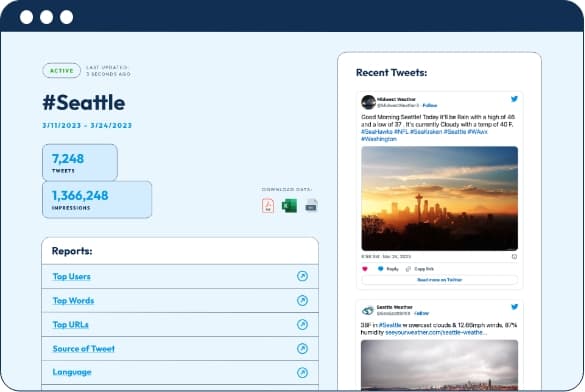
Ready to track your engagement metrics and measure the ROI of your Twitter strategy? Start your free Tweet Archivist trial to access comprehensive Twitter analytics that help you monitor engagement patterns, identify top-performing content, and optimize your approach with data-driven insights.
Related Twitter Growth Guides
- Best Sites to Buy Twitter Followers
- Buy Twitter Followers Cheap
- Buy Twitter Retweets Guide
- Buy Twitter Video Views
- Buy Twitter Poll Votes
- Buy Twitter Impressions
- Should You Buy Twitter Followers?
- Best Twitter SMM Panels
- Buy Twitter Comments
- Buy Instagram Followers
- Buy Instagram Likes
- Buy TikTok Followers
- Buy TikTok Likes