Twitter Writing Tips: Master the Art of 280 Characters
Introduction
Twitter's 280-character limit isn't a constraint—it's a creative challenge that separates amateur tweeters from true digital wordsmiths. In an era where attention spans are measured in seconds, mastering the art of concise, compelling Twitter writing has become an essential skill for marketers, entrepreneurs, and thought leaders alike.
The platform's brevity forces clarity. It demands that you distill complex ideas into digestible fragments while maintaining personality, persuasion, and purpose. Whether you're building a personal brand, growing a business, or establishing thought leadership, how you write on Twitter directly impacts your ability to capture attention, spark conversations, and drive meaningful engagement.
This comprehensive guide will transform how you approach Twitter writing. You'll learn data-backed strategies, psychological triggers, and proven formatting techniques that top influencers use to consistently create tweets that resonate, engage, and convert.
Why Twitter Writing Matters
Twitter remains one of the most influential social platforms for real-time conversations, news distribution, and community building. With over 500 million tweets sent daily, standing out requires more than just showing up—it demands strategic, intentional writing.
Research consistently shows that tweet quality directly correlates with engagement. According to multiple industry studies, tweets with fewer than 50 characters generate 56% more engagement than those using 50-100 characters. This counterintuitive finding reveals that less truly is more on Twitter.
Beyond engagement metrics, effective Twitter writing serves multiple business objectives. It builds brand awareness, establishes expertise, drives website traffic, generates leads, and creates opportunities for partnerships. For individuals, it opens doors to speaking engagements, consulting opportunities, and career advancement.
The platform's algorithmic feed prioritizes content that generates early engagement. This means your first few words carry exponential weight. Master those opening phrases, and you unlock Twitter's distribution engine. Fail to capture attention immediately, and your tweet vanishes into the void, regardless of the value it contains.
The Anatomy of a Perfect Tweet
Every high-performing tweet shares common structural elements that work together to maximize impact. Understanding this anatomy helps you construct tweets that consistently deliver results.
The Hook
Your opening 3-5 words determine whether people stop scrolling. The hook must immediately signal value, provoke curiosity, or trigger emotion. Questions work exceptionally well: 'Want to know the secret to...' or 'Ever wondered why...' Bold statements create intrigue: 'This changed everything.' or 'Nobody talks about this.'
The Core Message
After hooking attention, deliver your primary insight, tip, or observation. This is where you provide the value you promised. Be specific. Replace vague statements like 'improve your writing' with concrete claims like 'increase engagement by 56% with this technique.' Specificity builds credibility and compels action.
The Closer
End with a call-to-action, question, or statement that encourages engagement. Research from Twitter's official business blog shows that simply including 'Please Retweet' in your tweet copy can increase retweets by 4X. Other effective closers include questions that prompt replies, tag requests ('Tag someone who needs this'), or cliffhangers that drive profile visits for more content.
Character Count Optimization
While Twitter allows 280 characters, data suggests the optimal length sits between 71-100 characters for maximum engagement. This sweet spot allows clear message delivery while leaving room for retweets, comments, and link previews without text truncation.
Character efficiency requires ruthless editing. Every word must earn its place. Remove filler words like 'really,' 'very,' 'just,' and 'actually.' Replace multi-word phrases with single powerful words. Transform 'make better' into 'improve' or 'optimize.' Change 'a lot of people' to 'many.'
Front-loading matters tremendously. Place your most important words at the start of your tweet. Mobile feeds and preview snippets often truncate longer tweets, so if your key insight sits at character 200, many readers will never see it. Lead with impact, support with details, close with action.
Strategic White Space
Line breaks create visual breathing room that increases readability. Compare these two identical tweets with different formatting:
Without breaks: 'Twitter writing isn't about clever wordplay or perfect grammar. It's about clarity, specificity, and emotional resonance. Master these three elements and engagement follows naturally.'
With breaks:
'Twitter writing isn't about clever wordplay or perfect grammar.
It's about:
• Clarity
• Specificity
• Emotional resonance
Master these three and engagement follows naturally.'
The second version is visually scannable and emphasizes key points through structure. This formatting technique works especially well for listicle-style tweets and multi-point observations.
The Psychology of Engagement
Understanding what motivates people to engage with tweets unlocks your ability to consistently create content that resonates. Several psychological principles consistently drive Twitter engagement.
Emotional Triggers
Tweets that evoke emotion—whether inspiration, surprise, humor, or even productive controversy—significantly outperform neutral, purely informational content. A study analyzing millions of tweets found that emotional resonance correlates more strongly with virality than informational value alone.
This doesn't mean manufacturing fake emotion or being deliberately provocative. It means writing with genuine passion about topics that matter to your audience. Share personal insights. Express authentic opinions. Use language that connects on a human level rather than corporate-speak or jargon.
The Curiosity Gap
Creating a curiosity gap—hinting at valuable information without fully revealing it—compels clicks and engagement. However, this technique requires balance. Too obvious and it feels like clickbait. Too subtle and no one notices.
Effective curiosity gaps tease specific value: 'The one metric I stopped tracking (and doubled my growth)' works better than 'You won't believe what happened when I stopped tracking this.' The first promises specific, actionable insight. The second relies on hype without substance.
Social Proof and Authority
Tweets that demonstrate results, cite research, or reference credible sources perform better than unsupported claims. Specific numbers dramatically increase credibility: 'This strategy increased engagement by 156%' outperforms 'This strategy significantly increased engagement.'
When you can, back claims with data. Cite studies. Reference experts. Include case study details. This builds trust and positions you as a reliable source worth following and engaging with.
Formatting Techniques That Work
How your tweet looks matters as much as what it says. Several formatting techniques consistently improve performance across accounts and industries.
Power Words
Certain words consistently drive higher engagement. These 'power words' trigger psychological responses that compel action. Replace weak verbs with strong alternatives. Instead of 'ways to do something,' use 'mind-blowing ways to quickly and easily do something.' Common power words include: exclusive, proven, guaranteed, secret, revolutionary, ultimate, essential, critical, dangerous, forbidden.
Use them strategically, not excessively. One or two power words per tweet creates impact. Five or six creates skepticism.
Numbers and Lists
Tweets featuring specific numbers generate measurably higher engagement than those without. '7 ways to improve conversion' performs better than 'several ways to improve conversion.' Numbers create concrete expectations and make content feel structured and scannable.
Odd numbers (3, 5, 7) typically outperform even numbers, possibly because they feel less formulaic. Ultra-specific numbers (73 mistakes, 127 examples) signal thoroughness and research, though they work best when truthful rather than manufactured.
Questions
Ending tweets with questions dramatically increases reply rates. Questions invite participation and make followers feel heard. The most effective questions are specific and personally relevant: 'What's your biggest challenge with Twitter growth?' outperforms 'What do you think about Twitter?'
Open-ended questions generate more substantive replies than yes/no questions. However, for pure engagement metrics, yes/no questions often drive higher total response volumes because they're easier to answer quickly.
Visual Content Strategy
Twitter isn't just a text platform. Visual content significantly amplifies engagement across every metric. Tweets featuring visual content generate 18% more clicks, 89% more likes, and 150% more retweets compared to text-only posts.
Image Selection
Images should complement and enhance your message, not distract from it. The most effective images are clean, high-contrast, and immediately understandable. Avoid cluttered visuals with too many elements competing for attention.
Text overlays on images work exceptionally well for educational content, quotes, or statistics. Ensure text is large enough to read on mobile devices and contrasts sharply with background elements. Free tools like Canva offer templates specifically optimized for Twitter's image specifications.
GIFs and Videos
Research shows tweets with GIFs gain 55% more engagement than those without. GIFs add personality, humor, and emotional nuance that text alone struggles to convey. They're particularly effective for reactions, celebrations, or emphasizing emotional responses to information.
Videos perform even better, especially those under 60 seconds. Twitter's native video player auto-plays in feeds, capturing attention immediately. If using video, ensure the core message is understandable without sound—many users scroll with audio muted.
Visual Consistency
Brands and personal brands benefit from visual consistency. Using consistent colors, fonts, and design elements makes your tweets instantly recognizable in busy feeds. This builds brand equity and increases the likelihood followers engage with your content before even reading it.
Hashtag and Mention Strategy
Hashtags and mentions remain important Twitter tools, but their optimal use has evolved significantly. Overuse diminishes returns while strategic deployment amplifies reach and engagement.
The 1-2 Hashtag Rule
Current best practices recommend using just 1-2 hashtags per tweet. More than this makes content appear spammy and actually decreases engagement. Each hashtag serves as an exit point—a temptation for users to click away from your profile to explore the hashtag feed.
Choose hashtags strategically based on relevance and search volume. Extremely popular hashtags (#marketing, #business) provide discoverability but face massive competition. Niche hashtags (#B2BSaaS, #ContentStrategy) offer more targeted audiences with better engagement potential.
As of 2024-2026, hashtags matter less for algorithmic distribution than they did in earlier years. Twitter's algorithm now prioritizes content quality and engagement velocity over hashtag density. Use hashtags for discoverability and topical context, not as an SEO tactic.
Strategic Mentions
Mentioning relevant accounts serves multiple purposes: it notifies those accounts, potentially earning retweets and expanding reach; it provides attribution when sharing ideas; it builds relationships with influencers and brands in your space.
However, excessive mentions can appear desperate or spammy. Mention accounts when genuinely relevant—crediting sources, collaborating on content, or directly responding to their ideas. Avoid mention-bombing popular accounts hoping for visibility.
When looking to grow your Twitter presence through strategic engagement and audience building, services like Bulkoid.com can help accelerate your reach while you focus on perfecting your content strategy.
Timing and Frequency
When you tweet matters nearly as much as what you tweet. Twitter's real-time nature means timing directly impacts visibility and engagement potential.
Optimal Posting Times
Research suggests tweeting every 3 hours maintains consistent visibility without overwhelming followers. This translates to approximately 8 tweets daily—a volume that may seem high but reflects Twitter's fast-moving, high-volume nature.
Specific optimal times vary by industry and audience, but general patterns emerge. Weekday mornings (8-10 AM) and evenings (6-9 PM) typically see higher engagement as users check Twitter during commutes and leisure time. Wednesday and Thursday tend to outperform Monday and Friday.
However, these are generalizations. Your specific audience may follow different patterns. Use Twitter analytics tools to identify when your followers are most active and engaged. Test different posting times and track performance to discover your account's optimal schedule.
Consistency Over Volume
While 8 daily tweets represents an ideal for maximum visibility, consistency matters more than pure volume. Posting 3-5 quality tweets daily at consistent times outperforms erratic schedules with higher but inconsistent volume.
Consistency trains your audience to expect and look for your content. It also signals to Twitter's algorithm that you're an active, engaged user worth promoting. Build a sustainable posting schedule you can maintain long-term rather than burning out with unsustainable volume.
Before and After Examples
Theory matters, but examples demonstrate principles in action. Here are real-world before-and-after transformations showing how applying these Twitter writing tips dramatically improves tweet performance.
Example 1: Character Optimization
Before (178 characters):
'I've been thinking a lot about how to write better tweets and I've realized that being more concise and getting to the point quickly really helps with engagement on this platform.'
After (87 characters):
'Best Twitter writing tip:
Say it in half the words.
Then cut it in half again.'
Why it works: The revised version practices what it preaches. It's concise, uses white space, and delivers immediately actionable advice. The before version wastes characters on filler phrases and lacks concrete value.
Example 2: Emotional Engagement
Before (124 characters):
'Content marketing strategies are important for businesses that want to grow their audience and increase revenue over time.'
After (118 characters):
'Most businesses fail at content marketing.
Not because they lack ideas.
But because they never press publish.'
Why it works: The after version creates emotional resonance by acknowledging a common fear (failure) and identifying a specific, relatable barrier (fear of publishing). It uses formatting for emphasis and creates a mini-narrative arc.
Example 3: Curiosity and Specificity
Before (96 characters):
'There are some things about Twitter growth that people don't usually talk about but are important.'
After (134 characters):
'6 months ago I had 2,000 followers.
Today: 47,000.
The one tactic nobody mentions:
(Thread)'
Why it works: The after version uses specific numbers (credibility), creates curiosity gap (what's the tactic?), and promises expanded value (thread). The before version is vague and provides no reason to engage.
Example 4: Call-to-Action
Before (87 characters):
'I wrote a comprehensive guide about Twitter analytics. Check it out if interested.'
After (141 characters):
'Just published: The Twitter Analytics Guide I wish existed when I started.
Bookmark this if you want data-driven growth.
[link]'
Why it works: The after version frames value personally (I wish this existed), includes specific benefit (data-driven growth), and uses a low-friction CTA (bookmark) that encourages engagement beyond just clicking.
Advanced Writing Techniques
Once you've mastered fundamental Twitter writing principles, these advanced techniques can elevate your content to the next level.
Thread Strategy
Threads allow you to expand beyond 280 characters while maintaining the platform's concise format. The key is treating each tweet as both standalone and part of a larger narrative. Your first tweet must work independently—it appears in feeds and must hook attention without context.
Structure threads with clear progression: opening hook, numbered points for scanability, supporting details, and strong conclusion. End threads with CTAs that encourage engagement: 'Which point resonated most?' or 'Retweet the first tweet if you found this helpful.'
The Quotable Tweet
Some tweets aim specifically to be quoted, screenshotted, or shared. These contain concise wisdom, counterintuitive insights, or perfectly articulated observations people want to share with their own audiences.
Quotable tweets work best at 100-150 characters—long enough for substance but short enough for easy sharing. They typically avoid links or CTAs that might distract from the core message. Think of them as standalone insights designed for maximum shareability.
Conversation Starters
High-reply tweets ask questions that people genuinely want to answer. The best conversation starters are specific enough to be answerable but open enough to allow varied responses. 'What's your favorite productivity tool?' works better than 'How do you stay productive?' because it's more concrete.
Respond to early replies quickly. Twitter's algorithm prioritizes tweets generating conversation. Your replies keep the thread active and signal value to the algorithm, increasing distribution. Early engagement momentum dramatically affects eventual reach.
Data-Driven Storytelling
Combining personal narrative with specific metrics creates compelling content. 'I increased Twitter followers' is forgettable. 'I grew from 500 to 15,000 followers in 6 months by doing these 3 things' promises concrete, replicable value backed by proof.
When sharing results, be specific about methods and timelines. Transparency builds trust and makes insights more actionable. People respond to authenticity—share failures alongside successes when relevant.
Tools and Resources
The right tools amplify your Twitter writing effectiveness by streamlining workflow, providing data insights, and helping you maintain consistency.
Analytics and Tracking
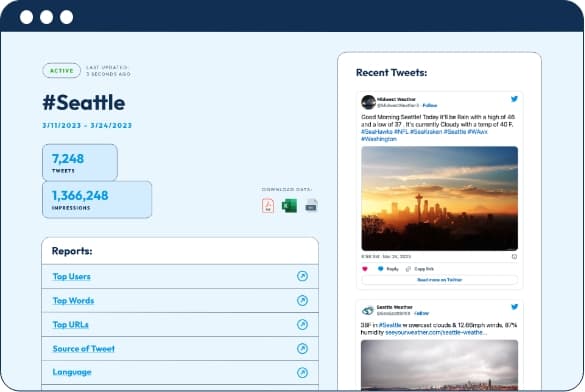
Understanding what works requires robust analytics. While Twitter's native analytics provide basic metrics, dedicated tools offer deeper insights. Tweet Archivist provides comprehensive Twitter analytics, allowing you to track performance trends, identify high-engagement content patterns, and archive your tweet history for future analysis.
Analyze not just your own content but competitors and influencers in your space. What topics drive their engagement? What formats perform best? How do they structure threads? Reverse-engineering successful content accelerates your learning curve.
Scheduling and Management
Consistent posting requires scheduling tools. Buffer, Hootsuite, and TweetDeck allow you to prepare content in advance and post at optimal times. This consistency is crucial for building audience and training the algorithm to prioritize your content.
However, avoid making your entire presence scheduled. Mix planned content with real-time engagement. Respond to trending topics, participate in conversations, and share spontaneous insights. The most successful Twitter accounts balance strategic planning with authentic spontaneity.
Growth and Audience Building
Building a targeted, engaged audience takes time and strategy. While organic growth remains ideal, services like Bulkoid.com can supplement your efforts by helping you reach relevant audiences aligned with your content and goals. The key is combining any growth tools with genuinely valuable content—no tool can compensate for poor writing or irrelevant content.
Focus on attracting the right followers, not just more followers. A thousand engaged, relevant followers drive more business value than ten thousand disinterested accounts. Target your content to specific audiences rather than attempting broad appeal.
Content Creation
Canva offers Twitter-optimized templates for creating visual content without design expertise. Grammarly catches typos and grammatical errors that might undermine credibility. Hemingway Editor identifies overly complex sentences that could be simplified.
For research and ideation, tools like Answer The Public and AlsoAsked reveal questions people ask about your topics. These insights inform content creation and ensure you address actual audience needs rather than assumed interests.
Common Mistakes to Avoid
Even experienced Twitter users make avoidable mistakes that undermine their effectiveness. Recognizing and correcting these common errors improves your results immediately.
Writing for Yourself Instead of Your Audience
The most fundamental mistake is creating content you find interesting rather than content your audience needs. Your tweets should solve problems, answer questions, or provide entertainment value for your specific followers.
Before tweeting, ask: 'Why would someone care about this?' If you can't articulate clear value, revise or discard the tweet. Self-indulgent content occasionally works for accounts with massive followings, but most of us need to prioritize audience value.
Inconsistent Voice and Messaging
Jumping between different tones, topics, and personalities confuses your audience. People follow you for specific reasons—expertise, humor, insights into particular topics. Dramatic inconsistency makes you unpredictable and less followable.
This doesn't mean never varying content. It means maintaining core thematic and tonal consistency. If you're known for marketing insights, occasional personal tweets are fine, but suddenly pivoting to political rants or entirely unrelated topics dilutes your brand.
Ignoring Engagement
Twitter is social media—emphasis on social. Posting without responding to replies or engaging with others' content limits your reach and growth. The algorithm rewards accounts that participate in conversations, not just broadcast messages.
Set aside time specifically for engagement. Respond to comments on your tweets. Join relevant conversations. Quote tweet with additional insights. This activity signals to the algorithm that you're a valuable community participant worth promoting.
Overposting or Underposting
Finding the right posting frequency requires balance. Posting once weekly provides insufficient momentum—followers forget you between appearances. Posting 30 times daily overwhelms feeds and leads to unfollows.
Most successful accounts post 3-8 times daily at consistent intervals. Test different frequencies and monitor follower retention and engagement rates. The optimal volume varies by account type, industry, and audience expectations.
Neglecting Analytics
Creating content without measuring performance is like driving blindfolded. You might reach your destination, but you'll waste time and risk crashes. Regular analytics review reveals what content resonates, when your audience engages, and where opportunities exist.
Use Twitter statistics tracking to identify patterns in your highest-performing tweets. Do lists work better than questions? Do threads outperform standalone tweets? Does humor drive more engagement than education? Let data guide strategy adjustments.
Conclusion
Mastering Twitter writing is an ongoing process, not a destination. The platform evolves, audiences shift, and what works today may need adjustment tomorrow. However, fundamental principles remain constant: clarity over cleverness, value over volume, engagement over broadcasting.
The 280-character limit isn't a limitation—it's a filter that forces quality. Every word must earn its place. Every tweet must deliver value. This constraint, when embraced, makes you a better communicator across all channels.
Start implementing these strategies today. Choose three techniques from this guide and commit to testing them over the next week. Track results. Iterate based on data. Most importantly, maintain consistency. The accounts that win on Twitter aren't necessarily the most talented writers—they're the ones who show up consistently with valuable, engaging content.
Your Twitter presence is an asset that compounds over time. Every tweet is a building block. Every engagement is a connection. Every follower represents potential impact. Invest in mastering this craft, and the returns—whether measured in influence, opportunities, or revenue—will follow.
Ready to take your Twitter strategy further? Explore Tweet Archivist's analytics features to gain deeper insights into your content performance, track long-term trends, and make data-driven decisions that accelerate your growth. The difference between mediocre and exceptional Twitter presence often comes down to understanding your data and acting on it strategically.
Start writing better tweets today. Your audience—and your business—will thank you.