Social Media Compliance: Complete Guide for Regulated Industries
What Is Social Media Compliance?
Social media compliance refers to the processes, policies, and technologies an organization uses to ensure that its social media activity adheres to applicable laws, regulations, and internal governance standards. For regulated industries—financial services, government, healthcare, and law—this is not optional. Violations can result in regulatory fines, reputational damage, litigation, or loss of operating licenses.
At its core, social media compliance involves four interconnected obligations:
- Archiving: Capturing and retaining a complete, tamper-evident record of all social media communications for the periods mandated by regulators.
- Monitoring: Reviewing content before or after publication to detect policy violations, misleading claims, or unauthorized disclosures.
- Supervision: Ensuring that designated compliance officers or supervisors have oversight of what employees post on behalf of the organization.
- Audit trails: Maintaining searchable, reproducible records that can be produced quickly in response to regulatory inquiries or litigation holds.
As social platforms have become primary channels for customer communication, investor relations, and public affairs, regulators have extended long-standing recordkeeping rules to cover them. What once applied only to emails and paper documents now applies equally to tweets, LinkedIn posts, and Facebook updates.
Understanding what social media compliance requires for your specific industry is the starting point for building a defensible program.
The Regulatory Landscape
Regulated industries face an overlapping web of federal, state, and international rules governing social media use. The major frameworks are summarized below.
FINRA (Financial Industry Regulatory Authority)
FINRA is the primary self-regulatory organization for broker-dealers in the United States. Its rules on communications with the public apply directly to social media.
- FINRA Rule 2210 governs “Communications with the Public” and categorizes social media posts as either retail communications (broadly distributed content) or correspondence (one-to-one messages). Retail communications require principal review and approval before use. Interactive, real-time posts may qualify as “public appearances” with lighter requirements, but any pre-scripted or re-used content reverts to retail communication status.
- FINRA Rule 3110 requires firms to establish and maintain a supervisory system for all communications, including social media. Supervisory procedures must be written, reviewed annually, and reasonably designed to detect violations.
- FINRA Regulatory Notice 10-06 (and the subsequent guidance in Notice 11-39) clarified that interactive electronic forums—including Twitter—are subject to recordkeeping rules and that “like” or “retweet” actions by a registered representative can constitute a business communication if they endorse a third-party recommendation.
SEC Rules (Securities and Exchange Commission)
The SEC applies its own recordkeeping mandates to broker-dealers and investment advisers.
- SEC Rule 17a-4 requires broker-dealers to retain business-related electronic communications—including social media posts—in a non-rewriteable, non-erasable (WORM) format for a minimum of three years, with the first two years in an easily accessible location. Records must be producible to examiners within 24 hours of a request.
- SEC Rule 204-2 imposes similar recordkeeping obligations on registered investment advisers, requiring retention of all business-related correspondence, including social media, for five years.
- The SEC’s 2013 guidance confirmed that companies may use social media to announce material information under Regulation FD, but only if investors have been notified in advance which channels the company will use.
FDIC and OCC
Banks supervised by the Federal Deposit Insurance Corporation (FDIC) and the Office of the Comptroller of the Currency (OCC) must comply with guidance issued in 2013 that treated social media as a form of “electronic media.” The guidance covers consumer protection laws, unfair or deceptive acts or practices (UDAP), and the CAN-SPAM Act as applied to social channels. Banks must maintain oversight programs that include monitoring, complaint management, and employee training specific to social media.
FCA (UK Financial Conduct Authority)
UK-regulated firms face requirements under the FCA’s Conduct of Business Sourcebook (COBS), which requires that all financial promotions be fair, clear, and not misleading. Social media posts that constitute financial promotions must be approved by an authorized person. The FCA has published specific guidance on social media and customer communications, making clear that character-limited platforms like X (Twitter) do not exempt firms from disclosure obligations—firms must link to required risk warnings if they cannot be included in the post itself.
GDPR (General Data Protection Regulation)
Organizations operating in the European Union or handling the data of EU residents must consider GDPR implications when using social media. This includes lawful bases for processing personal data collected through social channels, data subject rights (including the right to erasure), and the obligation to maintain records of processing activities. Social media archiving must be designed so that records containing personal data can be located and deleted if required by a valid erasure request without destroying the integrity of a compliance archive.
HIPAA (Health Insurance Portability and Accountability Act)
Covered entities and business associates in the healthcare sector must ensure that no Protected Health Information (PHI) is disclosed through social media channels. HIPAA does not require social media archiving in the same way that SEC or FINRA rules do, but it imposes strict prohibitions on impermissible disclosures and requires comprehensive policies governing employee social media use.
FOIA (Freedom of Information Act) and Open Records Laws
Federal agencies and most state governments are subject to records retention and disclosure laws that extend to social media. At the federal level, the National Archives and Records Administration (NARA) has issued guidance under the Federal Records Act confirming that agency social media accounts generate federal records that must be captured and retained. State equivalents vary but generally follow the same principle.
Financial Services Compliance in Depth
Social media compliance for financial institutions is among the most demanding of any sector, combining pre-approval workflows, supervisory oversight, and strict recordkeeping into a single governance framework.
Broker-Dealers and Registered Representatives
Every tweet, LinkedIn post, or Facebook update made by a registered representative in connection with the firm’s business is a “communication with the public” under FINRA Rule 2210. The practical implications are significant:
- Static content (profile pages, pinned posts, pre-written promotional material) must be reviewed and approved by a registered principal before first use.
- Interactive content (real-time responses, live commentary) may qualify for a lighter supervisory touch, but firms must have written procedures covering how interactive posts are supervised after the fact.
- Testimonials and endorsements are subject to specific rules. A registered rep who retweets a customer’s praise for the firm may be deemed to be endorsing that testimonial, triggering disclosure requirements.
- Third-party content such as links, shares, and embedded posts can become the firm’s communication if the rep adopts or endorses it.
Financial advisor social media compliance requires investment advisory firms registered with the SEC or state regulators to apply similar oversight under the Investment Advisers Act. Advisers cannot use testimonials in advertising under traditional rules (though the SEC’s 2021 Marketing Rule modernized this framework), and all social media communications that constitute “advertisements” must be retained under Rule 204-2.
Recordkeeping Under SEC Rule 17a-4
The technical requirements of Rule 17a-4 are often misunderstood. The rule does not simply require saving screenshots. It requires:
- Records stored in a non-rewriteable, non-erasable (WORM) format—meaning the original record cannot be altered after creation.
- Duplicate copies stored in a separate location (physically or logically separated).
- An index of all retained records that can be produced to examiners on demand.
- The ability to produce any record within 24 hours of a regulatory request.
- Retention of records for a minimum of three years (six years for certain categories such as blotters and ledgers).
Screenshots stored in a shared drive do not satisfy these requirements. Organizations need purpose-built social media compliance solutions that capture content in WORM-compliant storage with full metadata, timestamps, and audit logs.
Approval Workflows for Financial Firms
A compliant workflow for a broker-dealer typically looks like this:
- Drafting: The registered representative drafts content in a compliance-aware platform.
- Review queue: The draft is submitted to a registered principal for review before posting.
- Approval or revision: The principal approves, rejects, or requests changes with documented reasoning.
- Publication: Approved content is published directly from the platform (reducing the risk of unauthorized edits).
- Archiving: The published post is automatically captured and stored in a compliant archive.
- Ongoing monitoring: The archive is reviewed periodically and any reactive posts (comments, replies) are flagged for supervisory review.
Government Agencies and FOIA
Social media has become a primary communication channel for government agencies at all levels—announcing policies, engaging constituents, and providing public safety information. This creates substantial records management obligations.
Federal Records Act and NARA Guidance
Under the Federal Records Act (44 U.S.C. Chapter 31), federal agencies are required to create and preserve records that document their activities. NARA’s Bulletin 2014-02 explicitly confirmed that agency social media content constitutes federal records when it is created or received in connection with agency business.
Agencies must:
- Capture social media content in the agency’s official records management system, not rely on the platform itself to retain records.
- Apply appropriate retention schedules based on content type (general administrative records vs. records with permanent historical value).
- Ensure that records are available for FOIA production within the required response timeframes (generally 20 business days).
- Preserve records in response to litigation holds when relevant litigation is reasonably anticipated.
State Open Records Laws
Every U.S. state has an open records law (commonly called sunshine laws or public records laws) that may require disclosure of government social media records. Key considerations include:
- Records created on official government accounts are almost universally considered public records.
- In many states, records created on personal accounts by government officials in their official capacity are also subject to disclosure, regardless of whether a personal device or account was used.
- Deleted posts may still be subject to disclosure if they were not properly scheduled for destruction in accordance with the retention schedule.
- Comments from the public on government social media accounts may themselves constitute public records that must be preserved.
Government agencies require social media records management systems that can capture all content from official accounts in real time, including comments, replies, and deleted content, and store it in a searchable, exportable format suitable for FOIA production.
Managing Official vs. Personal Use
One of the most challenging areas for government social media compliance is distinguishing between an official’s personal expression and their official communications. Agencies should have clear written policies specifying which accounts are official, what constitutes official business, and what disclaimers employees must use when posting on personal accounts about work-adjacent topics.
Healthcare and HIPAA
Healthcare providers, health plans, and their business associates face a distinct compliance challenge on social media: the risk of inadvertent disclosure of Protected Health Information (PHI). Unlike financial services, HIPAA does not mandate specific social media archiving. However, it imposes strict prohibitions that require robust social media compliance monitoring.
What Constitutes a HIPAA Violation on Social Media
HIPAA violations on social media are often unintentional. Common scenarios include:
- A nurse posting about an interesting case in enough detail that the patient could be identified.
- A physician responding to a patient’s public tweet in a way that confirms the person is a patient.
- A hospital employee posting a photo taken in a clinical setting that contains patient information in the background.
- A provider commenting on a publicly visible post by a patient in a way that implicitly acknowledges the care relationship.
Even publicly available information can become PHI if it is combined with identifiers in a way that reveals someone’s health status. The de-identification of information for social media requires careful judgment, not just the removal of obvious identifiers.
Building a HIPAA-Compliant Social Media Policy
Healthcare organizations should develop a written social media policy that covers:
- Prohibition on PHI disclosure: An explicit, unambiguous statement that employees may never post, share, or comment on patient information, even if they believe it is anonymized.
- Personal vs. professional accounts: Guidelines on what employees may post on personal accounts regarding their employer, their work, or their patients.
- Responding to patients online: A protocol directing employees to move any patient-specific conversation to a secure, private channel rather than responding in a public social media thread.
- Monitoring and enforcement: A clear statement that the organization monitors social media for potential violations and the consequences of non-compliance.
- Training requirements: Annual training requirements that address specific social media scenarios relevant to clinical settings.
Healthcare organizations should also consider whether their social media presence triggers any obligations under state privacy laws, which in some cases (California, Virginia, Colorado) impose requirements that go beyond HIPAA.
Legal Firms and Ethics Rules
Attorneys and law firms face social media compliance obligations derived from professional ethics rules rather than federal regulations. The American Bar Association’s Model Rules of Professional Conduct, as adopted in varying forms by each state bar, govern attorney advertising, client confidentiality, and professional conduct online.
Attorney Advertising Rules
Most state bars treat law firm social media accounts as attorney advertising subject to their respective advertising rules. Common requirements include:
- Disclaimer requirements identifying content as attorney advertising.
- Prohibitions on false or misleading statements about the firm or its services.
- Restrictions on testimonials and past case results (with required disclaimers in most jurisdictions).
- Requirements that advertising materials be retained for a specified period (typically two years in jurisdictions that follow the Model Rules).
Client Confidentiality Online
ABA Model Rule 1.6 prohibits attorneys from disclosing confidential client information without the client’s informed consent. On social media, this means:
- Attorneys may not post about cases, even without naming the client, if the information could be used to identify the client or if a reasonable person in the client’s position would expect the information to remain confidential.
- Participating in public legal discussions (on LinkedIn or in Twitter threads) must be done with care to ensure that an attorney’s comments do not inadvertently reveal confidential information.
- Law firms should have policies preventing attorneys from seeking informal advice on social media about pending matters, even in ostensibly anonymous terms.
Candor and Supervision
Partners and supervising attorneys have an obligation under ABA Model Rule 5.1 to make reasonable efforts to ensure that their subordinates’ conduct conforms to the Rules of Professional Conduct. This supervisory obligation extends to the social media activity of associates and paralegals who post on behalf of the firm. A practical compliance program for law firms should include content review workflows and periodic audits of social media archives to ensure ongoing compliance.
Key Compliance Requirements
Across all regulated industries, four core requirements define what a compliant social media program looks like.
1. Comprehensive Archiving
Archiving is the foundation of any social media compliance program. The archive must be:
- Complete: Capturing all posts, comments, replies, direct messages, and edits from all official accounts across all platforms.
- Tamper-evident: Stored in a format that prevents alteration of the original record after capture.
- Timestamped: Including accurate metadata about when content was created, modified, or deleted.
- Searchable: Allowing compliance officers and legal teams to search by keyword, date range, account, or content type.
- Exportable: Producing records in formats suitable for regulatory production or litigation discovery.
Platform-native archives (such as the Twitter/X data download) do not meet these requirements for regulated industries. They are point-in-time snapshots, not continuous captures, and they do not produce the chain-of-custody documentation that regulators require. Organizations need dedicated social media compliance software that continuously captures content and stores it in a compliant, auditable repository.
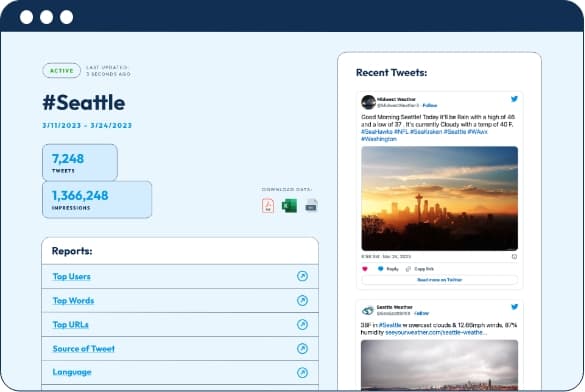
Tweet Archivist, for example, captures tweets, replies, and profile changes from specified accounts on an ongoing basis, providing a searchable, exportable record that compliance teams can review and produce on demand—a critical capability for organizations subject to recordkeeping rules.
2. Pre-Publication Review and Approval Workflows
Many regulators, particularly in financial services, require that promotional or public-facing content be reviewed by a designated supervisor before it is published. An effective approval workflow should:
- Route all drafted content to the appropriate reviewer based on content type, platform, and audience.
- Require documented approval (or rejection with documented reasoning) before content can be published.
- Log all review decisions as part of the compliance record.
- Prevent the original author from bypassing the review process by publishing directly to the platform.
3. Ongoing Monitoring
Social media compliance monitoring encompasses both proactive surveillance (scanning for policy violations, unauthorized disclosures, or regulatory breaches) and reactive monitoring (reviewing flagged content or responding to regulatory inquiries). Effective monitoring programs include:
- Automated keyword and pattern scanning to flag potentially non-compliant content for human review.
- Periodic manual review of archived content by compliance officers.
- Employee activity monitoring to detect unauthorized use of personal accounts for business communications.
- Brand monitoring to detect mentions of the firm on social media by third parties that may require a compliance response.
4. Audit Trails and Reporting
An audit trail documents every action taken within the social media compliance program: who drafted content, who reviewed it, when it was approved or rejected, when it was published, and when it was archived. Comprehensive audit trails serve multiple purposes:
- Demonstrating to regulators that the firm has a functioning supervisory system.
- Supporting internal investigations when potential violations are identified.
- Providing evidence in litigation that the firm acted in good faith.
- Identifying gaps or weaknesses in the compliance program that require remediation.
Building a Social Media Compliance Policy
A written social media compliance policy is required by most regulators and is the cornerstone of an effective program. The following framework covers the essential elements.
Section 1: Scope and Applicability
Define clearly who the policy applies to (all employees, only registered representatives, only those with posting authority), which platforms are covered, and what types of accounts are subject to the policy (official firm accounts, personal accounts used for business purposes, or both).
Section 2: Permitted and Prohibited Content
Provide specific guidance on what may and may not be posted. For financial firms, this includes prohibitions on:
- Performance claims without required disclosures.
- Predictions of future investment results.
- Testimonials or endorsements that violate Rule 2210.
- Non-public material information about publicly traded securities.
- Content that has not been reviewed and approved through the required workflow.
For all industries, common prohibitions include disclosing confidential client or customer information, making statements that could be construed as official positions without authorization, and engaging in discussions that could create legal liability.
Section 3: Approval Workflows
Document the specific process for content review and approval, including role assignments, timelines, escalation procedures, and how approval decisions are recorded.
Section 4: Recordkeeping Requirements
Specify the retention periods applicable to social media records under your regulatory framework, the systems used to capture and store records, and the procedures for producing records in response to regulatory requests or litigation holds.
Section 5: Employee Training
Require completion of initial and annual training covering the policy, relevant regulations, and specific social media scenarios applicable to your business. Maintain training records as part of the compliance archive.
Section 6: Monitoring and Enforcement
Describe how the organization monitors compliance with the policy, including automated tools, periodic reviews, and how violations are investigated and remediated. State the consequences of non-compliance clearly.
Section 7: Policy Review
Commit to an annual review of the policy to ensure it reflects current regulatory requirements, platform changes, and lessons learned from internal compliance reviews. Document each review as part of the compliance record.
Social Media Compliance Tools
The market for social media compliance tools has matured significantly as regulatory scrutiny has increased. When evaluating social media compliance software, organizations should assess the following capabilities.
Archiving and Recordkeeping
- Continuous capture: Does the tool capture content in real time, or does it rely on periodic snapshots that create gaps?
- WORM-compliant storage: Is the archive stored in a non-rewriteable format that satisfies SEC Rule 17a-4 and similar requirements?
- Metadata preservation: Does the tool capture timestamps, account identifiers, device information, and other metadata alongside the content itself?
- Deleted content capture: Can the tool capture content that has been deleted from the platform after posting?
- Multi-platform support: Does the tool cover all platforms your organization uses (X/Twitter, LinkedIn, Facebook, Instagram, YouTube, etc.)?
Monitoring and Supervision
- Keyword scanning: Does the tool automatically flag content containing specified keywords or phrases for compliance review?
- Workflow integration: Can it route flagged content to the appropriate reviewer with documented decision trails?
- Dashboard and reporting: Does it provide compliance officers with a clear view of all activity, pending reviews, and flagged content?
Search and Production
- Full-text search: Can compliance officers search the archive by keyword, date range, account, and content type?
- Export formats: Does the tool produce exports in formats suitable for regulatory production (PDF, CSV, native format with metadata)?
- Legal hold support: Can the tool apply holds to specific records to prevent deletion during litigation or regulatory investigations?
Integration and Scalability
- API connectivity: Does the tool use official platform APIs to ensure complete and accurate data capture?
- Scale: Can it handle the volume of accounts and content your organization produces?
- User permissions: Does it support role-based access so that compliance officers can review archived content without giving them publishing access?
Tools like Tweet Archivist provide the continuous capture and searchable archive infrastructure that compliance teams need for Twitter/X, enabling organizations to maintain a complete, auditable record of all activity on specified accounts without manual intervention.
Evaluating Total Cost and Complexity
Enterprise social media compliance platforms vary widely in cost and complexity. Larger firms with complex multi-platform needs may require full enterprise solutions. Smaller firms or those with more focused requirements (such as Twitter-only archiving for a government agency) may find that purpose-built social media compliance solutions provide the necessary functionality at a fraction of the cost of broad-spectrum platforms.
Common Compliance Mistakes and How to Avoid Them
Even well-intentioned compliance programs fail because of predictable, avoidable mistakes. The following are the most common errors organizations make—and the steps to prevent them.
Mistake 1: Relying on Platform-Native Archives
The error: Organizations assume that because Twitter, LinkedIn, or Facebook offer data download tools, those exports satisfy their recordkeeping obligations.
Why it fails: Platform archives are point-in-time snapshots, not continuous records. They do not capture deleted content, may not preserve all metadata, and are not stored in WORM-compliant formats. They cannot be produced within 24 hours of a regulatory request if they have not been generated in advance.
The fix: Use a dedicated compliance archiving solution that continuously captures content and stores it in a compliant format.
Mistake 2: Treating Personal Accounts as Outside the Policy
The error: Registered representatives or employees use personal social media accounts to discuss business topics, believing that personal accounts are not subject to firm supervision.
Why it fails: FINRA and SEC rules apply to the content of business communications, not the account from which they are sent. If a registered rep discusses securities recommendations on a personal Twitter account, that content is subject to the firm’s supervisory obligations.
The fix: The written policy must explicitly address personal account use for business purposes and require employees to identify and register any personal accounts used in connection with the firm’s business.
Mistake 3: No Written Policy or Outdated Policy
The error: The organization has no written social media policy, or the policy was written years ago and has not been updated to reflect new platforms, regulations, or business practices.
Why it fails: Regulators expect to see written, current procedures. An outdated policy that does not address platforms in current use provides little protection in an examination.
The fix: Conduct an annual policy review tied to a specific calendar date. Assign ownership of the review to a named compliance officer.
Mistake 4: Inadequate Employee Training
The error: Compliance training covers general communication policies but does not address social media specifically, leaving employees uncertain about what is and is not permitted.
Why it fails: Social media presents fact patterns that employees frequently encounter (a colleague asks them to share a LinkedIn post about the firm, a customer tweets a complaint, a reporter DMs them) that are not covered by traditional communication guidelines.
The fix: Include scenario-based social media training in the annual compliance curriculum. Test employees on specific situations rather than relying on general awareness.
Mistake 5: Gaps Between Approval and Posting
The error: The approval workflow requires compliance review, but employees can post directly to the platform after receiving approval, potentially modifying content between approval and publication.
Why it fails: Only the approved version of the content is compliant. Any post-approval modification creates a gap between what was approved and what was published.
The fix: Use a social media management platform that publishes directly from the approved queue, preventing manual posting after approval.
Mistake 6: No Litigation Hold Procedures
The error: When litigation or a regulatory investigation begins, the organization has no documented procedure for applying a litigation hold to social media records, and content may be deleted or overwritten before its relevance is recognized.
Why it fails: Spoliation of evidence (destruction of records after litigation is reasonably anticipated) can result in severe sanctions, including adverse inference instructions to juries.
The fix: Include social media records explicitly in the organization’s litigation hold procedures and conduct tabletop exercises to ensure that compliance and legal teams can execute a hold quickly.
Frequently Asked Questions
How long do organizations need to retain social media records?
Retention periods vary by industry and regulatory framework. FINRA broker-dealers must retain communications with the public for three years under Rule 17a-4(b)(4). Investment advisers must retain advertising and communications for five years under Rule 204-2. Federal agencies follow NARA-approved retention schedules, which vary by record category. Healthcare organizations must retain HIPAA-related policies and procedures for six years. Organizations subject to multiple frameworks must retain records for the longest applicable period.
Does social media compliance apply to personal accounts?
In financial services, yes—if the content relates to the firm’s business. FINRA Rule 2210 applies to communications made by registered representatives regardless of which account they use. For government employees, content created on personal accounts in the course of official business may constitute a public record subject to FOIA, even if a personal device was used. Organizations should have explicit written policies addressing personal account use.
What is the difference between social media monitoring and archiving?
Archiving is the capture and retention of social media records for compliance, records management, and legal purposes. Social media compliance monitoring is the ongoing review of that content for policy violations, regulatory breaches, or other issues requiring a compliance response. Both are necessary components of a complete compliance program: archiving creates the record, and monitoring ensures the record is reviewed.
Can regulated firms use X (Twitter) at all?
Yes, regulated firms can and do use X (Twitter) extensively. The platform’s character limits and real-time nature create compliance challenges, but these are manageable with appropriate policies, training, and technology. FINRA Regulatory Notice 11-39 provides guidance on how registered representatives can use social media compliantly. The key requirements are pre-approval for static content, post-hoc supervision for interactive content, and comprehensive archiving of all business-related communications.
What happens if a regulator requests social media records during an examination?
Regulated entities are expected to produce requested records within the timeframes specified by the regulator—typically 24 to 48 hours for broker-dealers under Rule 17a-4. Failure to produce records promptly, or production of incomplete records, can itself result in regulatory sanctions independent of any underlying compliance violation. Organizations that do not have a compliant archiving system in place face significant risk of producing inadequate records in response to examinations.
What should a social media compliance policy include?
At minimum, a compliant policy should cover: scope (who and what accounts are covered), permitted and prohibited content categories, the approval workflow for content requiring pre-publication review, recordkeeping requirements and retention periods, employee training requirements, monitoring procedures, and enforcement and remediation processes. The policy should be reviewed and updated at least annually.
How do government agencies handle deleted social media posts?
Under NARA guidance and most state open records laws, government agencies may not delete official social media content without following an approved retention schedule. Content deleted in violation of the retention schedule may still be subject to FOIA production if it can be recovered. Agencies should configure their archiving systems to capture and preserve content at the moment of publication, so that subsequent deletion on the platform does not result in loss of the record.