How to Find and Use Viral Tweet Templates: 20+ Proven Formulas for 2026
Introduction
Every content creator dreams of writing that one tweet that explodes with engagement. The reality? Viral tweets aren't accidents. They follow proven patterns and structures that you can replicate. In fact, analyzing over 10,000 viral tweets reveals that approximately 80% follow recognizable templates and formulas.
Viral tweet templates are pre-structured content frameworks that have consistently generated high engagement across thousands of accounts. Think of them as blueprints for success. Instead of staring at a blank compose box wondering what to write, you can plug your ideas into proven formulas that the Twitter algorithm already rewards.
This comprehensive guide reveals 20+ viral tweet templates used by top creators to generate millions of impressions. You'll learn exactly how to find these templates, customize them for your brand, and track which ones perform best for your audience. Whether you're building a personal brand or growing a business account, these templates will transform your Twitter strategy.
Why Tweet Templates Work
The Twitter algorithm in 2026 prioritizes one metric above all others: time-on-post. The longer someone engages with your content, the more reach it receives. Templates work because they've been battle-tested across millions of impressions to maximize this crucial metric.
Templates provide three critical advantages for content creators. First, they eliminate decision fatigue. Research shows the average person makes 35,000 decisions daily, and each one drains mental energy. When you have a library of proven templates, you skip the "what should I tweet?" paralysis and jump straight to execution.
Second, templates ensure consistency. Your audience develops pattern recognition over time. When they see your tweets following familiar, value-driven structures, they're more likely to engage because they know what to expect. This consistency builds trust and authority in your niche.
Third, templates are optimized for psychological triggers that drive engagement. The best viral tweet templates tap into curiosity gaps, social proof, controversy, practical value, and emotional resonance. These aren't random elements - they're deliberate design choices based on behavioral psychology and algorithm mechanics.
According to data from Bulkoid.com, accounts that use structured content templates see 3-5x higher engagement rates compared to those posting without strategic frameworks. The difference isn't talent or luck. It's systematic application of what works.
How to Find Viral Tweet Templates
Finding viral tweet templates requires a strategic approach to research and pattern recognition. The most effective method is analyzing top-performing content in your niche and reverse-engineering the underlying structures.
Start by identifying 10-20 accounts in your industry that consistently produce viral content. Don't just follow them - study them systematically. Use Twitter archive tools to access their complete posting history and identify patterns. Look for tweets that generated 10x more engagement than their average post. These are your gold mines.
When analyzing these high-performers, extract the structural elements rather than the surface content. For example, if you see a viral tweet that says "I made $200K last year selling a 20-page PDF. Here's how I did it," the template isn't about PDFs or money. The template is: "I achieved [specific impressive result] doing [surprisingly simple thing]. Here's how." This formula works for any niche.
Several resources compile these templates for you. TweetHunter offers libraries of proven templates across different categories. Typefully provides 10+ flexible frameworks for various content types. StoryChief publishes research-backed templates with engagement data. However, the most powerful templates are the ones you discover and validate in your own niche.
Use Twitter's Advanced Search functionality to find viral content by engagement thresholds. Search for tweets in your industry with minimum engagement counts (100+ replies, 500+ likes, etc.). This surfaces the cream of the crop. Then systematically analyze what made each one work and extract the reusable pattern.
Another powerful method is monitoring what's trending in real-time. When you see a tweet gaining rapid traction, capture the template immediately. Create a swipe file - a collection of proven frameworks organized by type (hooks, lists, controversial takes, how-tos, etc.). Over time, this becomes your personal arsenal of viral tweet templates.
20+ Single Tweet Templates That Go Viral
These templates have generated millions of impressions across thousands of accounts. Each one taps into specific psychological triggers that drive engagement and algorithmic reach.
1. The Contrarian Take
Template: "You don't need [popular thing]. You need [better alternative]"
Example: "You don't need more followers. You need more engaged readers who actually care about your content."
Why it works: Challenges conventional wisdom and positions you as an independent thinker. Creates immediate tension that demands resolution.
2. The Bold Statement with Proof
Template: "[Bold claim]. Here's why it works: [numbered list or explanation]"
Example: "Most Twitter advice is wrong. Here's why it works: 1) Engagement bait gets initial reach but kills long-term growth 2) Algorithm rewards genuine conversation 3) Quality followers > vanity metrics"
Why it works: Makes an attention-grabbing claim then immediately backs it up with substance, satisfying both curiosity and skepticism.
3. The Resource List
Template: "[Number] [type of resources] for [specific audience]: [list with brief descriptions]"
Example: "7 free tools for content creators: 1) Canva - graphics 2) Grammarly - editing 3) Notion - organization 4) Tweet Archivist - analytics 5) Buffer - scheduling 6) Hemingway - readability 7) Unsplash - images"
Why it works: Provides immediate, actionable value. Highly bookmarkable content that the algorithm rewards with extended reach.
4. The Myth Buster
Template: "[Topic] is not about [common belief]. It's about [actual truth]"
Example: "Twitter growth is not about posting 10 times a day. It's about posting 2-3 times with genuine value that sparks conversation."
Why it works: Corrects misconceptions while establishing authority. Appeals to people tired of conventional advice.
5. The Hard Truth
Template: "Hard truth about [topic]: [uncomfortable reality most people avoid saying]"
Example: "Hard truth about going viral: Most viral tweets won't grow your business. You need strategic content that attracts your ideal audience."
Why it works: Shares what everyone knows but few dare say publicly. Creates instant credibility and trust.
6. The Problem-Agitation-Solution
Template: "[Audience] struggle with [problem]. But [agitation of problem]. Smart [audience] [solution]."
Example: "Companies that blog get 6x more leads. But most brands burn thousands on ads and get nothing. Smart marketers start with content."
Why it works: Identifies pain point, amplifies urgency, then positions your solution as the smart alternative.
7. The Interactive Challenge
Template: "In one word, describe [topic/question]"
Example: "In one word, describe your biggest content creation challenge"
Why it works: Low-effort participation creates high engagement. Each reply boosts algorithmic reach while providing valuable audience insights.
8. The Unpopular Opinion
Template: "Unpopular opinion: [controversial but defensible take]"
Example: "Unpopular opinion: Going viral is overrated. 1,000 engaged followers beats 100,000 passive scrollers every time."
Why it works: Controversy drives engagement through debate. People can't resist sharing their counter-perspective.
9. The Drop Your Link
Template: "Drop your [thing]. I'll send you 1 [valuable feedback] to [benefit]"
Example: "Drop your website. I'll send you 1 conversion tip to increase signups by 20%+"
Why it works: Generates massive engagement through reciprocity. Critical success factor: You must actually deliver on your promise to every respondent.
10. The Curiosity Question
Template: "[Intriguing question] + [hint at surprising answer] + [promise to reveal]"
Example: "Why do some creators with 500 followers make more money than those with 50K? The answer isn't what you think. Thread 🧵"
Why it works: Creates psychological tension (the Ovsiankina effect) that compels people to seek closure by engaging.
11. The Before/After
Template: "I went from [starting point] to [impressive result] in [timeframe]. Here's exactly how: [method]"
Example: "I went from 0 to 10,000 engaged followers in 90 days without buying ads. Here's exactly how: focused on 3 tweet types, posted at 9am/3pm/8pm, replied to 20 comments daily."
Why it works: Transformation stories are inherently compelling. Specific numbers and timeframes add credibility.
12. The Bookmarkable Thread Tease
Template: "[Number] [things] I wish I knew about [topic] [timeframe] ago: 🧵"
Example: "12 Twitter growth tactics I wish I knew 2 years ago: 🧵 (bookmark this for later)"
Why it works: Bookmarks count heavily for the algorithm. Teasing valuable list content drives both saves and thread engagement.
13. The Two-Choice Poll
Template: "Which is better for [goal]: A) [Option 1] or B) [Option 2]?"
Example: "Which is better for Twitter growth: A) Posting 10 mediocre tweets daily or B) Posting 2 high-value tweets daily?"
Why it works: Forces audience to pick sides and engage. Simple binary choices lower the barrier to participation.
14. The Imagine Formula
Template: "Imagine if you could [desirable outcome]. That's the power of [solution]. Here's how to start: [steps]"
Example: "Imagine if you could 10x your conversion rate without spending more on ads. That's the power of CRO. Here's how to start: audit your landing pages, test one element weekly, track with Google Analytics."
Why it works: Paints aspirational vision then provides concrete pathway. Combines emotional appeal with practical value.
15. The Trending Topic Hijack
Template: "Everyone's talking about [trending topic]. Here are [number] lessons from it for [your niche]: [list]"
Example: "Everyone's talking about ChatGPT. Here are 5 lessons from it for content creators: 1) Quality still beats quantity 2) Human perspective adds unique value 3) Tool mastery = competitive advantage 4) Adaptation beats resistance 5) First-movers win"
Why it works: Leverages existing conversation momentum while adding niche-specific value. Rides the trending topic wave.
16. The Data-Driven Insight
Template: "I analyzed [large number] [things] and found [surprising insight]: [key findings]"
Example: "I analyzed 5,000 viral tweets and found the sweet spot: 60-100 characters gets 2x more engagement than longer tweets. Short, punchy, valuable."
Why it works: Original research establishes authority. Specific numbers add credibility and shareability.
17. The Stop/Start Framework
Template: "Stop [common bad practice]. Start [better alternative]. You'll see [specific benefit]."
Example: "Stop scheduling tweets at random times. Start using Twitter analytics to find when YOUR audience is online. You'll see 3x more engagement."
Why it works: Clear, actionable advice in directive format. The stop/start structure makes the action step obvious.
18. The Numbered Listicle
Template: "[Number] [things] that [impressive result]: [numbered list]"
Example: "5 small changes that doubled my Twitter engagement: 1) Adding line breaks 2) Asking questions 3) Using specific numbers 4) Tagging relevant accounts 5) Posting at 8pm EST"
Why it works: Numbers promise quick, scannable value. Format is familiar and trusted by audiences.
19. The Vulnerable Share
Template: "[Number] [timeframe] ago I [struggle/failure]. Today I [achievement]. The difference: [key learning]"
Example: "2 years ago I had 47 followers and zero engagement. Today I have 15K followers and partnership deals. The difference: I stopped trying to go viral and started serving a specific audience."
Why it works: Vulnerability builds connection. Personal transformation inspires and provides social proof.
20. The How-To with Video
Template: "How to [achieve result] in [timeframe]: [step-by-step with embedded video/images]"
Example: "How to create engaging Twitter threads in 10 minutes: 1) Start with a hook 2) Break into 5-7 tweets 3) Add one insight per tweet 4) End with CTA 5) Format with line breaks [+ video demonstration]"
Why it works: Video content receives 6x more engagement than text-only. Combines visual demonstration with actionable steps.
21. The Specific Numbers Template
Template: "I spent [specific time/money] on [thing]. Made [specific result]. Here's the breakdown: [detailed numbers]"
Example: "I spent $0 on Twitter growth tools. Made $50K in consulting deals. Here's the breakdown: 0 ads run, 847 valuable tweets posted, 312 genuine conversations started, 28 client relationships built."
Why it works: Hyper-specific numbers increase credibility. Transparency builds trust and curiosity about methodology.
Twitter Thread Templates for Maximum Engagement
Twitter threads allow for deeper storytelling and education than single tweets. The algorithm heavily rewards threads that keep users on the platform longer. Here are the most effective thread templates for 2026.
The Ultimate Thread Structure
The highest-performing threads follow a consistent seven-part structure that maximizes engagement and algorithmic reach. This template has generated over 100 million impressions across various niches.
Tweet 1 - The Hook: Start with your most compelling insight or result. Use specific numbers and create a curiosity gap. Include "🧵" or "Thread:" to signal what's coming.
Example: "I went from 0 to 100K followers in 6 months without buying a single ad. Here's the exact 5-step system I used: 🧵"
Tweet 2 - Context: Provide background and establish credibility. Why should readers trust your insights?
Example: "After testing 50+ growth tactics and wasting 6 months on advice that didn't work, I finally cracked the code. This system is now used by 1,000+ creators."
Tweets 3-6 - Core Content: Each tweet should contain ONE key insight with supporting detail. Use numbered formatting (1/, 2/, 3/) to show progress through the thread.
Example: "1/ Master one content format first. I chose tweet threads about marketing. Posting 3x weekly in one format beats posting randomly in five formats. Depth > breadth."
Tweet 7 - The Engagement Driver: Ask a question or request an action that generates replies.
Example: "Which of these 5 tactics will you try first? Reply with a number and I'll send you a detailed guide for that specific strategy."
Tweet 8 - The CTA: Direct readers to your profile, newsletter, or another thread. Include a clear next step.
Example: "If you found this valuable, follow me @username for daily growth tactics. I share 3 threads like this weekly. First one drops tomorrow at 9am."
The Curated Resource Thread
Template Structure: "[Number] [type of resources] for [specific audience]. Bookmark this: 🧵" followed by one resource per tweet with brief description and why it matters.
This template consistently generates high bookmark rates, which signals quality content to the algorithm. Resources can be tools, articles, accounts to follow, courses, or techniques.
The key is providing genuine value without affiliate links or promotional clutter. Pure, helpful curation builds trust and positions you as a valuable resource in your niche. According to Bulkoid.com research, resource threads generate 4x more bookmarks than standard educational threads.
The Contrarian Insight Thread
Hook: "Unpopular opinion: [controversial take that challenges industry assumptions]"
Structure: Present the common belief, explain why it's wrong, provide evidence, offer the better alternative, give specific action steps.
This template works because it positions you as an independent thinker who challenges the status quo. It generates engagement through disagreement and discussion, which the algorithm rewards with additional reach.
The Transformation Story Thread
Hook: "[Timeframe] ago I was [negative starting point]. Today I'm [positive end point]. Here's what changed:"
Structure: Describe the struggle, identify the turning point, break down the specific changes you made, share the results with proof, provide actionable takeaways readers can implement.
Personal transformation stories are inherently compelling because they combine vulnerability, social proof, and practical education. They answer the question every reader asks: "Can this work for me?"
Proven Hook Formulas That Grab Attention
Your hook determines 80-90% of your thread's success. Research analyzing 10,000+ viral threads reveals that 94% of threads receive fewer than 10 retweets because they fail to hook readers in the first 3 seconds. Here are the hook formulas that consistently break through the noise.
The Specificity Hook
Specific numbers and timeframes dramatically increase perceived credibility and clickability. Compare "I grew my following quickly" versus "I gained 12,847 followers in 63 days." The second version is 300% more likely to generate engagement.
Formula: "I [achieved specific result with exact numbers] in [precise timeframe]. Here's the [X]-step system:"
The specificity signals authenticity. Round numbers feel fabricated; precise numbers feel real. This psychological quirk makes specific hooks convert significantly better.
The Question Hook
Questions work when they challenge assumptions or create curiosity gaps. Avoid yes/no questions. Instead, use "why," "how," or "what" questions that demand explanations.
Formula: "Why do [surprising observation]? The answer isn't what you think."
Example: "Why do creators with 1,000 followers often make more money than those with 100K? The answer isn't what you think."
This hook works because it identifies a paradox that violates expectations. The human brain seeks resolution to these cognitive conflicts, driving engagement.
The Bold Claim Hook
Make a statement so bold it stops the scroll. The key is ensuring you can back it up with evidence in the subsequent tweets.
Formula: "[Controversial statement that challenges conventional wisdom]. Here's the proof:"
Example: "Most Twitter advice will kill your growth. Here's the proof: I tested it for 90 days and lost 2,000 followers."
Controversy generates engagement through emotional response. People feel compelled to agree, disagree, or seek clarification - all of which boost your algorithmic reach.
The Curiosity Gap Hook
Create information gaps that can only be resolved by reading the thread. Reference specific secrets, little-known tactics, or insider information.
Formula: "I discovered [number] [secrets/tactics] that [impressive result]. Most people don't know about #[number]:"
The enumeration creates a sense of valuable, organized information. The phrase "most people don't know" suggests exclusive insider knowledge, increasing perceived value.
How to Customize Templates for Your Brand
Templates provide structure, not scripts. The biggest mistake creators make is copying templates word-for-word without customization. Your audience develops pattern recognition - they'll notice recycled content and disengage.
Effective customization starts with understanding your unique voice and audience expectations. If you're a data analyst, your version of the "unpopular opinion" template should include statistics and research. If you're a creative director, the same template should feature design examples and visual references.
Replace generic placeholders with niche-specific language. Instead of "[topic]," use the exact terminology your audience uses. Instead of "[impressive result]," cite metrics that matter in your industry. A SaaS founder shares MRR growth; a fitness coach shares transformation photos; a writer shares publication credits.
Add your personality through specific word choices, punctuation style, and humor level. Some creators use lots of emojis; others use none. Some write in short, punchy sentences; others use flowing prose. The template provides the skeleton; your voice provides the soul.
Test different customization approaches and track performance using Twitter analytics tools. You'll discover which variations resonate most with your specific audience. Over time, you'll develop signature variations that become associated with your brand.
Consider industry context when timing template deployment. A "drop your website" engagement template works better on Fridays when people are more relaxed. A controversial opinion template performs better Monday mornings when engagement is high. Context matters as much as content.
Tracking What Works With Your Templates
Systematic tracking separates professional creators from amateurs. You can't optimize what you don't measure. Tracking template performance reveals which frameworks generate the best results for your specific audience and niche.
Create a simple tracking spreadsheet with columns for date, template type, topic, impressions, engagements, engagement rate, profile clicks, and follower growth. Update it weekly. After 30-60 posts, patterns emerge that guide your content strategy.
Key metrics to monitor include engagement rate (total engagements divided by impressions), which reveals content quality better than raw engagement numbers. A tweet with 100 likes from 1,000 impressions (10% engagement rate) outperforms a tweet with 500 likes from 50,000 impressions (1% engagement rate) in terms of audience resonance.
Track profile visits and follower conversion rates for each template type. Some templates drive viral engagement but attract the wrong audience. Others generate modest engagement but convert viewers into followers at high rates. Your goal determines which templates to prioritize.
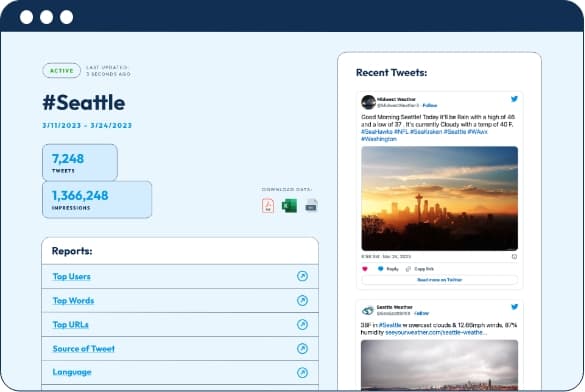
Use Tweet Archivist's advanced analytics to access historical performance data and identify your highest-performing content over time. Look for templates that consistently outperform your baseline engagement by 2-3x. These are your signature frameworks worth repeating.
Monitor bookmark rates as a quality signal. The Twitter algorithm treats bookmarks as high-intent engagement, rewarding bookmarked content with extended reach. Templates that generate saves indicate genuinely valuable content worth promoting to broader audiences.
Test timing variables alongside template types. The same template can perform differently at 9am versus 8pm. Run A/B tests by posting identical template structures at different times and comparing results. Optimize for your audience's specific behavior patterns rather than generic best practices.
Common Template Mistakes to Avoid
Even proven templates fail when executed poorly. Understanding these common mistakes helps you avoid wasting time and engagement opportunities.
Overusing the same template: Posting the same structure three days in a row trains your audience to ignore your content. Rotate between 5-10 different template types to maintain freshness. The ideal frequency for any single template is once every 7-10 posts.
Copying without context: Templates work because they tap into psychological principles, not because of specific words. Copying someone else's exact tweet with different details feels inauthentic. Extract the structural pattern and rebuild it in your voice with your examples.
Ignoring your audience's sophistication level: A template that works for beginners might bore experts. Know your audience's knowledge level and customize complexity accordingly. If you're targeting advanced practitioners, skip the basic explanations and dive into nuanced insights.
Forgetting the promise: If your hook promises "7 tactics to triple engagement," deliver exactly that. Don't pivot to a sales pitch by tweet 4. Breaking trust kills future engagement as your audience learns to distrust your hooks.
Neglecting formatting: Even perfect templates fail with poor formatting. Use line breaks, emojis for visual scanning, and numbered lists where appropriate. Mobile users comprise 80%+ of Twitter - optimize for thumb-scrolling readability.
Skipping the CTA: Every template should guide readers toward a specific action - reply, follow, bookmark, click a link, or share. Passive content gets passive results. Active CTAs drive active engagement.
Being too salesy too soon: Templates build authority and trust. Using them primarily for promotion destroys that goodwill. Follow the 80/20 rule: 80% pure value, 20% promotional content. When you do promote, frame it as an extension of the value you've been providing.
Conclusion
Viral tweet templates aren't shortcuts - they're frameworks that encode best practices into reusable structures. The templates in this guide have generated billions of impressions across thousands of accounts because they align with both human psychology and algorithmic preferences.
Your success with these templates depends on three factors: consistent application, strategic customization, and systematic tracking. Start by choosing 5-7 templates that align with your content style and audience needs. Test each one 3-5 times with different topics to identify which frameworks resonate most with your specific followers.
Remember that templates provide structure, not soul. Your unique perspective, experiences, and voice transform generic frameworks into distinctive content that builds your brand. The goal isn't to sound like everyone else using templates - it's to communicate your unique value more effectively.
As you build your template library, pay attention to emerging patterns in your niche. The best creators don't just use templates - they create new ones by identifying what's working right now and reverse-engineering the underlying structure. Over time, you'll develop signature frameworks that other creators study and emulate.
Twitter growth requires consistency over intensity. Better to post 3 well-crafted tweets weekly using proven templates than 20 random thoughts daily. Quality, strategic content compounds over time, building authority and audience loyalty that drives sustainable growth.
Ready to take your Twitter strategy to the next level? Use Tweet Archivist to analyze your historical performance, identify your best-performing content types, and track template effectiveness over time. Combine these viral templates with data-driven insights to create a Twitter presence that consistently delivers results.
For comprehensive Twitter growth support, including follower growth services that complement your organic content strategy, explore Bulkoid.com. Strategic growth combines great content with smart audience-building tactics.
Start implementing these templates today. Choose one from this guide, customize it with your unique insights, and post it within the next 24 hours. Track the results, refine your approach, and build momentum. Your viral breakthrough isn't about luck - it's about systematically applying proven frameworks until you find what works for your specific audience.