How to Write Engaging Tweets That Drive Clicks: 15 Proven Strategies
Introduction
Every day, over 500 million tweets flood Twitter's platform. In this digital ocean of content, your tweets compete for precious seconds of attention from scrolling users. The difference between a tweet that drives clicks and one that disappears into the void often comes down to specific, repeatable strategies that many marketers overlook.
If you're struggling to get your audience to click through to your content, you're not alone. The average click-through rate for Twitter ads hovers around 1.64% to 2%, and organic tweets typically perform even lower. But here's the good news: with the right approach, you can dramatically increase your Twitter CTR and transform your profile into a consistent traffic generator.
In this comprehensive guide, you'll discover 15 proven strategies to write engaging tweets that capture attention and drive clicks. Whether you're promoting blog posts, products, or building brand awareness, these data-backed techniques will help you maximize every character of your 280-character limit.
Understanding Tweet Engagement and CTR
Before diving into tactics, it's essential to understand what we're optimizing for. Tweet engagement encompasses all interactions with your content, including likes, retweets, replies, and clicks. Click-through rate (CTR) specifically measures the percentage of people who see your tweet and actually click on your link.
Why does CTR matter more than vanity metrics like likes? Because clicks represent real interest and intent. A user who clicks your link is moving down your marketing funnel, visiting your website, and potentially converting into a customer or loyal reader. That's why businesses focused on ROI prioritize CTR over simple engagement numbers.
According to recent data, tweets with links get retweeted 86% more often than those without. However, the average CTR remains surprisingly low because most users don't optimize their tweets for clicks. Understanding this gap creates your competitive advantage.
When you track your Twitter analytics properly, you'll notice patterns in which tweets drive the most clicks. This data becomes your roadmap for creating more effective content consistently.
The Anatomy of a High-Performing Tweet
High-performing tweets share specific structural elements that encourage clicks. Let's break down the anatomy of a tweet optimized for maximum CTR.
Character Count Optimization
While Twitter allows 280 characters, research shows that tweets between 120-130 characters achieve the highest click-through rates. This length provides enough context to be compelling without overwhelming readers or making your tweet difficult to scan quickly.
Shorter tweets also leave room for others to retweet your content with their own commentary, extending your reach organically. When crafting your message, aim for concise clarity rather than using every available character.
The Hook and Opening Line
Your first few words determine whether someone stops scrolling or keeps moving. The most effective opening lines create curiosity, state a benefit, or ask a compelling question. Think of your tweet's opening like a headline, it must earn attention instantly.
Power openings include:
- Surprising statistics: "832% more retweets" immediately signals valuable data
- Bold statements: "Most marketers waste 90% of their Twitter efforts"
- Direct questions: "Want to double your website traffic from Twitter?"
- How-to promises: "Here's how to write tweets that actually convert"
Strategic Link Placement
Link placement significantly impacts your CTR. Data shows that positioning your link approximately 25% of the way through your tweet achieves the highest click-through rates. This placement provides enough context before the link to build curiosity, but doesn't make readers wait until the end.
Avoid placing links at the very beginning or very end of your tweets. The beginning position doesn't give readers context, while end placement often gets cut off in feeds or loses attention before readers reach it.
Clear Calls to Action
Don't assume your audience knows what to do. Tweets with explicit calls to action receive 18% more clicks than those without. Use action words like "Read," "Discover," "Learn," "Check out," or "Get" to direct user behavior.
Your CTA should align with your content's value proposition. If you're sharing a comprehensive guide, your CTA might be "Read the complete guide." For time-sensitive offers, try "Get access now before it's gone."
Visual Content That Drives Clicks
Twitter is increasingly visual, and the data proves that multimedia content dramatically outperforms text-only tweets. Understanding how to leverage visual elements can multiply your engagement and click-through rates overnight.
The Power of Images and Photos
Tweets with photos receive 35% more engagement than those without. But not all images are created equal. High-performing images are:
- Relevant to your content and promise
- High quality and properly sized for Twitter's display
- Eye-catching with strong contrast or interesting subjects
- Include text overlays highlighting key benefits or statistics
Custom graphics consistently outperform stock photos. Even simple branded images with your key message overlaid on a colored background can increase clicks significantly compared to generic stock imagery.
Video Content Dominance
Video tweets receive 10x more engagement than tweets without multimedia. Video content stops the scroll and captures attention longer than static images. The first 3 seconds are critical, your video must immediately communicate value to prevent viewers from scrolling past.
Effective video tweets include:
- Tutorial snippets showing quick how-tos
- Behind-the-scenes content that builds connection
- Product demonstrations or feature highlights
- Animated text graphics explaining key concepts
Keep videos short (30-60 seconds is optimal) and add captions, since most Twitter users watch videos with sound off.
Infographics and Data Visualizations
Infographics are click magnets on Twitter. Research shows infographics receive 832% more retweets and 746% more click-throughs than standard article tweets. Why? Because they provide immediate value while scrolling and make complex information digestible.
Create mini-infographics specifically for Twitter that tease the full content available on your website. Include your most compelling statistic or insight in the graphic, then drive clicks to see the complete data set.
Crafting Compelling Tweet Copy
Beyond structure and visuals, the words you choose make or break your tweet's performance. Compelling copy combines psychological triggers with clarity to motivate clicks.
Power Words That Drive Action
Certain words consistently correlate with higher CTR. Research analyzing millions of tweets identified these high-performing words: "via," "@," "RT," "Please," "Check," "How to," "Guide," "Proven," "Secret," and "Because."
These words work because they either leverage social proof ("via," "RT"), create urgency ("now," "today"), or promise value ("how to," "guide"). Incorporate them naturally into your tweets without forcing awkward phrasing.
Questions Generate Engagement
Questions are remarkably effective for driving engagement. Data shows that tweets with questions receive 1,050% more replies than statements. While replies aren't clicks, tweets with high engagement rates get more visibility in Twitter's algorithm, leading to more impressions and ultimately more clicks.
Effective question formats include:
- "What's your biggest challenge with [topic]?"
- "Have you tried [strategy]?"
- "Which would you choose: A or B?"
- "What if you could [desired outcome]?"
Clarity Over Cleverness
While witty, clever tweets can generate likes, clearly stated offers receive 18% more clicks than ambiguous tweets. Your audience scrolls quickly and won't pause to decode clever wordplay when dozens of other tweets compete for attention.
Be direct about what users will get when they click. Instead of "You won't believe what we discovered," try "We analyzed 10,000 tweets and found 3 strategies that triple CTR." Specificity beats mystery for click-through optimization.
Emotional Triggers and Curiosity Gaps
The most clicked tweets tap into emotional triggers or create curiosity gaps. Emotional triggers include surprise ("Shocking data reveals..."), fear of missing out ("Before it's too late..."), or aspiration ("Join the top 1% of marketers who...").
Curiosity gaps hint at valuable information without revealing everything. They promise a payoff for clicking. Examples include "The one mistake killing your Twitter engagement" or "What 97% of marketers don't know about tweet optimization."
Strategic Use of Hashtags and Mentions
Hashtags and mentions are powerful tools when used strategically, but overuse can tank your engagement. Here's how to optimize both for maximum clicks.
Hashtag Best Practices
Research shows that adding hashtags can increase engagement by 16% on average. However, more isn't better. Tweets with one or two hashtags consistently outperform those with three or more. Excessive hashtags make tweets look spammy and reduce perceived credibility.
Choose hashtags that are:
- Directly relevant to your content topic
- Active but not oversaturated (check current tweet volume)
- Specific rather than generic (#TwitterMarketingTips beats #Marketing)
- Aligned with your target audience's interests
Place hashtags naturally within your copy when possible, rather than stacking them at the end. "Learn how to increase #TwitterEngagement" reads better than ending with "#Twitter #Engagement #SocialMedia #Marketing."
Leveraging @Mentions for Visibility
Mentioning other accounts in your tweets serves multiple purposes. It increases your tweet's visibility when the mentioned account engages with or retweets your content. It also adds credibility when you cite authoritative sources or tools.
Strategic mention approaches include:
- Citing sources: "According to @TwitterBusiness, video tweets get 10x more engagement"
- Tagging featured experts or brands in your content
- Mentioning tools or services you reference (builds relationships)
- Engaging thought leaders to increase reach
When discussing Twitter growth strategies, mentioning services like Bulkoid.com that help businesses scale their Twitter presence can add value for audiences serious about growing their following.
Timing and Frequency Optimization
Even perfectly crafted tweets fail if posted at the wrong time or with poor frequency strategy. Timing and posting patterns significantly impact your visibility and CTR.
Best Times to Post for Maximum CTR
Click-through rates typically peak in the afternoon hours, particularly around 12 PM to 1 PM when people check Twitter during lunch breaks, and again at 5 PM to 6 PM as work days end. However, these general patterns vary by industry and audience.
B2B audiences tend to engage during business hours (9 AM to 5 PM on weekdays), while B2C audiences show stronger engagement during evenings and weekends. Test your specific audience patterns using Twitter analytics tracking to identify your optimal posting windows.
Posting Frequency and Spacing
Consistency matters more than volume. Research shows that tweets with sufficient gaps between them achieve higher click-through rates than accounts that rapid-fire multiple tweets within minutes. Spacing allows each tweet to reach its full potential audience without competing with your own content.
Recommended posting frequencies vary by audience size and engagement level, but most brands benefit from 3-5 tweets daily with at least 2-3 hours between posts. Larger accounts with highly engaged audiences can post more frequently (8-15 times daily) without diminishing returns.
Weekend vs. Weekday Strategy
Weekend tweets often show higher CTR but require adjusted frequency. Social media feeds move slower on weekends, so your tweets remain visible longer. Post 2-3 times on Saturday and Sunday rather than your weekday frequency, focusing on your highest-quality content.
Advanced CTR Optimization Techniques
Once you've mastered the fundamentals, these advanced techniques can further optimize your Twitter click-through rates.
A/B Testing Your Tweets
Systematic testing reveals what resonates with your specific audience. Test variables like opening lines, link placement, image types, CTA wording, and posting times. Change one variable at a time to isolate what drives performance differences.
Run A/B tests by tweeting similar content with one variation at different times or days. Track CTR for each version using Twitter Analytics or dedicated social media management tools. Over time, these insights compound into a proven formula for your audience.
Tweet Threading for Longer Content
Twitter threads keep audiences engaged on the platform while providing context that drives clicks to your full content. Effective thread structure includes:
- A hook tweet that summarizes your key insight
- 2-5 supporting tweets that deliver value and build curiosity
- A final tweet with your link and clear CTA
Threads receive more total engagement than single tweets and keep your content visible in feeds longer as people engage with different tweets in the sequence.
Strategic Retweeting
Don't let great content die after one post. Retweet your best-performing content with new framing or context. Quote-retweet your original post with a different angle: "Still getting questions about this, so here's a quick recap..." or "Updated with new data since I first shared this."
Spacing retweets appropriately (at least 1-2 weeks apart) reaches new followers who missed the original and reminds existing followers without annoying them.
Twitter Cards and Rich Previews
Ensure your website properly implements Twitter Cards metadata. Twitter Cards create rich previews with images, titles, and descriptions when you share links, significantly increasing click-through rates compared to plain URLs.
Test your Twitter Cards using Twitter's Card Validator tool to ensure your links display properly with compelling preview content that entices clicks.
Measuring and Analyzing Your Results
Improvement requires measurement. Tracking the right metrics helps you identify what works and double down on successful strategies while eliminating what doesn't.
Key Metrics to Track
Focus on these essential metrics for CTR optimization:
- Click-through rate: Total clicks divided by impressions
- Engagement rate: Total engagements divided by impressions
- Link clicks: Specifically tracking link clicks vs. other engagement types
- Impressions: How many users saw your tweet
- Best performing content types: Which topics, formats, and styles drive clicks
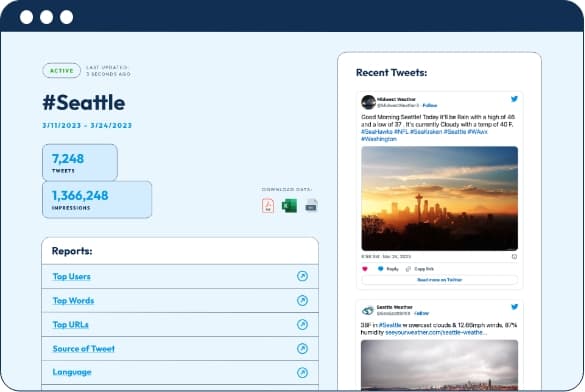
Twitter's native analytics provide basic insights, but dedicated analytics tools offer deeper analysis. Tweet Archivist's advanced analytics features help you track historical performance, identify trends, and understand what content resonates with your audience over time.
Competitive Benchmarking
Compare your performance against industry averages and direct competitors. If your CTR sits below 1%, you have significant room for improvement. Rates above 2-3% indicate strong tweet optimization. Top performers in competitive industries often achieve 5-10% CTR on well-crafted tweets.
Use Twitter statistics tracking tools to monitor competitor performance and identify successful content patterns you can adapt for your audience.
Iterative Improvement Process
Tweet optimization is continuous. Implement this monthly improvement cycle:
- Review your top 10 and bottom 10 performing tweets from the past month
- Identify common patterns in high performers (topics, formats, timing)
- Note what failed in poor performers (and stop doing that)
- Create hypotheses for improving specific metrics
- Test new approaches systematically
- Analyze results and adjust your strategy
This data-driven approach compounds over time, continuously improving your Twitter performance and CTR.
Common Mistakes That Kill Engagement
Even experienced marketers make these critical mistakes that sabotage their Twitter CTR. Avoiding these pitfalls immediately improves your results.
Overposting and Content Fatigue
Flooding your followers' feeds with too many tweets too quickly leads to unfollows and ignored content. Your audience tunes out when they see your account dominating their timeline. Respect your audience's attention by posting quality over quantity.
Hashtag Overload
Using 5+ hashtags per tweet screams spam and reduces credibility. Each hashtag beyond two decreases your perceived authenticity and can actually harm engagement rather than help it.
Generic, Template-Sounding Content
Audiences instantly recognize templated, automated-sounding tweets. Content that feels robotic or overly promotional gets scrolled past. Inject personality, specific examples, and unique perspectives to stand out.
Ignoring Engagement Opportunities
Posting tweets without engaging with replies or mentions wastes community-building opportunities. When people reply to your tweets, respond quickly. This signals the algorithm that your content sparks conversation, increasing future tweet visibility.
Not Optimizing for Mobile
Over 80% of Twitter users access the platform via mobile devices. Tweets that work well on desktop but fail on mobile miss the majority of your potential audience. Keep text readable, images clear at small sizes, and CTAs thumb-friendly.
Linking to Poor Landing Pages
Driving clicks to slow-loading pages, irrelevant content, or pages with poor mobile experiences destroys trust and ruins future CTR. Ensure every link provides the value your tweet promises, loads quickly, and offers clear next steps.
Conclusion
Writing engaging tweets that drive clicks isn't about luck or going viral. It's about systematically applying proven strategies that align with how people consume content on Twitter. The 15 strategies covered in this guide provide a comprehensive framework for transforming your Twitter presence into a consistent traffic generator.
Start by optimizing your tweet structure, keeping messages between 120-130 characters, placing links strategically, and including clear calls to action. Layer in visual content, with photos boosting engagement by 35% and videos by 10x. Craft compelling copy using power words, questions, and clarity over cleverness.
Master the strategic use of 1-2 relevant hashtags and valuable @mentions while posting consistently at optimal times with proper spacing between tweets. Implement advanced techniques like A/B testing, threading, and strategic retweeting. Most importantly, measure your results continuously and iterate based on data.
Remember that increasing your Twitter CTR is an ongoing process, not a one-time fix. Each tweet is an opportunity to test, learn, and refine your approach. The marketers who succeed on Twitter are those who treat it as a measurable channel, track what works, and consistently apply proven principles while staying authentic to their brand voice.
Ready to take your Twitter analytics to the next level? Explore Tweet Archivist's powerful analytics features to track your tweet performance, identify trends, and make data-driven decisions that consistently improve your click-through rates and overall Twitter ROI. Start optimizing your tweets today and watch your website traffic grow.