How to Download Your Twitter Archive: Complete Guide to Accessing and Analyzing Your Data
Introduction
Your Twitter account contains years of valuable data—every tweet, reply, like, and direct message you've ever shared. Whether you're conducting research, preparing for a platform migration, ensuring compliance with data regulations, or simply wanting to preserve your digital legacy, downloading your Twitter archive is an essential step in taking control of your social media presence.
In this comprehensive guide, we'll walk you through the complete process of requesting and downloading your Twitter archive, explain exactly what data you'll receive, break down the file structure, and show you how to extract meaningful insights from your complete Twitter history. By the end, you'll have full mastery over accessing and understanding your Twitter data.
Why Download Your Twitter Archive?
Before diving into the technical steps, it's worth understanding the compelling reasons to download your Twitter archive. The platform has evolved significantly over the years, and having a complete backup of your data serves multiple important purposes.
First and foremost, a Twitter archive provides data ownership and portability. Under regulations like GDPR and CCPA, you have the legal right to access and control your personal data. Downloading your archive ensures you maintain a complete copy of your digital footprint independent of the platform's policies or potential account restrictions.
For content creators and marketers, your archive serves as an invaluable content research tool. You can identify your most engaging tweets, analyze posting patterns, discover what topics resonated with your audience, and use historical data to inform future content strategies. Many successful Twitter users regularly analyze their archives to understand which content types drive the best engagement.
The archive also functions as essential backup protection. Accounts can be suspended, hacked, or accidentally deleted. Platform changes or business decisions could restrict access to historical data. Having a local copy ensures your years of content creation aren't lost to technical issues or policy changes.
For businesses and professionals, Twitter archives support compliance and legal requirements. Many industries require retention of business communications, including social media interactions. Your archive provides documented proof of communications, timestamps, and engagement data that may be necessary for regulatory compliance, legal discovery, or dispute resolution.
Finally, downloading your archive is crucial if you're planning to migrate platforms or delete your account. Before making the switch to alternative social networks or leaving Twitter entirely, securing a complete backup ensures you don't lose years of content, connections, and conversations.
How to Download Your Twitter Archive
Twitter (now X) makes it relatively straightforward to request your complete data archive, though the process differs slightly between desktop and mobile platforms. The platform requires identity verification to ensure your data remains secure, and you'll need access to the email address or phone number associated with your account.
Before you begin, verify that you're logged into the correct Twitter account and that you have access to your registered email or phone number. The download link expires after a specific period (typically 7-30 days depending on your account), so you'll want to complete the download promptly once your archive is ready.
Desktop Download Instructions
If you're accessing Twitter through a web browser on your computer, follow these detailed steps to request your data archive:
Step 1: Access Your Settings
Navigate to Twitter.com and ensure you're logged into your account. Look for the "More" button in the left navigation panel (it appears as three horizontal dots). Click on "More" to reveal additional menu options.
Step 2: Navigate to Privacy and Settings
From the expanded menu, select "Settings and privacy." This opens your account configuration options where you can manage various aspects of your Twitter presence.
Step 3: Request Your Archive
Click on "Your account" in the settings menu, then select "Download an archive of your data." This is Twitter's official data portability feature that compiles your complete account history.
Step 4: Verify Your Identity
Twitter will prompt you to enter your account password. After confirming your password, you'll need to complete identity verification by entering a code sent to your registered email address or phone number. This two-factor authentication ensures only the legitimate account owner can access sensitive account data.
Step 5: Confirm Your Request
After entering the verification code, click the "Request data" or "Request archive" button. Twitter will acknowledge your request and begin compiling your data in the background. You'll receive a confirmation message indicating your request is being processed.
Mobile Download Instructions
The process is similar on Twitter's mobile app for iOS and Android, with some interface differences:
Step 1: Open Settings
Launch the Twitter app on your mobile device. Tap your profile icon in the top-left corner to open the navigation menu, then tap "Settings and privacy."
Step 2: Access Your Account Data
Tap "Account," then scroll down to find the "Data and permissions" section. Select "Your X data" (or "Your Twitter data" depending on app version).
Step 3: Verify and Request
Similar to the desktop process, you'll need to verify your identity by entering a code sent to your email or phone. After verification, tap "Request data" to submit your archive request.
How Long Does It Take?
After requesting your Twitter archive, patience is required. Twitter typically takes 24 to 48 hours to prepare your archive for download, though this timeline can vary based on several factors.
Accounts with extensive histories—those with tens of thousands of tweets, large media libraries, or years of activity—may take longer to process. Similarly, high-traffic periods when many users are simultaneously requesting archives can extend processing times. Some users report receiving their archives within a few hours, while others have waited up to 72 hours or more.
Twitter will send an email notification to your registered address when your archive is ready for download. The email contains a download link and instructions for accessing your data. It's crucial to download your archive promptly, as the download link typically expires after 7 days (some sources report 30 days, but don't rely on this extended window). If the link expires, you'll need to submit a new request and wait through the processing period again.
When you receive the notification email, make sure you're logged into Twitter on the same browser before clicking the download link. The archive downloads as a compressed ZIP file, typically ranging from a few megabytes for newer accounts to several gigabytes for accounts with extensive media content.
What's Included in Your Twitter Archive
Your Twitter archive is remarkably comprehensive, containing virtually every aspect of your account activity since creation. Understanding what data you'll receive helps you plan how to analyze and utilize this information effectively.
Complete Tweet History
The centerpiece of your archive is a complete record of every tweet you've ever posted, including original tweets, retweets, quote tweets, and replies. Each tweet entry includes the full text, timestamp, engagement metrics (likes, retweets, replies at the time of archiving), any media attachments, hashtags used, and mentions of other users. Importantly, this includes tweets you've deleted—your archive preserves your complete Twitter history regardless of subsequent deletions.
Account Information and Profile Data
Your archive contains comprehensive account metadata including your display name history, bio text changes over time, profile and header image files, account creation date, account type (personal, business, verified status), connected email addresses and phone numbers, location information you've shared, birth date if provided, and language preferences.
Direct Messages
All direct message conversations are included in your archive, even those you've deleted from the platform interface. The archive preserves both individual and group conversations with complete message text, timestamps, and media attachments. This comprehensive DM history makes archives particularly valuable for professional documentation.
Media Files
Every photo, video, and GIF you've uploaded to Twitter is included in your archive. However, there's an important limitation here that we'll discuss in the limitations section—the archive contains references and thumbnails rather than full-resolution originals in some cases.
Engagement Data
Your archive includes a complete list of every tweet you've liked throughout your Twitter history. You'll also receive data about your followers and following lists, though with some limitations regarding historical accuracy and user information completeness.
Moments and Lists
If you've created Twitter Moments (curated collections of tweets) or organized users into Lists, these are preserved in your archive along with their descriptions and member information.
Additional Information
Your archive may also include ad engagement data showing which promoted tweets you've interacted with, interests inferred by Twitter's algorithm for ad targeting, connected applications and their permissions, personalization and data settings history, and screen name change history.
Understanding the Archive File Structure
When you extract the downloaded ZIP file, you'll find a well-organized directory structure designed to make your data accessible through both human-readable HTML interfaces and machine-readable data files for analysis.
The root directory contains several key files. The Your_archive.html file (filename may vary slightly) serves as the main browsing interface—open this in any web browser to navigate your tweets, search your history, and view media through an interface similar to Twitter itself. A README.txt file provides basic instructions and explains the archive structure.
The data/ directory is where all your actual information lives. This folder contains JavaScript files with a .js extension, but don't be fooled—these are essentially JSON data wrapped in JavaScript variable declarations. Key files include:
tweets.js - Your most important data file containing every tweet you've posted. Each tweet entry is a JSON object with comprehensive metadata including tweet ID, timestamp, full text, engagement counts, media URLs, and entity extraction (hashtags, mentions, URLs).
account.js - Your account information and settings, including profile details, account creation date, and configuration preferences.
profile.js - Detailed profile information including bio text, location, website URLs, and avatar references.
direct-messages.js - Complete DM history organized by conversation, with each message containing sender/recipient information, timestamps, and message text.
like.js - Every tweet you've ever liked, with the liked tweet's text and metadata.
follower.js and following.js - Lists of your followers and accounts you follow, though these typically contain user IDs rather than human-readable usernames.
The assets/ directory contains CSS stylesheets, JavaScript code that powers the HTML interface, and image files for the browsing interface. The data/js/ subdirectory may contain additional library files used by the HTML viewer.
For developers and data analysts, understanding the JSON structure is crucial. The data files use a unique format where valid JSON is wrapped in JavaScript variable assignment. For example, tweets.js begins with something like: window.YTD.tweets.part0 = [ followed by JSON array data. To use this data in JSON parsers, you'll need to strip the JavaScript wrapper, keeping only the array or object content.
How to View Your Twitter Archive
The simplest way to explore your Twitter archive is through the included HTML interface. Here's how to get started:
Extract the ZIP File
Use your operating system's built-in extraction tool or a third-party application like 7-Zip or WinRAR to decompress the archive. Extract to a location you'll remember, such as a dedicated "Twitter Archive" folder in your Documents directory.
Open the Main Interface
Navigate to the extracted folder and double-click the "Your_archive.html" file (or similar filename). This opens in your default web browser, presenting an interface that resembles Twitter's timeline view.
Navigate Your Data
The HTML interface provides several useful features. You can scroll through your complete tweet history in chronological or reverse chronological order, use the search function to find tweets containing specific keywords, hashtags, or mentions, click on months and years to jump to specific time periods, view embedded media directly in the browser, and see basic engagement metrics for each tweet.
This browser-based viewer works entirely offline—all your data is contained in the local files, so you can explore your Twitter history even without an internet connection (though some externally hosted media may not display without connectivity).
Methods for Analyzing Your Twitter Data
While the HTML viewer is convenient for casual browsing, serious analysis requires working directly with the underlying data files. Here are proven methods for extracting insights from your Twitter archive.
Spreadsheet Analysis for Beginners
If you're not comfortable with programming, you can still perform valuable analysis using spreadsheet software. Several online tools and browser extensions can convert your tweets.js file to CSV format compatible with Excel or Google Sheets. Once imported, you can create pivot tables to identify your most engaging tweets, filter by date ranges to analyze specific periods, count hashtag usage to see which topics you've discussed most, and calculate posting frequency to understand your activity patterns.
Python Analysis for Developers
Python offers powerful libraries for Twitter data analysis. Using the json module, you can parse your data files (after removing the JavaScript wrapper). The pandas library enables sophisticated data manipulation, filtering, and statistical analysis. Libraries like matplotlib and seaborn create visualizations showing posting patterns, engagement trends, and content evolution over time. Natural language processing tools like NLTK or spaCy can perform sentiment analysis, identify frequent topics, and extract meaningful patterns from your tweet text.
Specialized Twitter Analytics Tools
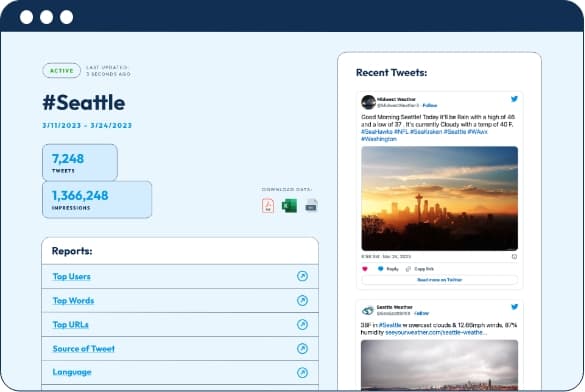
Several platforms are specifically designed for Twitter data analysis. Tweet Archivist offers comprehensive analytics tools that can import your archive data and provide interactive dashboards showing engagement trends, sentiment analysis, hashtag performance, influential mentions, and time-series visualizations. The platform makes it easy to identify your best-performing content and understand what resonates with your audience.
Other specialized tools include TAGS (Twitter Archival Google Sheet), which provides a no-code solution for basic analysis, Voyant Tools for text analysis and word frequency visualization, and Tableau or Power BI for business intelligence professionals who want to create custom dashboards combining Twitter data with other business metrics.
Key Metrics to Analyze
Regardless of which tools you use, focus on these valuable metrics. Engagement rate helps identify which content types generate the most interaction. Posting patterns reveal optimal times and days for reaching your audience. Content themes show which topics you discuss most and which resonate best with followers. Hashtag effectiveness indicates which hashtags expand your reach versus which add no value. Conversation patterns analyze who you interact with most frequently and the nature of those interactions. Growth indicators track follower growth periods and correlate them with content strategies.
For businesses looking to accelerate their Twitter growth based on these insights, services like Bulkoid.com offer targeted growth solutions that can help you expand your reach while maintaining authentic engagement. Combining data-driven insights from your archive with strategic growth services creates a powerful approach to Twitter success.
Twitter Archive Limitations
While Twitter archives are impressively comprehensive, it's important to understand what's not included to set appropriate expectations and plan additional data preservation if needed.
Missing Media Files
One of the most significant limitations affects media content. While your archive includes references to photos and videos you've uploaded, it often doesn't contain the full-resolution original files. Instead, you receive links to Twitter's servers (t.co URLs) where the media is hosted. This means if you view your archive offline or if Twitter later removes the media, those images and videos won't be accessible. To preserve media fully, you may need to separately download photos and videos from your Twitter account using third-party tools.
Incomplete Engagement Data
Your archive shows engagement metrics as they existed at the moment the archive was generated, but these are static snapshots. If a tweet continues gaining likes and retweets after your archive date, those new engagements won't appear in your archive. Additionally, you can't see detailed analytics like impression counts, link clicks, or profile visits—metrics available in Twitter's native analytics dashboard but excluded from archive downloads.
Follower and Following Limitations
While you receive lists of followers and following, the data typically includes user IDs rather than usernames, display names, or profile information. This makes it difficult to identify who these accounts are without cross-referencing against live Twitter data. Additionally, the lists represent a snapshot at archive creation time—they don't show the history of when you followed or were followed by specific accounts.
Limited Context for Interactions
When you've liked or retweeted content from other users, your archive shows your action but often lacks complete context about the original tweet. Deleted tweets from other users, suspended accounts, or content you interacted with may appear as incomplete records with missing text or media.
No Analytical Tools Included
The archive itself is purely data—it doesn't include analysis, visualizations, or insights. The HTML viewer allows browsing but doesn't provide engagement graphs, sentiment analysis, or trending topic identification. You'll need to use external tools or write custom code to extract meaningful patterns from the raw data.
Search Limitations
While the HTML interface includes basic search, it's nowhere near as sophisticated as Twitter's advanced search features. You can't easily search by date ranges, filter by engagement levels, or use complex operators to find specific types of content. For advanced searching capabilities, consider using Tweet Archivist's powerful search features that offer comprehensive filtering and discovery tools.
Advanced Analysis Tools
For users who want to go beyond basic browsing and extract serious insights from their Twitter archives, several advanced tools and platforms are worth exploring.
Tweet Archivist Platform
As a comprehensive Twitter analytics solution, Tweet Archivist specializes in helping users make sense of Twitter data at scale. The platform can import your downloaded archive and transform raw data into actionable insights through interactive visualizations, historical trend analysis, sentiment tracking, influencer identification, competitive benchmarking, and exportable reports. Whether you're a researcher, marketer, or business analyst, Tweet Archivist provides enterprise-grade analytics capabilities without requiring coding expertise.
Programming-Based Solutions
For developers and data scientists, programming languages offer unlimited flexibility for custom analysis. R programming language, particularly with the rtweet and tidytext packages, excels at statistical analysis and academic research applications. Python with pandas, matplotlib, and scikit-learn enables machine learning applications, predictive modeling, and custom visualization creation. JavaScript with D3.js allows creation of interactive web-based visualizations that can be shared with stakeholders.
Business Intelligence Platforms
Professionals already using BI tools can import Twitter archive data for integration with broader business metrics. Tableau connects to JSON data sources and creates sophisticated dashboards combining social media performance with sales, marketing, and customer service data. Microsoft Power BI offers similar capabilities with strong integration to the Microsoft ecosystem. Google Data Studio provides free visualization options with good collaboration features for teams.
Specialized Research Tools
Academic researchers and serious analysts may benefit from tools designed for scholarly work. ATLAS.ti offers qualitative data analysis capabilities with AI-assisted coding for thematic analysis of tweet content. NVivo provides similar qualitative research features with strong text analysis capabilities. These tools help identify patterns, themes, and insights that quantitative metrics alone might miss.
Conclusion
Downloading your Twitter archive is more than just a data backup—it's an opportunity to take ownership of your digital presence, gain insights into your content evolution, and preserve years of conversations and connections. Whether you're preparing for platform migration, conducting research, ensuring compliance, or simply curious about your Twitter journey, your archive provides a comprehensive record of your social media history.
The process of requesting and downloading your archive is straightforward, typically taking just a few minutes of active work and 24-48 hours of processing time. Once you have your data, the included HTML viewer offers an easy way to browse your history, while the underlying JSON files provide rich data for sophisticated analysis.
Understanding the file structure, recognizing the archive's limitations, and leveraging the right analysis tools transforms raw data into actionable insights. You can identify your most engaging content, understand your audience better, optimize your posting strategy, and make data-driven decisions about your Twitter presence moving forward.
For users serious about Twitter analytics and growth, combining your archive insights with professional tools creates a powerful strategy. Tweet Archivist's comprehensive analytics platform helps you understand not just what you've posted, but how your content performs, what resonates with your audience, and where opportunities for growth exist. Meanwhile, services like Bulkoid.com can help accelerate your growth with authentic engagement strategies informed by data-driven insights.
Your Twitter archive represents years of digital communication, content creation, and community building. By downloading, preserving, and analyzing this data, you ensure that valuable history remains accessible regardless of platform changes, policy updates, or account issues. Take control of your data today—request your Twitter archive and discover the insights hidden in your social media history.
Ready to unlock deeper insights from your Twitter data? Explore Tweet Archivist's archive analysis features and transform your Twitter history into strategic advantages for growth and engagement.